Act I
“She stole it!”
The accusation cracked across the courtroom like a whip.
Every head turned toward the man in the navy suit as he shot to his feet behind the plaintiff’s table, one finger pointed across the polished oak aisle. His face was sharp with outrage, his voice loud enough to make the microphones hum.
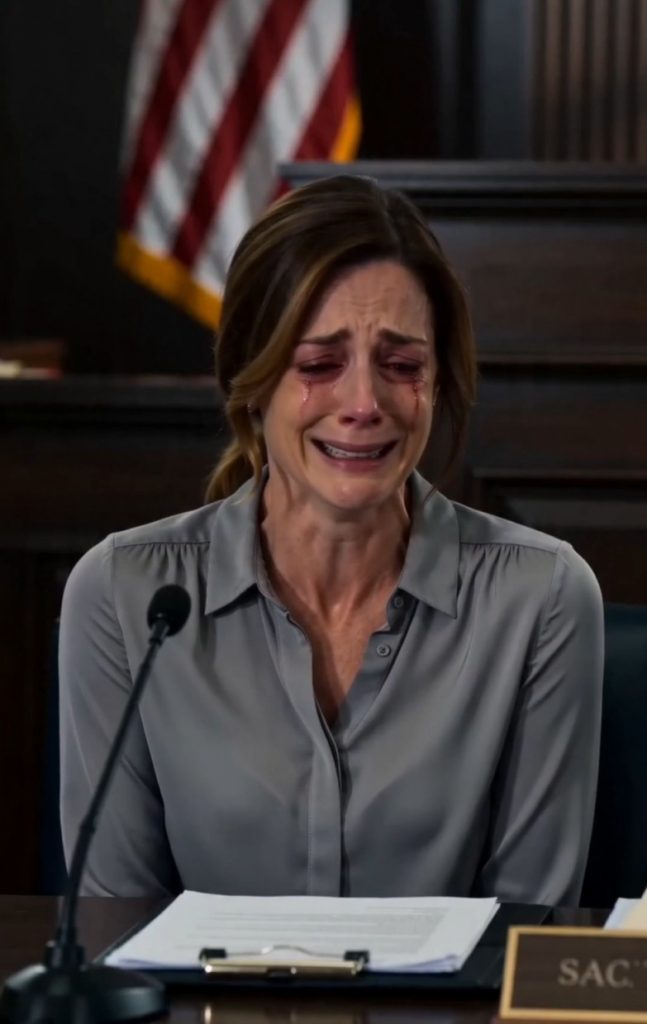
At the other table, Rachel Mercer shook her head.
“I didn’t,” she whispered.
But the words barely made it past her tears.
Her shoulders were hunched inside a plain gray blouse. Her hair, usually neat, fell loosely around her face. She looked less like a woman defending herself in court and more like someone who had spent months being slowly crushed by a lie no one powerful wanted to question.
Behind her sat her daughter, Lily.
Eleven years old. Long light-brown hair. Freckles across her nose. A white ribbed shirt too simple for a courtroom full of expensive suits.
She did not cry.
She watched.
Judge Callahan leaned forward from the bench, his black robe still, his expression hard.
“Mr. Carver,” he said, “sit down.”
Elliot Carver lowered himself into his chair, but his eyes stayed fixed on Rachel.
The hearing was supposed to decide whether Rachel Mercer had stolen the Carver family’s diamond necklace, a piece so old and famous that newspapers had once called it “the winter crown of Boston society.”
But everyone in the courtroom understood the real stakes.
If Rachel was found responsible, she would lose control of her late husband’s estate.
Worse, she could lose guardianship influence over Lily’s inheritance.
Elliot Carver, her dead husband’s older brother, would step in as trustee.
That was what he wanted.
Not justice.
Control.
Rachel wiped her face with shaking fingers.
“I never touched that necklace,” she said. “I never even knew where it was kept.”
Elliot turned slightly toward his attorney. He leaned close, covering his mouth with the back of his hand.
“She can’t hear,” he whispered.
Lily stood up.
The courtroom seemed to inhale.
Her mother turned in panic. “Lily, sweetheart—”
“He is lying,” Lily said.
Her voice was clear. Small, but not weak.
Elliot looked over his shoulder with an irritated smile, the kind adults use when they think a child has wandered into grown-up business.
Then Lily looked straight at him.
“I can read lips.”
The smile vanished.
For the first time all morning, Elliot Carver stopped performing.
Lily pointed at the black leather briefcase beside his chair.
“He told him to hide the necklace.”
A silence fell so hard it felt physical.
The judge’s eyes moved from Lily to Elliot, then to the briefcase.
“Open it,” Judge Callahan said.
Elliot’s hand trembled as he reached for the gold latch.
And when the click echoed through the courtroom, everyone finally understood that the child had not interrupted the trial.
She had ended it.
Act II
Six months earlier, Rachel Mercer still believed grief was the worst thing that could happen to a family.
She was wrong.
Grief was clean compared to betrayal.
Her husband, Daniel Carver, had died suddenly in early spring, leaving behind a technology company, an old family estate, and a daughter who still slept with his navy sweater folded under her pillow.
Daniel had been everything Elliot was not.
Gentle. Patient. Unimpressed by money.
He had married Rachel against his family’s wishes after meeting her at a hospital fundraiser where she worked as a patient advocate. Elliot had called her “temporary.” Daniel had called her home.
The Carvers never forgave her for becoming permanent.
To them, Rachel was not family. She was the woman who walked in without a pedigree and left with Daniel’s name, Daniel’s love, and Daniel’s only child.
Lily was different.
They wanted Lily.
Not because they loved her better, but because Daniel’s will placed most of his estate in a trust for her. Until Lily turned twenty-five, Rachel would manage the trust with an independent financial guardian.
Unless Rachel was found guilty of criminal misconduct.
Daniel had written that clause to protect Lily from chaos.
Elliot saw it as a door.
All he needed was a scandal.
The necklace vanished two weeks after Daniel’s funeral.
It belonged to Beatrice Carver, Daniel and Elliot’s mother, who had died years earlier. The family claimed it had been stored in a locked safe inside the estate’s private study.
Elliot said Rachel had taken it during a memorial gathering.
He said she had been seen near the study. He said she had debts. He said women like Rachel always eventually revealed what they were.
No one asked what he meant by women like Rachel.
They all understood.
Rachel denied it from the beginning. She let officers search her house. She handed over bank records. She answered every question until her voice gave out.
Nothing mattered.
Elliot had witnesses.
A housekeeper who said she saw Rachel near the hall.
A cousin who claimed Rachel asked about the necklace.
A security technician who said the study camera “malfunctioned” for exactly eleven minutes.
The story was too neat.
Lily knew that before anyone else did.
She had been born hearing the world only halfway.
A severe illness when she was two left her with partial hearing loss. Hearing aids helped, but not perfectly. Noise blurred. Crowds became storms. Whispers disappeared unless she could see the speaker’s mouth.
So Lily learned to read faces.
Then lips.
Then the spaces between what people said and what they meant.
Adults underestimated her constantly.
They lowered their voices around her. They whispered in hallways. They used words like custody, competence, trustee, and unstable while thinking she was playing games on her tablet.
Lily heard enough.
She saw more.
The day of the funeral, she saw Elliot in the study.
Not Rachel.
Elliot.
He had been standing by the safe with his phone pressed between his shoulder and ear, speaking too fast. Lily had passed the door looking for her father’s old fountain pen, and Elliot had turned so abruptly that she froze.
His mouth had formed three words before he closed the door.
Move it tonight.
At the time, she did not understand.
Later, when police came for her mother, she did.
But children in courtrooms are often treated like decorations unless adults decide they are useful. Rachel refused to put Lily on the stand. She said her daughter had already lost enough.
Elliot counted on that.
He counted on Rachel’s softness.
He counted on Lily’s silence.
And he counted on everyone believing that a girl who struggled to hear could not possibly be the one person in the room listening best.
Act III
Judge Callahan did not let Elliot open the briefcase alone.
A bailiff stepped forward first.
Elliot’s attorney rose quickly.
“Your Honor, we object. This is an outrageous invasion based on the statement of a child who is not under oath.”
The judge did not look away from the briefcase.
“Your objection is noted. The court has just heard an allegation of active concealment of evidence inside my courtroom. Open it.”
Elliot’s face had gone gray.
The bailiff lifted the briefcase onto the table and turned it toward the judge. The latch clicked open. Papers sat inside, stacked neatly, along with a silver pen, a tablet, and a folded blue silk cloth tucked into the back corner.
Lily stared at the cloth.
She knew before anyone touched it.
The bailiff lifted it carefully.
Gasps rose from the gallery.
Diamonds caught the daylight from the tall windows and scattered it across the oak walls.
The Carver necklace lay in the cloth like a frozen accusation.
Rachel made a sound that was almost a sob.
Elliot’s attorney stepped back as if the jewelry had burned him.
Judge Callahan’s voice dropped.
“Mr. Carver.”
Elliot opened his mouth.
Nothing came out.
The judge turned to the bailiff.
“Secure the evidence.”
The courtroom erupted.
Reporters near the back began whispering into phones. Elliot’s cousin covered her face. The housekeeper who had testified against Rachel stared at the floor as if she wished it would open.
Rachel turned in her chair, reaching blindly for Lily.
Lily walked into her mother’s arms.
Only then did she shake.
Not because she was afraid of Elliot.
Because she had held the truth inside her small body for months while adults argued over whether her mother deserved to be believed.
But the necklace was not the end.
It was the beginning.
Because as the bailiff placed it inside an evidence bag, something slipped from the silk cloth and landed on the table.
A tiny brass key.
Judge Callahan noticed it first.
“What is that?”
Rachel wiped her eyes and looked confused.
“I don’t know.”
But Elliot did.
His face changed again.
Not panic this time.
Terror.
Lily saw his lips move.
No sound reached her clearly, but she did not need it.
He said, “Not the box.”
Judge Callahan looked directly at Lily.
“What did he say?”
Lily swallowed.
“He said, ‘Not the box.’”
The courtroom stilled.
Rachel’s attorney, Marisol Vega, stood slowly.
“Your Honor,” she said, “for months we have requested access to the Carver estate’s private archive, including Beatrice Carver’s sealed jewelry inventory. Mr. Carver’s team claimed no key could be located.”
Judge Callahan looked at Elliot.
The air changed again.
The necklace had proved Rachel was framed.
But the key promised something worse.
Act IV
The box was brought to court within the hour.
It arrived in the hands of a sheriff’s deputy, pulled from a safe inside the Carver estate under emergency order. It was small, dark, and old, with brass corners worn smooth by generations of hands.
Elliot refused to look at it.
Rachel could not stop looking.
Lily sat between her mother and Ms. Vega, holding Rachel’s sleeve in one hand. Her hearing aids caught fragments of the room: paper shifting, microphones tapping, Elliot breathing too hard through his nose.
Judge Callahan ordered the box opened.
The brass key fit perfectly.
Inside was not more jewelry.
It was a stack of letters, a flash drive, and a sealed envelope addressed in Daniel Carver’s handwriting.
For Rachel.
Her hand flew to her mouth.
Ms. Vega opened it with the judge’s permission and read aloud.
Rachel,
If you are reading this, then I was right to be afraid.
My brother has been moving money through the charitable division and using Mother’s estate accounts to cover it. I found the records two days before I died. The necklace is not just jewelry. Mother hid the archive key with it because she knew Elliot had started selling family assets years ago.
If anything happens to me, trust Lily. She sees what people try to hide.
Rachel began crying silently.
Lily went very still.
Trust Lily.
Her father had known.
The flash drive was entered into evidence. The court technician connected it to a secure laptop. Transaction records appeared. Shell companies. Forged signatures. Estate withdrawals. Payments to the very witnesses who had helped accuse Rachel.
The housekeeper broke first.
She stood in the gallery and began sobbing.
“He said I’d lose my pension,” she cried. “He said Mrs. Mercer would be fine because rich people always are. I didn’t know he’d try to take the child.”
Elliot shouted, “Shut up!”
Judge Callahan slammed his gavel once.
“That is enough.”
But it was not enough.
Not for Rachel.
Not for Lily.
Not for Daniel, whose final warning had been hidden inside a box while his wife was dragged through court as a thief.
Ms. Vega turned to the judge.
“Your Honor, we request immediate dismissal of the claim against my client, emergency protection over the Mercer-Carver trust, and referral for criminal investigation into Mr. Carver’s conduct.”
Elliot stood too fast.
“This is a family matter,” he snapped.
The judge’s eyes hardened.
“No, Mr. Carver. This became a criminal matter the moment you brought stolen property into my courtroom and accused an innocent woman of taking it.”
Elliot pointed at Rachel.
“She poisoned him against me. She came into our family with nothing.”
Rachel lifted her head.
For months, she had answered him with tears.
This time, she did not.
“I came into your family with love,” she said. “That is why Daniel chose me. And that is why you hated me.”
The words silenced him.
Not because they were loud.
Because they were true.
Lily looked at her mother then, and something inside her shifted. She had seen Rachel cry, apologize, explain, defend, shrink.
Now she saw her stand.
Judge Callahan ordered Elliot’s briefcase, phone, and legal documents seized. The hearing was suspended. Officers approached the plaintiff’s table.
Elliot turned once toward Lily.
His mouth moved with ugly precision.
Lily read it.
You ruined me.
She stood, small and steady.
“No,” she said.
Everyone turned.
Lily looked directly at him.
“You did.”
And that was when Elliot Carver finally understood that the weakest person in the room had never been weak at all.
Act V
The newspapers called it the Briefcase Scandal.
Rachel hated the name.
It made the whole thing sound clever, almost entertaining, like a trick revealed at the end of a magic show. There was nothing entertaining about being accused in front of strangers while her child watched.
There was nothing clever about a man using grief as cover for greed.
Within weeks, the charges against Rachel were dropped. Elliot Carver was indicted for evidence tampering, fraud, witness intimidation, and theft connected to the estate accounts. The false witnesses made deals. The security technician admitted he had disabled the study camera under Elliot’s instruction.
The necklace was returned to the court vault until the estate could be settled.
Rachel did not ask for it.
She wanted Daniel back.
She wanted the months Lily had spent afraid to sleep.
She wanted the world to understand that clearing a woman’s name does not erase the damage done by dragging it through dirt first.
But she also knew something had changed.
The trust was protected. Elliot was removed from all estate authority. Daniel’s company launched an independent audit and discovered that his suspicions had only scratched the surface.
And Lily, the child everyone had underestimated, became the reason the truth survived.
Rachel worried about that.
She worried people would turn her daughter into a symbol, a headline, a brave little girl with a gift. Lily was not a symbol. She was a child who liked strawberry waffles, hated itchy sweaters, and still slept with her father’s old navy sweater folded under her pillow.
So Rachel took her away for a week after the hearing.
No reporters.
No lawyers.
Just a quiet cabin near a lake where mornings smelled like pine and the loudest sound was rain tapping the roof.
On the third night, Lily asked the question Rachel had been dreading.
“Did Dad know Uncle Elliot would hurt us?”
Rachel sat beside her on the bed.
“I think he knew Elliot was dangerous,” she said carefully. “But I don’t think he knew how far he would go.”
Lily looked down at her hands.
“He wrote, ‘Trust Lily.’”
Rachel’s eyes filled.
“Yes.”
“Did he mean because I can read lips?”
Rachel brushed Lily’s hair behind her ear.
“No, sweetheart. I think he meant because you pay attention. Because you see people. Because you care about the truth even when adults make it messy.”
Lily nodded slowly.
Then she whispered, “I was scared.”
Rachel pulled her close.
“I know.”
“I thought if I said something wrong, they would take you away.”
Rachel closed her eyes.
“They didn’t.”
“Because of the briefcase?”
Rachel held her tighter.
“Because you were brave. But also because the lie was always going to break. Lies like that look strong until one honest person touches them.”
Months later, Judge Callahan requested that Lily visit the courthouse under different circumstances. No cameras. No reporters. Just Rachel, Ms. Vega, and the judge in an empty courtroom filled with afternoon light.
Lily stood near the witness stand, quieter than usual.
The judge came down from the bench and handed her a small sealed envelope.
“This belonged to your father,” he said.
Inside was Daniel’s fountain pen.
The one Lily had been searching for on the day she saw Elliot in the study.
Rachel covered her mouth.
“We found it in the archive box,” the judge explained. “Your father used it to sign the letter.”
Lily held the pen carefully.
It was heavier than she expected.
The judge looked at her with a gentleness he had not shown during the trial.
“You reminded a lot of adults in this building what courage looks like.”
Lily did not smile.
Not exactly.
She glanced at the bench, then at the table where Elliot’s briefcase had opened, then at the chair where her mother had once sat crying.
“I don’t want to come back here,” she said.
Judge Callahan nodded.
“I hope you never have to.”
Years passed, and the courtroom story followed Lily in ways she could not always control. People remembered the girl who read lips. The girl who exposed the necklace. The girl who made a powerful man sweat beneath oak walls and daylight.
But Rachel remembered something else.
She remembered Lily standing up when it would have been easier to stay small.
She remembered the sound of the gold latch opening.
She remembered the first breath she took after seeing the necklace in Elliot’s briefcase, when she realized her daughter had pulled her back from the edge of a life someone else had designed for her.
On Lily’s eighteenth birthday, Rachel gave her the necklace.
Not to wear.
To decide.
Lily opened the box, studied the diamonds for a long moment, then closed it again.
“It caused too much pain,” she said.
Rachel nodded. “Then sell it. Donate it. Lock it away. It’s yours.”
Lily looked at her mother.
“Not mine,” she said. “Ours.”
Together, they sold the necklace and used the money to create a legal fund for families fighting false accusations in custody and inheritance cases. They named it the Daniel Mercer Trust, because Lily chose to carry her father’s kindness, not his family’s jewels.
The silver fountain pen stayed on her desk.
Years later, when Lily entered law school, she brought it with her.
People asked why.
She would smile and say it reminded her to listen carefully.
But the truth was deeper than that.
It reminded her that the most powerful voice in a courtroom is not always the loudest one.
Sometimes it belongs to a crying mother saying, “I didn’t.”
Sometimes it belongs to a father hidden inside a letter.
And sometimes it belongs to a little girl everyone thought could not hear, standing in the daylight and reading the truth from the mouth of a liar.