Act I
“Take your mess into the rain.”
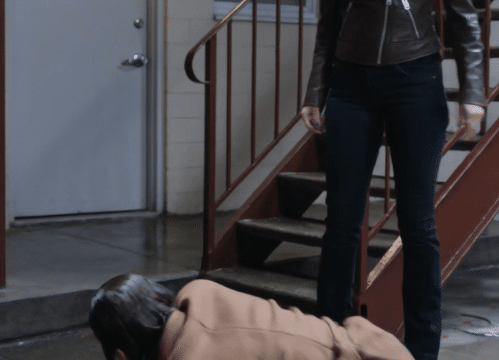
The landlord’s voice cut through the storm just before his boot struck the woman in the back.
She fell hard against the concrete steps, her hands reaching instinctively for the tiny clothes scattered around her. Her old suitcase tipped onto its side, spilling everything she owned into the muddy water. A faded pink sweater floated near the bottom stair. One small sock disappeared beneath a shallow stream of rain.
For a moment, she could not breathe.
Her name was Emily Carter, and at thirty-four, she had reached a point in life she had once believed could happen only to other people. She had no home, almost no money, and a seven-year-old daughter who believed her mother could fix anything.
Emily curled around the wet clothes, her face twisted in pain. When her elbow struck the edge of the concrete step, a thin red mark appeared against her skin. She barely noticed it.
All she could see was the little yellow dress lying in a puddle.
It was the dress her daughter, Lily, had worn on her last birthday.
“Please,” Emily whispered, struggling to push herself upright. Rain ran down her face, mixing with tears she no longer had the energy to hide. “My child has nowhere to sleep.”
The man standing above her, landlord Richard Harlan, looked at the suitcase as if it contained garbage that had offended him personally.
“Trash,” he said. “Not under my roof.”
Emily stared at him.
She had expected anger. She had expected threats, perhaps another demand for money she did not have. But the word trash struck somewhere deeper than the kick.
For three years, she had rented a cramped second-floor apartment in Harlan’s deteriorating building on the outskirts of Cleveland. The hallway light flickered, the staircase groaned beneath every footstep, and water crept under her kitchen window whenever the weather turned bad. Still, it had been a home.
There had been a bed for Lily, a little table where they ate breakfast, and a windowsill where Emily kept a dying basil plant because her daughter liked to pretend they had a garden.
Now the landlord had thrown them out.
And he had not even given her the dignity of letting her gather their belongings in peace.
Harlan stepped closer.
Emily tried to shield the clothes with her body, but he kicked her again, then once more as she struggled to pull the suitcase toward her. The watching tenants gasped. One woman covered her mouth. A man on the landing took a step backward.
Nobody moved to help.
“Take your mess into the rain,” Harlan repeated.
Emily pressed her lips together to keep from crying out. Her entire body trembled, partly from the cold and partly from the humiliation of being watched as though she were a spectacle rather than a human being.
She had called the housing office that morning. She had left messages with a legal aid clinic. She had even asked Harlan to give her one more night so she could find somewhere safe for Lily to sleep.
He had answered by changing the lock.
But Harlan did not know one important thing about Emily.
She had not been waiting for a miracle.
She had been waiting for someone to arrive with the truth.
And when the black car came screaming to a stop at the curb, Harlan was about to discover that the woman in the rain was not as powerless as he believed.
Act II
Three weeks earlier, Emily had still believed she could save her apartment.
She worked mornings at a neighborhood diner, wiping tables, carrying plates, and smiling at customers who rarely looked at her long enough to notice how tired she was. In the afternoons, she cleaned offices downtown. On good weeks, the two jobs covered rent, groceries, and Lily’s school expenses.
On bad weeks, she chose which bill could wait.
Then the diner cut her hours.
A month later, Lily developed a stubborn respiratory infection, and Emily missed several cleaning shifts to stay home with her. The medical bills were manageable at first, but the lost wages were not. By the time she returned to work full-time, Harlan had already added late fees to her rent.
Emily paid what she could.
He refused to accept it.
“You owe the full amount,” he told her when she approached him in the hallway with an envelope of cash. “I’m not running a charity.”
“I’m not asking you to,” Emily replied. “I’m asking you to let me catch up.”
“Then catch up.”
She had walked away with the envelope still in her hand.
The following week, a paper appeared taped to her door. It warned that she needed to vacate the apartment immediately. There was no court date, no official judgment, and no clear explanation of what legal process Harlan claimed to have followed.
Emily photographed the paper and called a local tenant hotline.
The woman who answered listened carefully, then asked Emily to read the notice aloud.
When Emily finished, the woman went quiet.
“Do you have a copy of your lease?” she asked.
“Yes.”
“Your rent receipts?”
“Most of them.”
“Keep everything. Do not throw anything away. And please, do not assume that a letter from your landlord means you have legally lost your home.”
Emily wanted to believe her.
But Harlan had already begun acting as if the building belonged to him in every possible sense. He walked through the hallways shouting at tenants, threatened to remove belongings from apartments, and reminded everyone that he could make their lives difficult whenever he wanted.
Some residents had lived there for years. They knew the pipes leaked, the heating failed, and the back staircase had a loose railing. They also knew that complaining could lead to a rent increase, a threat, or a sudden inspection.
So they kept their heads down.
Emily tried to do the same.
She packed Lily’s clothes into an old suitcase, folded the child’s drawings into a plastic grocery bag, and placed their important documents inside a waterproof envelope. She told her daughter that they might need to stay somewhere else for a little while.
“Did I do something bad?” Lily asked.
Emily knelt in front of her.
“No, sweetheart. Not one thing.”
“Then why do we have to leave?”
Emily opened her mouth, but the answer would not come.
How could she explain that sometimes adults used power as if it were permission to hurt people? How could she tell a seven-year-old that doing everything right did not always protect a family from someone determined to take advantage of them?
Instead, she hugged Lily and promised they would find a safe place.
That night, Emily contacted every shelter she could reach. One was full. Another could not accommodate them until the following week. A third offered a temporary bed, but only if Emily could arrive before its evening intake deadline.
She arranged for Lily to stay with a trusted friend while she tried to secure their belongings and finish the paperwork.
That was the plan.
Then, on the morning Harlan threw her out, Emily discovered that the lock had been changed and her suitcase had been left outside.
She had no time to argue. Rain was already pouring across the parking lot, and the building’s residents had begun gathering near the entrance.
Harlan wanted her gone before anyone could ask questions.
He had no idea that someone had already begun asking them.
And the first question had not come from a tenant.
It had come from a lawyer who had spent years investigating landlords who believed poor people could be frightened into surrendering their rights.
Act III
The black sedan braked so sharply that water sprayed from its tires across the curb.
The driver’s door opened.
A woman in a dark suit stepped into the rain, followed by a younger assistant carrying a leather document case. She was fifty-seven, with silver beginning to show at her temples and the composed expression of someone who had learned not to confuse loudness with authority.
Her name was Margaret Ellis.
To Harlan, she looked like another inconvenient stranger.
He turned toward her, already preparing to tell her to keep moving.
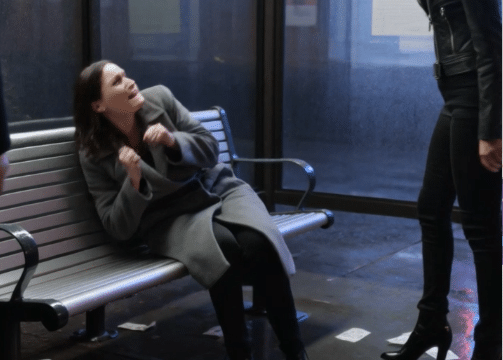
Then Margaret saw Emily on the concrete.
She saw the open suitcase, the clothes soaking in dirty water, and the woman trying to hold herself together while the tenants watched from the doorway.
Margaret’s expression changed.
She did not ask Emily why she had been thrown out. She did not ask whether she had paid her rent. She did not demand that the injured woman explain herself while standing in the rain.
She simply moved between Emily and Harlan.
Her assistant hurried to Emily’s side, holding an umbrella over her while Margaret positioned herself directly in the landlord’s path.
“Don’t touch her again,” Margaret said.
Harlan gave a short, disbelieving laugh.
“And who exactly are you supposed to be?”
Margaret ignored the question.
“Show me the eviction notice.”
For the first time that morning, Harlan seemed uncertain.
“What?”
“The eviction notice. The court order. Whatever document you believe gives you the authority to put this woman on the street.” Margaret held out one hand. “Show it to me.”
Harlan glanced at the tenants. He was accustomed to an audience, but he was not accustomed to one that might be asked to testify.
“This is my property,” he said. “I decide who stays here.”
“You own a building,” Margaret replied. “That does not mean you can ignore the law.”
His face hardened.
“You people always show up after the damage is done. She didn’t pay. I gave her plenty of chances.”
Margaret looked at Emily, who was now sitting against the bottom stair with the umbrella above her head. The assistant had begun gathering the least-soaked clothes into a clean canvas bag.
Then Margaret looked back at Harlan.
“Show me the notice.”
Harlan opened his mouth.
Nothing came out.
The silence was brief, but it changed the atmosphere around them. A tenant standing near the entrance lowered her hand from her mouth. The man on the landing leaned forward. Even the rain seemed less loud as everyone waited for Harlan to produce a document he had been claiming existed.
He reached into his jacket, pulled out a folded sheet of paper, and thrust it toward Margaret.
She read it once.
Then again.
Her expression became colder.
“This is not a court order,” she said.
“It tells her to leave.”
“It tells her that you want her to leave. Those are not the same thing.”
Harlan snatched the paper back.
“You don’t know anything about this situation.”
“Actually, Mr. Harlan, I know quite a lot.”
The landlord stopped moving.
Margaret opened the leather case her assistant had brought. Inside were copies of documents, photographs, and a thick folder marked with the building’s address.
“I represent a nonprofit housing organization that has been reviewing complaints about this property,” she said. “We have rent receipts, maintenance requests, tenant statements, and records of notices issued to residents.”
Harlan’s face lost some of its color.
For months, he had believed the building’s isolation protected him. The tenants were poor, exhausted, and afraid of losing what little they had. Most could not afford private attorneys. Some did not know where to report unsafe conditions. Others had tried, only to be told that the process would take time.
He had mistaken their vulnerability for silence.
And he had mistaken silence for consent.
Margaret closed the folder.
“Now,” she said, “I want to know why this woman was removed from her home without the proper legal process.”
Harlan looked at Emily.
She was still trembling beneath the umbrella, one hand wrapped around Lily’s little yellow dress. Her face was pale, and every movement seemed to hurt. But for the first time since he had kicked her down the stairs, she was no longer looking at him as though he had the final word.
He hated that look.
He hated it because it meant someone else had entered the conversation.
Someone who could make him answer.
But Margaret had not come to the building merely because a complaint had crossed her desk.
She had come because one of the documents in her folder suggested that Harlan’s treatment of Emily was part of something much larger.
And the name on that document was one he had spent years trying to keep out of sight.
Act IV
“Call the police,” Margaret told her assistant. “And get an ambulance here.”
Harlan immediately stepped forward.
“Now hold on. Nobody needs to make this into some kind of criminal matter.”
Margaret did not move.
“You kicked an injured woman while she was collecting her child’s belongings. You did it in front of witnesses. You can explain that to the officers when they arrive.”
“She was trespassing.”
“She was a tenant whose belongings were placed outside without a lawful eviction process.”
“She owes me money.”
“Then you pursue the money through the proper legal channels.”
Every sentence seemed to remove another piece of the authority Harlan had worn like armor.
He glanced toward the tenants, searching for a familiar expression of fear. He expected them to look away, to pretend they had seen nothing, to leave him alone with his version of events.
Instead, the woman near the doorway spoke.
“I saw him kick her.”
Harlan turned sharply.
“You keep out of this.”
The woman swallowed, but she did not retreat.
“I saw it.”
The man on the landing followed.
“So did I.”
Then another tenant stepped into view. An older resident who had rented a small apartment in the building for nearly a decade slowly descended the rusted staircase, holding the railing with one hand.
“I’ve been waiting for someone to do something about this place,” he said. “I didn’t think anyone would.”
Margaret nodded to each witness, making no promises she could not keep. Her assistant recorded their names and contact information while the rain continued to beat against the pavement.
Emily watched them, stunned.
These were the same people who had stood frozen while Harlan kicked her. She could not blame them entirely; fear had a way of making even decent people feel powerless. But their voices, arriving one by one, made the space around her feel less empty.
Then Margaret returned to the folder.
“There is another issue,” she said.
Harlan’s jaw tightened.
“Here we go.”
Margaret removed a document bearing the signature of a company that had purchased the building’s mortgage after the original lender sold its distressed loans. Attached to it was a record of complaints and correspondence concerning the property’s management.
“This building is part of a portfolio currently under review for a housing preservation project,” she explained. “The organization I represent has been negotiating to acquire several properties in this area, including this one, so the residents can remain housed while the buildings are repaired.”
Harlan gave a mocking smile.
“You think some charity is going to take this place off my hands?”
“Not if the title, debt, and management records reveal serious irregularities.”
The smile disappeared.
Margaret continued carefully.
“Several tenants reported being pressured to leave before their leases expired. Others reported receiving charges that did not match their rental agreements. We also found evidence that some payments were recorded differently in the management ledgers than they appeared on tenant receipts.”
Harlan shook his head.
“That’s accounting. You wouldn’t understand.”
“Perhaps you can explain it to the investigators.”
She placed another page on top of the folder.
At the bottom was a signature Harlan recognized immediately.
His own.
The document was a management certification he had signed years earlier, confirming that rent payments, tenant notices, and maintenance records were being handled according to the applicable requirements. The signature itself was genuine. The problem was what the records suggested had happened afterward.
Margaret did not accuse him of a crime she could not yet prove. She did not need to.
She only needed to make clear that the records were preserved, the complaints were documented, and the people he had dismissed as powerless now had representation.
“You came here to frighten a woman into disappearing,” she said. “But you have just given several witnesses a reason to speak.”
Harlan looked at the folder as if it might somehow vanish if he stared hard enough.
Then he looked at Emily.
“You planned this,” he said.
Emily lifted her head.
For the first time, she answered him without lowering her eyes.
“No. I planned to keep my daughter safe.”
The words were quiet, but they carried across the steps.
Harlan’s face twisted with anger.
“You think this changes anything? You still can’t pay what you owe.”
Emily held the little yellow dress against her chest.
“I paid what I could. I asked you to give me time. You changed my lock and threw my child’s clothes into the rain.”
“You should have followed the rules.”
Margaret stepped forward.
“And you should have followed the law.”
Sirens sounded faintly at the end of the street.
Harlan glanced toward the road. For the first time, he seemed to understand that the situation was no longer something he could control by raising his voice. The witnesses were ready to speak. The lawyer had documents. The police were coming. And the story he had told himself—that nobody would challenge him, that nobody would care—was collapsing in front of the entire building.
Still, he reached for one final defense.
He turned toward Margaret, forcing a smile that looked painful on his face.
“You have no idea who you’re dealing with.”
Margaret closed the folder.
“I know exactly who I’m dealing with.”
Then she looked toward the entrance, where the residents had gathered in silence.
“And now,” she said, “so do they.”
Act V
The police arrived minutes later.
Harlan tried to regain control by talking over everyone. He described Emily as an irresponsible tenant, accused Margaret of interfering with his business, and insisted that the entire incident had been exaggerated.
But his story had too many witnesses.
The tenants gave their statements. Margaret provided the documents she had brought, along with the information her organization had already collected. Emily was examined by paramedics, who helped her to her feet and recommended that she be taken to a hospital for evaluation.
As the officers spoke with Harlan, his voice grew louder and his explanations grew thinner.
He was not led away in some triumphant cinematic parade, and nobody declared that his entire life had been destroyed on the spot. Real consequences did not always arrive in a single dramatic moment.
Instead, the process began.
The assault was documented. Witness statements were collected. The questionable eviction was referred for legal review, and the broader complaints about the building’s management were added to the investigation. Harlan was left standing beneath the flickering hallway light, facing questions he could no longer silence with a threat.
Margaret turned away from him.
Her first concern was Emily.
“Can you tell me where your daughter is?” she asked gently.
“With a friend,” Emily replied. “She’s safe. She thinks I’m finding us somewhere to stay.”
“Good. We are going to make sure you have somewhere to sleep tonight.”
Emily looked down at the ruined suitcase.
“I don’t have money for a hotel.”
“You don’t have to solve everything in the next five minutes.”
The kindness of the sentence nearly broke her.
For days, Emily had been forcing herself to think only about the next task: the next phone call, the next shift, the next payment, the next place where she might be allowed to rest. She had been so busy trying not to fall apart that she had forgotten what it felt like when another person offered help without making her beg for it.
Margaret’s assistant arranged temporary accommodation through a local housing service. Another staff member contacted Emily’s friend to explain that they would help with transportation and the arrangements for Lily.
Before they left, Emily crouched beside the suitcase.
The clothes were wet and stained. One sleeve had torn. The yellow dress was muddy, and the little pink sweater had soaked through.
Emily tried to fold them carefully anyway.
Margaret knelt beside her.
“Those can be replaced,” she said.
Emily shook her head.
“Not all of them.”
She lifted the yellow dress and smoothed its skirt with shaking fingers.
“Lily wore this when she turned seven. She picked it herself. She said it made her look like a princess.”
Margaret did not tell her that the dress was only a piece of fabric. She did not remind her that there were more important things to worry about.
She understood.
Sometimes the objects people fought to save were not valuable because of what they cost. They were valuable because they held proof of a life that had not always been defined by fear.
Emily placed the dress in the clean canvas bag.
Then she stood, leaning on the assistant’s arm, and looked once more at the building.
For three years, she had believed that keeping a roof over Lily’s head was the same as protecting her. Now she understood that a home was not simply a room with a locked door. It was a place where a child could sleep without wondering whether tomorrow would bring another threat.
She would not be able to give Lily every answer that night.
But she could tell her the truth.
They were leaving because a man had treated them cruelly, not because they deserved it. They were frightened, but they were not alone. And what had happened on those concrete steps would not be erased simply because Harlan wanted everyone to forget it.
In the weeks that followed, the legal fight moved forward.
Emily’s account of the assault was supported by witness statements. The eviction process came under scrutiny, and the records concerning tenant payments and management practices were examined more closely. The housing organization continued its effort to protect residents from unlawful displacement while the relevant authorities reviewed the allegations.
The outcome was not instant, and the paperwork did not erase the pain of that morning.
But the building changed.
Tenants who had barely exchanged greetings began meeting to discuss their rights and document problems they had previously endured in silence. Maintenance complaints were gathered into a single record. Residents who had assumed they were individually helpless discovered that their experiences, when brought together, were much harder to dismiss.
And Emily found a temporary apartment where Lily could sleep in a real bed.
The first night there, Emily sat beside her daughter’s mattress and watched her breathe. Lily had asked whether they could still keep the little yellow dress, even though it was stained.
“Of course,” Emily told her.
“Even if it’s ruined?”
Emily brushed a strand of hair away from her daughter’s forehead.
“Especially then.”
She washed the dress by hand the next morning. Some of the mud came out. Some did not. She hung it near the window to dry, and Lily declared that it looked even more special because it had survived a terrible day.
Emily smiled, but after her daughter left the room, she pressed the dress against her face and cried.
Not because everything was fixed.
Because, for the first time in weeks, she could finally let herself feel how frightened she had been.
Months later, when the building’s residents gathered for a meeting about the ongoing housing case, Emily returned to give her statement. She wore a clean brown coat, and her shoes were dry. Lily waited with a trusted friend while Emily stood before the tenants and described what had happened.
Her voice shook at first.
Then it steadied.
She spoke about the changed lock, the notice that was not a court order, the suitcase in the rain, and the moment she had begged a man to remember that her child needed somewhere to sleep.
She did not exaggerate. She did not ask anyone to hate Harlan.
She simply told the truth.
When she finished, the room remained quiet for a moment. Then the older tenant who had come down the staircase that morning rose from his chair.
“I saw what he did,” he said. “And I’m not staying quiet about it anymore.”
One by one, others stood with him.
Emily looked around the room, remembering the faces that had once watched from the hallway while she lay on the concrete. Some of those people had been too afraid to move then. Now they were willing to speak.
That was the part Harlan had never understood.
He had believed that power meant making people afraid to challenge him. He had believed that poverty made a person disposable, that a woman with a wet suitcase and a frightened child could be pushed out of sight and forgotten.
But the morning he kicked Emily Carter into the rain, he made one mistake he could not take back.
He turned a private injustice into a public truth.
And when Margaret Ellis stepped between him and the woman he had tried to erase, she did more than demand a missing document. She gave Emily a chance to be heard—and gave the watching tenants a reason to believe their voices mattered, too.
Harlan’s final words that morning had been a question.
“What notice?”
For months, he had expected that question to make everyone doubt Emily.
Instead, it became the moment people began asking questions of him.
And this time, he was the one who had to answer.