Act I
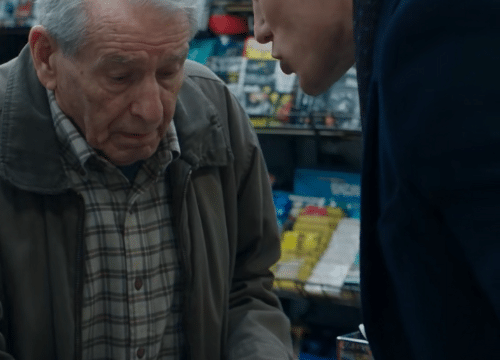
“Move that private.”
Colonel Richard Hayes pointed toward a young soldier lying on a stretcher in Bay Three of the military hospital’s emergency wing.
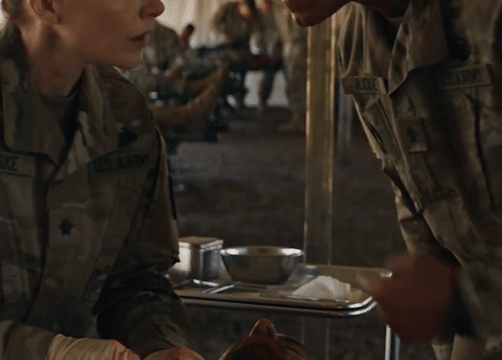
The soldier’s breathing was unstable. Medical monitors beeped rapidly beside him, and a nurse was working to keep his condition from deteriorating.
But Hayes wasn’t looking at the patient.
He was looking at his own aide, who stood nearby with a relatively minor injury.
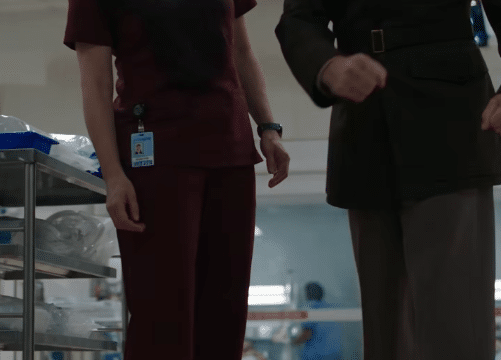
Across the treatment bay, Dr. Katherine Morgan, a thirty-four-year-old military physician, continued checking the private’s condition.
“He’s unstable. Your aide can wait.”
Hayes stared at her.
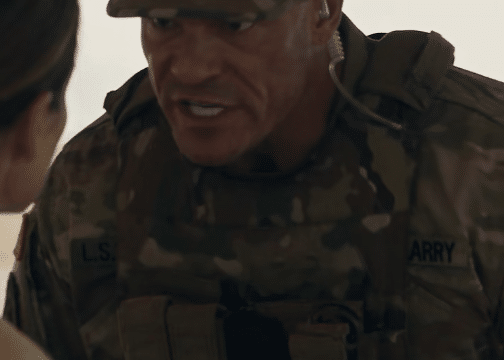
He was forty-seven, rigid in his military bearing, and accustomed to having his orders followed without discussion. His combat uniform displayed the rank of a full Colonel, and he expected everyone in the emergency wing to recognize what that meant.
Katherine didn’t argue.
She simply returned her attention to the patient.
That made Hayes angrier.
He grabbed a cup from a nearby medical tray and threw its diluted cleaning water directly into her face.
The cup hit the floor.
Before anyone could react, he slapped her hard across the cheek.
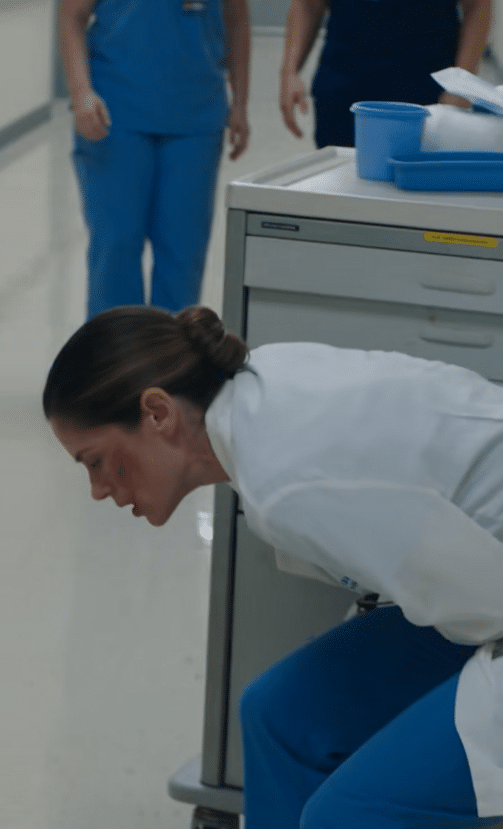
Her head turned with the impact. Her cheek reddened and began swelling, and a faint trace of blood appeared at the corner of her mouth.
Then he drove a hard kick into her stomach.
Katherine folded forward and dropped beside the treatment cart, struggling to catch her breath.
The nurses froze.
A medic turned in disbelief.
Hayes looked down at the doctor as though she had committed some unforgivable offense.
“You don’t tell a Colonel to wait.”
He expected an apology.
He expected her to understand that challenging him had consequences.
Instead, Katherine slowly steadied herself and wiped the faint blood from her mouth.
Her eyes moved back toward the unstable patient.
Then she reached for her phone.
Her voice was quiet.
“Emergency Wing. Bay Three. Two minutes.”
Hayes gave a contemptuous laugh.
“Call whoever trained you.”
He had no idea that someone was already on the way.
And when the emergency doors opened, the Colonel would discover that the doctor he had just attacked was connected to a level of authority he had never imagined.
Act II
Dr. Katherine Morgan had spent most of her adult life learning how to make decisions when other people were panicking.
At thirty-four, she had become a respected military physician with a reputation for staying composed under extraordinary pressure.
She wasn’t interested in prestige.
She didn’t enjoy being introduced at ceremonies or having senior officers recognize her name.
Her work mattered more than the attention surrounding it.
In the emergency wing, she was simply Doctor Morgan.
She treated soldiers according to their medical needs, not their rank, connections, or personal importance.
That principle had been tested countless times.
An injured private might need immediate intervention while a senior officer could safely wait. A soldier with a seemingly minor wound might deteriorate without warning, while someone with a more dramatic injury might be medically stable.
Katherine understood those distinctions.
She also understood that a physician who allowed intimidation to determine triage could put lives at risk.
That afternoon, the emergency wing was unusually crowded.
Stretchers lined the corridor. Nurses moved between treatment bays, and medics delivered new patients while doctors coordinated assessments.
The private in Bay Three had arrived in unstable condition.
His breathing required close monitoring, and Katherine had already directed staff to prioritize him.
Colonel Hayes arrived shortly afterward with his aide.
The aide had an injury that required treatment, but there was no immediate threat to his life.
Katherine explained that he would have to wait.
Hayes refused to accept the decision.
He had spent years in an environment where people moved when he entered a room. His rank had become part of how he understood the world.
He expected it to matter everywhere.
Even here.
What he didn’t understand was that the emergency wing operated under a different principle.
Medical urgency came first.
Katherine had no intention of changing that principle to satisfy his ego.
Her father had taught her something similar long before she entered military medicine.
He had told her that leadership was not measured by how quickly people obeyed you, but by what happened to the people depending on you.
Katherine had carried those words throughout her career.
She rarely mentioned her father.
Most colleagues knew little about her family, and she had deliberately kept that part of her life separate from her professional identity.
She wanted to be respected for her medical judgment.
Not for a famous surname.
But the phone call she had just made was not an attempt to use her family name to win an argument.
It was a request for someone who needed to see what had happened.
And that person was already approaching the hospital.
Act III
Hayes adjusted his uniform and looked around the emergency bay.
He expected the staff to return to normal once the confrontation ended.
Instead, several nurses were staring at him.
One had moved closer to Katherine.
Another was quietly checking the condition of the private on the stretcher.
Nobody was congratulating the Colonel.
Nobody was treating his behavior as an understandable response to disrespect.
The room had become painfully quiet.
Katherine remained beside the treatment cart, one hand briefly resting against her stomach as she regained her breathing.
Her cheek was swollen.
The faint blood trace at her mouth was visible.
But she wasn’t crying.
She wasn’t shouting.
She wasn’t trying to humiliate Hayes in front of his aide.
She was looking at the patient.
That composure seemed to irritate him even more.
He had expected the assault to settle the matter.
Instead, it had exposed him.
A nurse quietly picked up the scattered medical supplies.
The medic beside the private continued monitoring the patient’s condition.
Katherine checked that the immediate care plan was being followed, then looked toward the emergency doors.
She knew the person she had contacted would understand the urgency of her message.
She had given only the location and the time.
Nothing more was necessary.
Hayes noticed her calm expression.
“Who exactly are you expecting?” he seemed ready to ask, but the words never came.
He had already dismissed her call.
He had already told her to contact whoever trained her.
Now he was beginning to wonder why she looked so certain.
The emergency wing’s double doors stood at the far end of the corridor.
Beyond them, footsteps approached.
A nurse glanced toward the entrance.
Then another.
The doors opened.
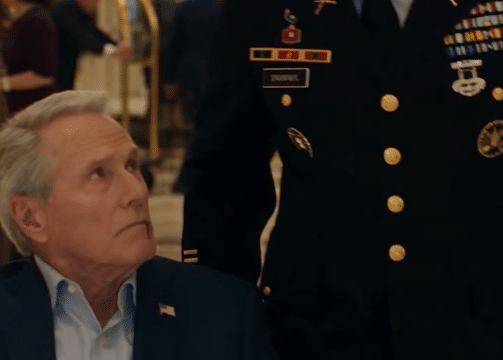
A senior military figure stepped inside.
The first thing visible was the uniform.
Four stars rested on the shoulders.
Dense decorations covered the chest.
Polished boots crossed the bright hospital floor.
The face remained outside the frame.
But the authority was unmistakable.
Hayes stopped moving.
Act IV
The senior general walked into the emergency wing.
Two personnel followed at a respectful distance.
The nurses and medics immediately recognized that this was not an ordinary visit.
The four-star insignia was visible beneath the bright hospital lights.
Hayes straightened instinctively.
He knew what those stars meant.
He had spent his career working within a chain of command where very few people held that level of authority.
But he couldn’t understand why the senior general was heading toward Bay Three.
Then he noticed Katherine.
She was standing beside the treatment cart, her white coat slightly disarranged and her cheek visibly swollen.
She looked toward the approaching figure without surprise.
The general continued forward.
Hayes followed his movement with his eyes.
The senior officer wasn’t approaching the hospital administrator.
He wasn’t asking to see the command staff.
He was walking directly toward Katherine.
The Colonel’s expression changed.
He looked at the doctor again.
Then at the general’s decorated shoulders.
Then back at her.
Something about the scene suddenly felt familiar.
He remembered that senior officers sometimes had family members serving in demanding professional roles.
He remembered seeing photographs of the Four-Star General at official events.
But he had never paid attention to the people standing beside him.
Now he was beginning to understand why Katherine had not seemed intimidated by his rank.
Why she had remained so calm.
Why she had made a phone call with such certainty.
The general stopped near Bay Three.
Katherine stood beside him.
Neither of them needed to make a public announcement.
The connection was becoming obvious.
Hayes looked toward the swollen cheek.
Then at the general’s four-star shoulders.
The reality settled over him.
The doctor he had slapped was the daughter of the very senior commander now standing in front of him.
The aide beside Hayes had gone completely silent.
The nurses watched without moving.
Even the hospital’s constant background noise seemed distant.
Hayes had spent the afternoon insisting that a Colonel should never be told to wait.
Now he was facing a man whose rank stood far above his own.
But the worst part was not the difference in rank.
It was the realization that he had assaulted the man’s daughter while she was trying to save a soldier’s life.
The Colonel’s confidence began to collapse.
He opened his mouth.
Then closed it again.
He could no longer find the words that had come so easily only minutes earlier.
Act V
The four-star general remained beside Katherine.
He looked toward the treatment bay.
The private was still receiving care.
A nurse was monitoring his condition, and the medical team had continued working despite the confrontation.
Katherine glanced at the patient before looking back toward her father.
She didn’t ask him to intervene on her behalf.
She didn’t point toward Hayes or demand an apology.
She simply remained where she was, focused on the work she had come to do.
That was what made the moment so powerful.
She had never needed to announce her family connection.
She had never needed to use it to justify her medical decision.
The private had been unstable.
The aide had been stable.
The order of treatment had been clear.
And nothing about Hayes’s rank changed that.
The Colonel looked around the emergency wing.
He could see the witnesses.
He could see the scattered supplies.
He could see Katherine’s injuries.
He could see the four-star general standing beside her.
There was no way to turn the incident into a misunderstanding.
His earlier words returned to him.
“Move that private.”
“You don’t tell a Colonel to wait.”
He had treated the emergency wing as though it existed to serve his personal authority.
Now he was discovering that the people working there had responsibilities that outranked his impatience.
Katherine’s father remained composed.
He did not need to threaten Hayes.
The hospital staff had witnessed the assault, and the medical consequences were visible.
A formal report would follow. The witnesses would be interviewed, the incident documented, and the appropriate command authorities would determine the consequences.
Hayes could no longer control the story by issuing an order.
He looked at the general again.
His voice came out much quieter than before.
“Sir… why are you here?”
The question revealed everything.
Only minutes earlier, he had believed that his rank entitled him to control every person in the room.
Now he was desperately trying to understand why a Four-Star General had personally appeared in the emergency wing.
Katherine turned back toward Bay Three.
The patient still needed her.
And that, more than anything, exposed the difference between the two officers.
One had demanded priority because of his rank.
The other had risked everything to protect the life of someone who had none.
Hayes had tried to teach a military doctor that rank mattered more than responsibility. In the end, the entire emergency wing witnessed the opposite.