Act I
“Scrub harder. The machine’s broken.”
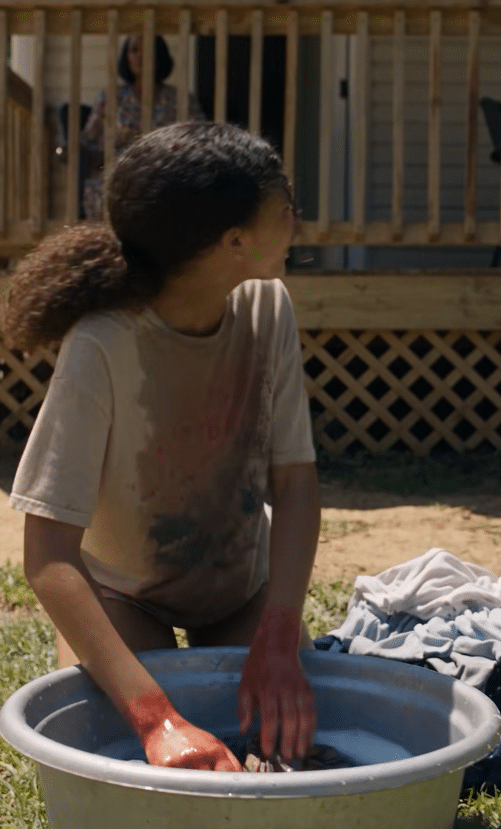
Nia knelt beside a giant wash basin in the afternoon heat, her knees pressed against the hard ground as she worked through another mountain of laundry. Soapy water sloshed over the rim. Damp strands of curly black hair clung to her forehead, and her old T-shirt stuck to her back.
On the porch, her stepmother sat comfortably in a chair, sipping iced tea.
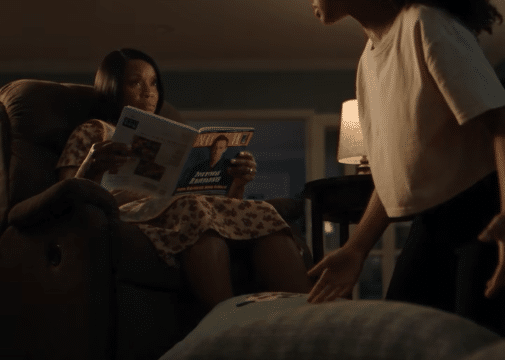
She wore a floral dress, her glossy black bob perfectly arranged, as though the afternoon had been reserved for relaxation rather than the endless work taking place a few feet away. Every so often, she glanced toward the basin and issued another instruction, supervising Nia with the casual authority of someone who believed the girl had no right to complain.
Nia plunged another shirt into the water.
Her hands were red and chapped from weeks of detergent, scrubbing, rinsing, and twisting wet fabric until her fingers ached. The pile seemed endless. Every time she finished one batch, another appeared.
She had been told the washing machine was broken.
At first, she had believed it.
The explanation had sounded ordinary enough: appliances failed, repairs cost money, and families sometimes had to manage without conveniences. But days had turned into weeks, and weeks had become three months. The washing machine remained untouched while Nia continued washing everything by hand.
She looked at the clothes piled beside her.
Then she looked toward the laundry room.
The machine was still there. No one had hauled it away. No repair technician had declared it beyond saving. It simply remained unused, while Nia’s hands grew more irritated with every passing day.
She tried to keep scrubbing.
But the frustration she’d swallowed for months finally broke through.
“It’s been ‘broken’ for three months!”
Her stepmother didn’t look particularly concerned.
She took another sip of iced tea, as if Nia had complained about the weather rather than three months of exhausting, unnecessary work.
The girl lowered the shirt into the basin.
Her fingers hurt. The soap stung the damaged skin around her knuckles, and even the simple act of gripping the fabric had become uncomfortable. Still, the laundry waited, and she knew what would happen if she stopped before the pile was finished.
Her stepmother leaned forward slightly.
“Repairs cost money. Your hands are free.”
The words were delivered with almost effortless practicality.
To her, the issue was settled. A repair bill could be avoided, and Nia’s labor could take its place. There was no need to reconsider the arrangement, no reason to question whether a fourteen-year-old should spend hours hand-washing an entire household’s clothes.
Nia stared at her.
“My hands are bleeding!”
Her stepmother glanced toward the basin.
“Then wear gloves. Problem solved.”
Nia looked down at her hands again.
The answer was so dismissive that she couldn’t immediately respond. She had described the pain, and her stepmother had treated it like a minor inconvenience that could be eliminated with a cheap accessory.
No one had asked why the machine had remained broken for so long.
No one had questioned whether three months of this work was necessary.
And Nia had begun to fear that the problem wasn’t the washing machine at all.
Then the sound of a vehicle approaching the house threatened to end the arrangement her stepmother had relied on for months.
Act II
Nia returned to the basin.
She didn’t have the luxury of arguing for long. The clothes still needed washing, the afternoon was moving on, and the woman on the porch had made her expectations clear.
So Nia bent over the water again.
She worked through another shirt, pressing the fabric against itself and scrubbing at the stains. Her fingers moved carefully where the skin had become most irritated, but careful movements only made the work slower.
She could hear the faint hum of the neighborhood beyond the backyard fence. Somewhere nearby, someone was mowing a lawn. The ordinary sounds of an American afternoon made the scene feel almost painfully normal.
That was what made it so difficult to explain.
There was no dramatic emergency. No disaster had destroyed the laundry room. No visible damage had left the washing machine unusable. There was simply a girl on her knees beside a basin, doing work that a functioning appliance should have handled, while an adult relaxed nearby.
Nia had learned to stop asking how much longer it would continue.
Three months was already too long.
She had tried to tell herself that the situation was temporary, that perhaps the money for repairs would become available soon, or that her stepmother would eventually decide the arrangement had gone far enough. But every week brought more laundry, and every objection brought another reminder that the machine was supposedly broken.
The explanation had become part of the routine.
The girl was expected to accept it.
Her stepmother, meanwhile, appeared entirely comfortable with the arrangement. The iced tea rested in her hand, and her posture remained relaxed as she watched Nia work. She didn’t seem to notice the way the girl flexed her fingers between loads or how carefully she avoided pressing the most irritated areas against the rough fabric.
Nia tried to concentrate on finishing the shirt.
Then she heard a vehicle approaching.
The sound grew louder before a truck came to a stop outside. Footsteps followed, and Marcus appeared with a repairman beside him.
Marcus wore a white shirt, his shoulder-length dreadlocks resting against his shoulders. He had called for professional help himself, apparently deciding that the washing machine’s supposed failure had gone on long enough.
His expression changed when he saw the basin.
The laundry filled nearly the entire space beside Nia. The girl was still kneeling, her hands submerged in soapy water, while the machine sat unused inside the laundry room.
Marcus looked at his daughter.
Then he looked toward the porch.
For three months, Nia had been told that the machine couldn’t be used. Now Marcus had brought someone who could determine whether that was true.
He didn’t need to make a scene. The repairman’s presence was enough to turn an excuse into a question that could finally be answered.
Marcus stepped toward the laundry room.
“I called a repairman. No daughter of mine washes like it’s 1950.”
His words were firm, but he kept his voice controlled.
On the porch, his wife abruptly stood up.
For the first time that afternoon, her composure slipped. The iced tea was no longer the center of her attention. She looked toward the laundry room, where the repairman was preparing to examine the machine.
“Marcus, don’t—”
She stopped herself, but the interruption had already drawn attention.
Marcus turned slightly toward her.
The repairman continued toward the machine.
And Nia, still beside the basin, watched as the first person in months arrived who might finally explain why the washing machine had never been repaired.
The truth would not require an expensive diagnostic report. It would take only a plug and a functioning machine.
Act III
The laundry room was small, practical, and familiar.
The washing machine stood against the wall, surrounded by the ordinary clutter of a busy household. Devon, the repairman, crouched in front of it and began checking the setup.
He didn’t rush.
He examined the machine, looked over its connections, and reached toward the power supply. His movements were professional and unhurried, the practiced routine of someone accustomed to being called when an appliance refused to work.
Nia remained nearby, watching from the doorway.
Marcus stood behind Devon, waiting for an explanation. His wife hovered close enough to hear every word, her earlier confidence giving way to visible unease.
For three months, the machine had been described as broken.
Three months of clothes scrubbed by hand. Three months of detergent irritating Nia’s skin. Three months of telling the girl that repairs were too expensive, while leaving her to do the work herself.
Devon finished his initial check.
Then he pressed the start button.
The machine came to life.
A steady hum filled the laundry room.
For a moment, nobody spoke.
The sound was ordinary. There was no dramatic burst of activity, no sudden revelation written across a screen. The motor simply ran, doing exactly what a working washing machine was supposed to do.
Devon watched it operate.
Then he looked toward Marcus and Nia.
“Machine works fine. Somebody just… unplugged it.”
The words were plain and technical.
There was no accusation in his tone, no attempt to dramatize the finding. He had checked the machine, restored its power, and confirmed that it worked.
The problem had not been what the family had been told it was.
Marcus turned toward his wife.
Nia looked at the machine, listening to the steady hum. It was almost absurdly simple. The appliance that had supposedly been broken for three months was now running in front of them, while the basin outside remained full of clothes she had been forced to wash by hand.
Her stepmother stood still.
The repairman’s explanation left little room for the story that had governed Nia’s days. If the machine worked normally, then the months of manual washing had not been necessary because the appliance was beyond repair.
The plug had simply been disconnected.
Marcus looked back at Devon, as if hoping for another detail that might explain how such a basic problem had been mistaken for a broken machine. But Devon had already provided the essential finding.
No failed motor.
No costly repair.
No complicated mechanical fault.
The machine worked.
Marcus’s face tightened as the implications settled in. He had called the repairman expecting to solve an ordinary household problem. Instead, he had discovered that his daughter had spent three months doing exhausting work because a machine had been left without power.
He looked toward the doorway.
Nia’s hands were still red and chapped.
The sight made the machine’s steady hum feel almost unbearable.
Her stepmother shifted her weight.
The woman who had sat comfortably on the porch, sipping iced tea and directing Nia to scrub harder, now seemed unable to find a comfortable place to stand. Her eyes moved from the machine to Marcus, then toward the power connection Devon had checked.
The truth was no longer hidden behind an explanation about repair costs.
It was right there in the laundry room.
Marcus’s next question would make clear that he understood exactly what the discovery meant for his daughter.
Act IV
“Three months, Nia washed by hand. Because somebody unplugged it?”
Marcus spoke quietly.
The question was not really for Devon. The repairman had already explained what he found. The machine worked, and the plug had been disconnected.
Marcus was looking at his wife.
He seemed to be trying to reconcile the explanation he had been given over the past three months with the scene unfolding in front of him. Nia’s hands were damaged from the detergent and repeated scrubbing. The basin outside was still filled with clothes. The machine, supposedly unusable, was humming normally.
Three months.
The length of time gave the discovery its weight.
A disconnected plug might have been a simple mistake if someone had noticed it and corrected it. But the machine had remained unused for months while Nia was repeatedly sent to the basin to wash the family’s clothes.
Marcus’s wife began to speak.
“I… I must’ve kicked the plug—”
The explanation came out haltingly.
Devon looked toward the power connection.
He had not merely found a loose plug lying beside the wall. The cord had been wrapped around a pipe, secured in a way that was difficult to reconcile with an accidental kick.
He stated the finding without embellishment.
“The plug was wrapped around the pipe. Twice. That’s not a kick.”
The laundry room fell quiet.
Devon wasn’t speculating about anyone’s motives. He was describing what he had seen. The plug had been wrapped around the pipe twice, and the machine itself worked.
Those were the facts he could establish.
But the details were enough to make the excuse sound increasingly implausible.
Marcus looked at the cord.
Then he looked at his wife.
She had told him the machine was broken. Nia had been left to do the laundry by hand, and the explanation about repair costs had apparently been repeated so often that it had become an accepted part of household life.
Now the repairman had confirmed that the appliance was functional.
Marcus’s expression darkened.
He did not shout or move toward his wife. The confrontation remained still, almost unnervingly quiet. No one needed to raise a voice for the difference between the original explanation and the technical finding to become obvious.
Outside, the wash basin waited in the afternoon sun.
Nia had spent hours there, trying to finish each load while her skin grew more irritated. She had complained about the pain, only to be told to wear gloves. She had pointed out that the machine had supposedly been broken for three months, only to be instructed to scrub harder.
Her suffering had been treated as a solution to a problem that apparently didn’t exist.
Marcus turned toward the backyard.
His daughter was standing near the basin now, no longer bent over the laundry. She looked exhausted, but she wasn’t trying to hide her hands.
For months, Nia had been the one expected to explain herself whenever she questioned the arrangement. She had been told why the machine couldn’t be used and why the work had to be done manually.
Now she didn’t need to explain the machine.
The repairman had already done that.
Marcus looked at his daughter, and she looked back at him.
Then Nia spoke, reducing three months of suffering to four words and her own name for the truth.
Act V
“Three months, Dad.”
Nia stood beside the wash basin and held up her hands.
They were red and chapped, the skin irritated from repeated contact with soap and water. She did not make a speech about everything she had endured. She did not need to recount every load of laundry or describe every afternoon spent scrubbing while the machine sat unused.
She simply showed him.
For three months, those hands had done the work that the washing machine was supposed to do.
For three months, she had been told the appliance was broken.
For three months, the explanation had been used to justify sending her back to the basin, even as her hands grew increasingly painful.
Now the machine was running.
The sound carried from the laundry room into the backyard, steady and unmistakable. It was the most ordinary noise in the world, but in that moment it made the entire arrangement impossible to understand as a necessary inconvenience.
The repairman had found no complicated fault to explain the months of hand-washing.
He had found a disconnected plug.
And the cord had been wrapped around the pipe twice.
Nia held her hands higher, allowing Marcus to see their condition clearly. Her face showed exhaustion, hurt, and the restrained frustration of a child who had spent too long trying to make an adult understand something that should never have required so much explanation.
She had told her stepmother that her hands hurt.
She had been told to wear gloves.
She had pointed out that the machine had been supposedly broken for three months.
She had been told to scrub harder.
Now Marcus could see the evidence himself.
His gaze moved from Nia’s damaged hands to the laundry room, where the machine continued humming. Then he looked at his wife.
His expression darkened.
The woman who had been sipping iced tea on the porch no longer appeared relaxed. Her explanation about the plug had been challenged by the repairman’s direct observation, and the machine’s normal operation had removed the possibility that an expensive repair was needed.
The backyard remained quiet.
Devon stood near the laundry room, having completed the task he had been called to perform. He had checked the appliance and stated his finding plainly. He offered no elaborate theory about the household or anyone’s intentions.
The facts were enough.
Nia kept her hands raised.
She wasn’t asking for pity. She wasn’t begging anyone to believe her. She was showing her father what three months of the arrangement had done, leaving him to look at the damage and the machine that had never needed the repair he had been led to expect.
Marcus stared at her hands.
Then he looked at his wife again.
His face grew darker as the truth settled into place.
The washing machine hummed behind them, perfectly functional.
Nia stood in the afternoon light, her red, chapped hands held up between them.
Hard cut.