Act I
“My homework! It’s ruined!”
Nia’s cry broke through the quiet of her small bedroom.
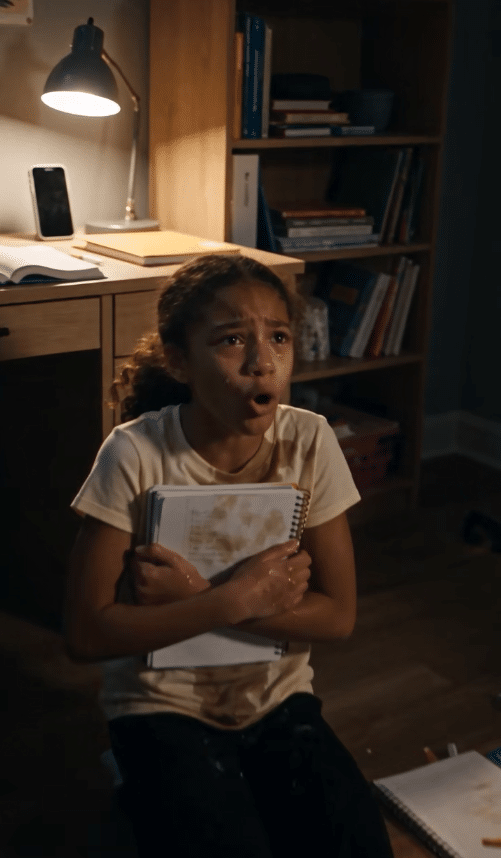
Fourteen-year-old Nia stood beside her desk, clutching a stack of notebooks whose pages had turned limp and heavy with water. The corners curled beneath her fingers. Ink had begun to bleed across the paper, blurring the answers she had spent three hours carefully writing.
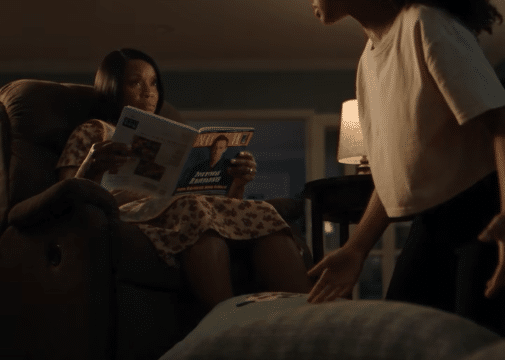
Beside the desk, her stepmother stood holding an empty water glass.
“Oops. My hand slipped.”
The words came with a shrug so casual it made Nia stare at her in disbelief.
Nia looked down at the ruined pages, then back at the woman in the floral dress. Her eyes were filling with tears, but beneath the hurt was something harder to dismiss: she knew what had happened, and she refused to pretend otherwise.
“You did it on purpose! It’s due tomorrow!”
Her stepmother’s expression barely changed.
“Then you’ll learn to keep your things… elsewhere.”
The water dripped from the edge of the desk onto the floor.
Nia tightened her grip on the notebooks. Every page represented time she couldn’t get back: calculations checked twice, answers rewritten when they weren’t good enough, and paragraphs she had carefully arranged because she wanted her work to be right.
Three hours.
Three hours that were supposed to carry her through tomorrow’s deadline had been reduced to a soggy mess.
And her stepmother was standing there as though the only problem was that Nia had left her belongings in the wrong place.
Nia blinked hard, trying to keep the tears from falling. But when she looked down at the pages again, one slipped against another with a wet, sickening sound.
“Three hours of work!”
Her voice cracked.
Her stepmother didn’t offer to help. She didn’t reach for a towel or apologize for the damage. She simply held the empty glass, wearing the kind of innocent expression that made Nia feel as though she was expected to apologize for being upset.
For a moment, Nia looked like she might collapse beneath the weight of it all.
Then she straightened.
Her homework was ruined. Her deadline was still tomorrow. And the person responsible was standing in front of her, refusing even to acknowledge the possibility that she had done something wrong.
Nia could cry, but she couldn’t afford to surrender.
Not tonight.
Her stepmother believed the ruined pages would be the end of the story. She had no idea that someone else had already preserved every one of them.
Act II
“Cry all you want. The teacher won’t accept excuses.”
Her stepmother delivered the words with a dismissive smile.
Then she turned away, still holding the empty glass, as if the matter had been settled. She had damaged the work, denied responsibility, and left Nia to face the consequences alone.
Nia remained beside the desk.
Her cream-white T-shirt was plain, her black trousers slightly wrinkled from the long evening, and her curly hair was tied back in a low ponytail. She looked like any student who had stayed up too late finishing an assignment.
But there was nothing ordinary about the scene in front of her.
The notebooks had absorbed so much water that the pages clung together. Some of the writing remained visible, but much of it had blurred into dark smears. Nia couldn’t simply turn the pages over and start again. Even the paper itself was beginning to tear under its own weight.
She knew what tomorrow meant.
A teacher would expect the finished work. An explanation about water-damaged notebooks might sound like an excuse, especially if she couldn’t prove what had happened. And the person who had caused the damage was already making it clear that she wouldn’t help Nia recover from it.
The cruelty lay in more than the spilled water.
It lay in the confidence with which her stepmother expected Nia to accept the consequences.
Nia lowered her eyes to the desk, struggling to steady her breathing. She had worked for hours because she wanted to do well. She had tried to make every answer accurate, every page complete, every assignment something she could submit without embarrassment.
Now she was being told that none of that effort mattered.
She could almost hear the explanation her stepmother might give someone else: Nia was careless. Nia had failed to protect her belongings. Nia had left everything lying around and needed to learn a lesson.
The story was already being shaped to make Nia responsible.
And without evidence, the truth might be much harder to establish.
The sound of footsteps came from the hallway.
Nia looked toward the door just as Marcus entered the room. Wearing a white shirt, her father took in the soaked notebooks, the water on the desk, and his daughter’s tear-streaked face.
He stopped.
“What happened here?”
Nia turned toward him immediately.
“She poured water on my homework!”
The words came out with all the urgency she had been trying to contain. She didn’t soften them to protect her stepmother’s reputation or pretend the damage was accidental.
She wanted her father to understand what he was seeing.
Her stepmother turned back toward Marcus.
“It was an accident, Marcus!”
The denial arrived quickly, almost before Nia had finished speaking.
The empty glass was still in her hand. The wet notebooks were still spread across the desk. Nia was still standing beside them, crying over work that had taken three hours to complete.
Two explanations now stood in the same room.
One came from the girl whose work had been destroyed.
The other came from the woman who insisted it had happened by accident.
Marcus looked between them.
Neither the water nor the ruined pages could tell him what had been in his wife’s mind. But the speed with which she dismissed the damage left a question hanging in the air.
Then a figure appeared in the doorway.
Caleb, ten years old and wearing a gray hoodie, stood quietly with his smartphone in his hand.
He had been listening.
And unlike the adults in the room, he had brought something that could help establish exactly what Nia’s homework had looked like before the water reached it.
The little boy had entered the room with no intention of starting a confrontation. What he said next would change the meaning of the entire scene.
Act III
“I photographed every page. Yesterday. For my own homework.”
Caleb’s voice was quiet, but everyone heard him.
For a moment, nobody moved.
His stepmother turned sharply toward the doorway, the easy confidence on her face beginning to falter.
“You what?!”
Caleb held his phone in front of him.
He wasn’t trying to provoke her. He wasn’t smiling or celebrating the fact that he had contradicted an adult. He simply seemed to realize that something he had done for an entirely ordinary reason had suddenly become important.
Nia looked at him through her tears.
Yesterday, she had helped Caleb study. He had used his phone to photograph her pages so he could practice the same material later. To him, it had been a simple way to review the work his older sister had helped him understand.
He hadn’t been collecting evidence against anyone.
He hadn’t expected the notebooks to be damaged.
He had merely wanted to learn.
But the photographs had preserved something the water could not erase: what Nia’s work looked like before it was ruined.
Caleb explained.
“Nia helps me study. I take pictures so I can practice.”
His words made the situation suddenly clearer.
The images weren’t a reconstruction made after the argument began. They had been taken the day before, when the notebooks were still intact. They existed because Caleb had wanted to study from his sister’s work, not because he had anticipated a dispute.
That was what made them so powerful.
Nia hadn’t needed to predict what would happen to her homework. She hadn’t needed to ask anyone to watch over her belongings or photograph each page herself.
Her little brother had done it without knowing he might someday be protecting her from an accusation.
Caleb stepped forward and handed the phone to Marcus.
The movement was careful and uncomplicated.
Marcus accepted it.
Nia remained beside the desk, still clutching the soaked notebooks. Her tears continued to fall, but her expression had changed. For the first time since the water spilled, she wasn’t the only person in the room insisting that the damage mattered.
Her stepmother looked at the phone.
Then she looked at Caleb.
The empty glass was still in her hand, but it no longer seemed like an ordinary household object. It was part of the scene everyone could see: the water, the destroyed pages, the girl who had cried out in shock, and the claim that the damage had been an accident.
Caleb’s photographs offered a clear record of the notebooks before any of that had happened.
He hadn’t set out to expose anyone.
He had simply told the truth about why the photographs existed.
And now Marcus had them.
For the first time, the woman insisting on an accident could no longer rely on the ruined pages to speak for themselves.
Act IV
Marcus studied the photographs.
He moved through the images on Caleb’s phone, looking carefully at the pages that had been intact the previous day. The camera had captured the work Nia had completed before the water soaked through the notebooks.
The photographs showed what the damaged paper could no longer preserve clearly.
Page after page.
The work had existed. It had been complete enough for Caleb to photograph and use for his own studying. The images had been taken before the incident in the bedroom, exactly as Caleb had explained.
Marcus’s expression grew more serious as he looked.
Nia watched him, standing quietly beside the desk. She didn’t ask whether he believed her. She didn’t try to explain the same thing a second time.
She had already told him what happened.
Now he could see what Caleb had saved.
Her stepmother remained nearby, her floral dress perfectly undisturbed. A moment earlier, she had seemed certain that a shrug and a casual explanation would end the matter. Now she was watching Marcus scroll through a record she hadn’t expected to exist.
The room felt smaller.
The water continued to gather along the edge of the desk. The notebooks lay where they had been left, their pages swollen and distorted. Nia still had the same deadline, the same lost hours, and the same work she had believed she would have to explain to her teacher.
But the photographs had changed one crucial thing.
The work had not vanished without a trace.
Even if the physical pages were damaged beyond use, Caleb’s phone held a record of what they had contained before the water was poured. Nia’s effort had not been entirely erased.
Marcus continued examining the images.
He didn’t need to make a dramatic accusation. The contrast was already there: the intact pages in the photographs, the soaked notebooks on the desk, and his wife’s insistence that the damage was an accident.
The photographs did not reveal anyone’s thoughts. They could not, by themselves, explain why the water had been spilled.
But they established the condition of the homework before it happened.
And they gave Marcus a reason to question the explanation he had just been offered.
Caleb stood near his father, holding himself still. He had helped his sister study, taken pictures for his own practice, and handed over the phone when he realized the images might matter.
He had not planned to become a witness.
He had simply remembered what he had done yesterday.
Nia looked at her brother, her expression softening for a moment. She had spent the evening believing that her work was gone and that no one would understand what it meant to lose it hours before the deadline.
Caleb had given her something she hadn’t known she needed.
Proof that her effort had existed.
Marcus lowered the phone slightly and looked toward the desk once more.
Then he turned to his wife.
The photographs could not answer every question about what had happened, but they made one thing impossible to dismiss: the damage was no longer a story with only one version.
Act V
“Every page. Clear as day.”
Marcus’s voice was low.
He held Caleb’s phone, the photographs still before him. His eyes moved from the images to the soaked notebooks spread across Nia’s desk.
He had seen enough to understand the significance of what his son had preserved.
The pages in the photographs were intact. The notebooks in front of him were not. And Caleb had explained exactly when and why he had taken the pictures.
Yesterday.
For his own homework.
Because Nia helped him study.
There was nothing calculated about the explanation. It was the kind of small, ordinary detail a child might forget to mention on any other day. Yet it had preserved a record of his sister’s work before the damage occurred.
Nia stood beside the desk, tears still on her face.
She had lost three hours of effort, and the deadline hadn’t moved. The photographs could preserve her work, but they couldn’t give her back the evening she had spent completing it. They couldn’t make the soaked paper dry or erase the fear that she might still have to explain everything at school.
Still, she was no longer standing alone with a ruined assignment and an accusation that she was making a fuss.
Her brother had spoken.
Her father had seen the photographs.
And the claim of an accident now faced evidence that had existed before anyone knew it would be needed.
Marcus looked up from the phone.
His wife stood pale beside the desk, the empty glass still in her hand. The casual expression she had worn when she said her hand had slipped was gone.
She had expected Nia’s tears to be the only response to the damage. She had expected the ruined notebooks to become a problem Nia would have to solve by herself. And she had expected her explanation to end the conversation.
But Caleb had preserved every page.
Marcus met his wife’s eyes.
“Your ‘accident’ just became evidence.”
The words settled over the room.
Nia held the damaged notebooks against her chest, her eyes wet but defiant. Caleb stood in the doorway with his phone no longer in his hand. Marcus remained beside the desk, facing the woman who had called the damage an accident.
His wife said nothing.
Her face drained of color.
Hard cut.