Act I
The wounded soldier was not going anywhere.
That was the problem.
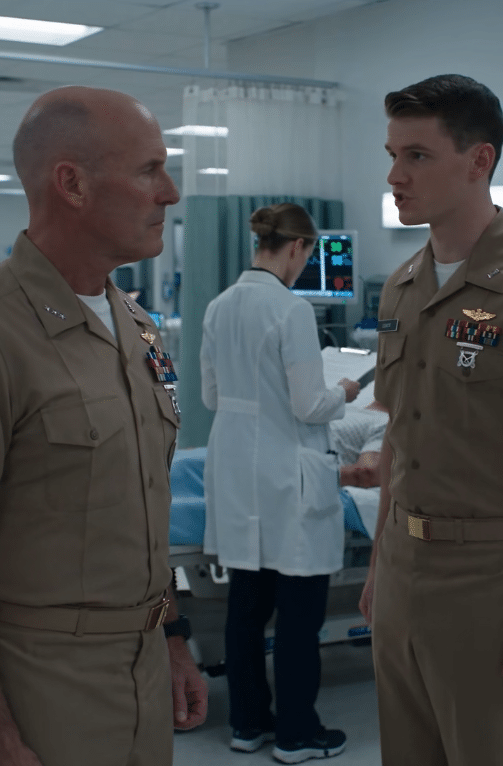
The young man lay beneath the cold hospital lights, surrounded by monitors and medical equipment, while a doctor stood firmly between his bed and the officer demanding his release.
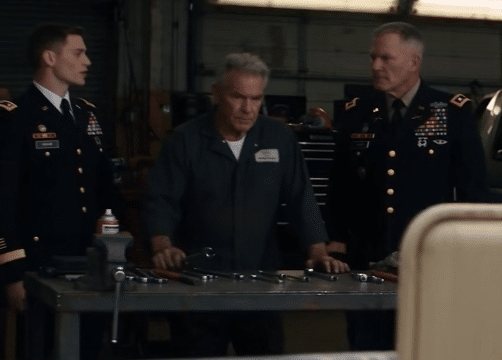
The Lieutenant aide leaned toward the Colonel.
“Colonel, she still refuses to release him.”
The Colonel’s expression hardened.
The doctor didn’t move.
“He is not medically cleared.”
It was a simple medical fact.
But the Colonel heard something else in those words.
Defiance.
His unit was under pressure to maintain readiness numbers. A wounded soldier remaining in the hospital looked bad on a report, and the Colonel had already decided that the paperwork mattered more than the doctor’s caution.
“You’re holding up my unit.”
“I’m protecting your soldier.”
“You were ordered to release him.”
“I can’t.”
The Colonel snatched the medical chart from her hand and threw it onto the bed.
She didn’t flinch.
Instead, she stepped back toward the patient.
That was when he struck her.
The slap cracked through the room.
Her head turned with the impact. She staggered sideways, one hand catching the edge of the medical cart as her cheek immediately reddened.
The patient stared.
The Lieutenant froze.
The veteran nurse near the bed took one involuntary step forward.
But the doctor was already recovering.
She straightened.
Took a breath.
And returned to the space between the Colonel and the wounded soldier.
The Colonel stared at her as if he couldn’t understand why she was still standing there.
“Contract doctors don’t command my soldiers.”
The doctor said nothing.
She checked the patient’s monitor.
Then his breathing.
Then the IV line.
Only after making sure he was stable did she look back at the Colonel.
The movement shifted the collar of her blouse.
Something metallic slipped free.
The nurse saw it.
Her face went pale.
And suddenly, the room felt much smaller.
Act II
The pendant was nothing the Colonel would have noticed under ordinary circumstances.
It was small.
Metal.
Worn beneath the doctor’s blouse on a simple chain.
But when it slipped into view, the reverse showed a distinctive military crest.
The veteran nurse recognized it immediately.
She had served long enough to know that some insignias were decorations.
Others were warnings.
This one belonged to the second category.
The doctor noticed the nurse staring.
She closed her fingers around the pendant.
The Colonel saw the movement.
“What?”
The nurse looked at him.
Then at the pendant.
Then back at him.
“Colonel… I really think you should stop.”
Her voice was low.
Careful.
Not the voice of someone offering casual advice.
The Colonel’s eyes narrowed.
“Stop what?”
The nurse didn’t answer.
He looked down at the pendant.
Then scoffed.
“Jewelry doesn’t give orders.”
The Lieutenant gave a nervous half-smile, as though the Colonel had finally put the situation back under control.
But the nurse didn’t smile.
She knew the crest.
She knew the kind of person who could give it.
And she knew that the doctor had deliberately kept it hidden.
The doctor released the pendant.
It disappeared beneath her blouse again.
Then she returned her attention to the patient.
“His blood pressure is still unstable.”
The Colonel stepped closer.
“You heard me.”
“I heard you.”
“Then release him.”
“No.”
The answer was calm.
Almost clinical.
That calmness irritated him more than an argument would have.
“You think your medical degree puts you above command?”
“No.”
She looked directly at him.
“I think his condition puts him above your schedule.”
The nurse lowered her eyes.
The Lieutenant stopped moving.
For the first time, the Colonel seemed unsure whether he was arguing with a doctor or something much more complicated.
But he still didn’t know what.
And the pendant was still hiding the answer.
Act III
The Colonel turned toward the patient.
“He’s fit enough.”
The doctor immediately stepped between them.
“No.”
“Move.”
“He is not medically cleared.”
“You don’t give me orders.”
“I’m not giving you an order.”
She glanced at the monitor.
“I’m documenting a medical decision.”
That distinction mattered.
The nurse knew it.
The Lieutenant knew it.
And somewhere beneath the Colonel’s anger, he knew it too.
Because medical records could survive long after command positions changed.
The Colonel looked at the doctor again.
She was younger than him.
She wore no visible rank.
No command insignia.
Just a white coat, dark scrubs, and a stethoscope.
To him, that made her easy to dismiss.
But the nurse kept watching the place where the pendant had disappeared.
She remembered seeing that crest years ago.
Not in a hospital gift shop.
Not at a ceremonial dinner.
She had seen it on official occasions where senior officers stood differently when its owner entered the room.
The crest was associated with authority.
Not ordinary authority.
The kind that could change a commander’s decision without raising a voice.
The nurse swallowed.
She looked at the doctor.
The doctor’s expression gave nothing away.
She didn’t need to explain the pendant.
She didn’t need to explain her family.
She didn’t even need to explain why she was still protecting the soldier after being slapped.
Her duty already explained that.
The Colonel, however, was beginning to notice the nurse’s reaction.
“Why are you looking at her like that?”
The nurse remained silent.
The doctor finally touched the pendant through her blouse.
“The man who gave it to me does.”
The Colonel stared at her.
“What?”
She repeated nothing.
She simply returned her hand to the patient’s bedrail.
The Colonel looked at the nurse.
The nurse wouldn’t meet his eyes.
That was the moment the Colonel began searching his own memory.
Military ceremonies.
Command photographs.
Senior officers.
Old names.
Old families.
People whose influence reached far beyond the walls of a hospital.
He couldn’t place the crest.
But the nurse could.
And her silence was becoming more frightening than any answer.
Act IV
The Colonel’s anger had changed.
It was still there.
But something else had entered the room.
Calculation.
He looked at the doctor’s white coat.
Then at the stethoscope.
Then at the pendant beneath her blouse.
He had called her a contract doctor.
He had treated her like an employee who had forgotten her place.
But the nurse’s reaction suggested that the pendant belonged to someone whose place had never been in question.
The Lieutenant shifted uneasily.
“Sir…”
The Colonel held up a hand.
The aide stopped.
The doctor checked the wounded soldier again.
She adjusted the blanket.
Verified the monitor.
Then quietly reviewed the chart.
She never looked frightened.
That was what bothered the Colonel most.
Someone who had just been slapped should have retreated.
She hadn’t.
Someone who had been publicly humiliated should have defended herself.
She hadn’t.
Instead, she had behaved as though the assault were irrelevant compared with the soldier lying behind her.
The Colonel looked toward the nurse.
“You recognize that crest.”
The nurse said nothing.
“Don’t lie to me.”
Still nothing.
Her silence was confirmation enough.
The Colonel’s eyes returned to the doctor.
“Who gave you that?”
The doctor looked at him.
She could have answered.
She could have named the man.
She could have ended the mystery with one sentence.
Instead, she remained silent.
The Colonel suddenly remembered how some military families operated.
Names were not always spoken.
Authority did not always arrive wearing rank.
Sometimes it arrived through a sealed envelope.
Sometimes through a phone call.
Sometimes through an old crest carried quietly around someone’s neck.
The nurse took another careful breath.
The Lieutenant’s earlier confidence was gone.
And the wounded soldier watched from the bed, realizing that the balance of power in the room had shifted without anyone raising another hand.
The Colonel looked at the pendant again.
This time, he didn’t see jewelry.
He saw a question.
And he was beginning to fear the answer.
Act V
The hospital room fell almost completely silent.
Only the monitor continued its steady rhythm.
The doctor stood beside the wounded soldier with one hand resting near the bedrail.
Her cheek was still red.
Her breathing was controlled.
She had been humiliated in front of everyone in the room, but she had not surrendered the one thing that mattered.
The patient was staying.
The nurse remained near the bed.
She knew the crest.
The Colonel knew she knew.
And that knowledge was eating away at his certainty.
He looked at the doctor again.
“You expect me to believe that pendant matters?”
She didn’t answer.
He looked at the nurse.
Nothing.
He looked back at the doctor.
Still nothing.
For the first time, the Colonel understood that he had made a mistake before he even knew what the mistake was.
He had assumed the woman standing in front of him was powerless because she wasn’t displaying her authority.
But the pendant suggested otherwise.
And the nurse’s fear suggested something even larger.
The Colonel’s mind raced through the senior command structure.
He searched for a face.
A name.
A family.
Someone powerful enough that a simple gift could carry the weight of an order.
The doctor watched him search.
She didn’t help him.
She didn’t need to.
The answer belonged to the man who had given her the pendant.
And until the Colonel knew who that man was, every assumption he had made about her was suddenly uncertain.
The nurse lowered her gaze.
The Lieutenant stopped breathing for a moment.
The Colonel stared toward the pendant just out of view.
His confidence was gone.
Only the question remained.
“What man…?”