Act I
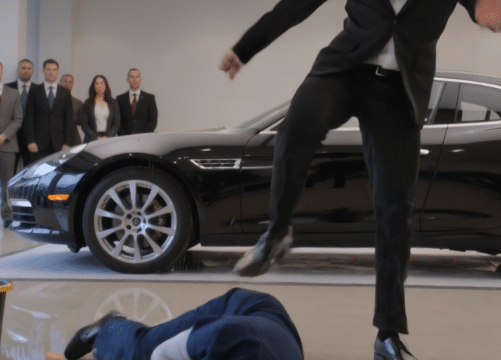
The trustee folder hit the marble first.
It burst open at the foot of the donor wall, blue cover sliding across the polished floor while papers stamped with the university seal scattered beneath bronze statues and framed portraits of men whose names had been carved into history before most students were allowed through the front door.
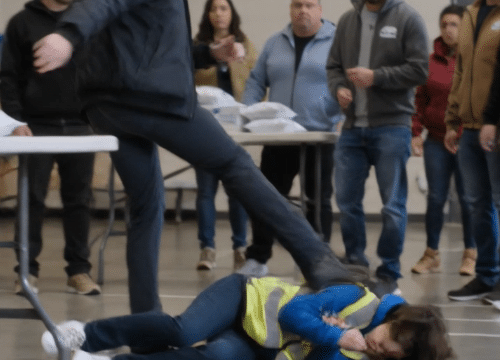
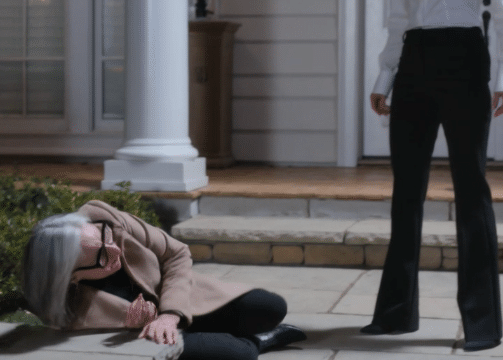
Then Miss Williams fell against the marble step.
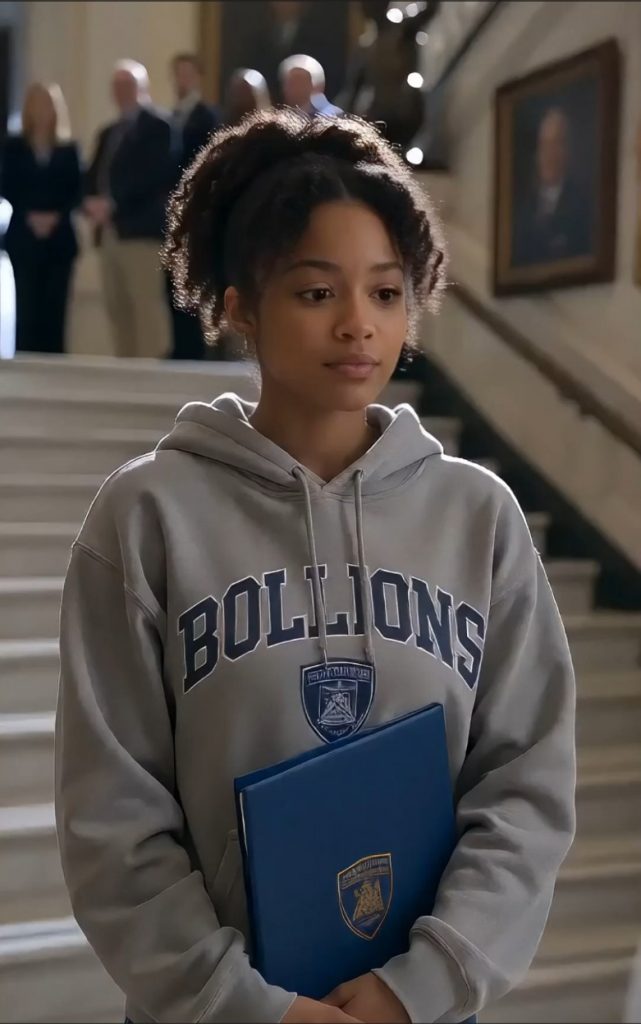
Her knee struck hard enough to make her breath catch. One hand braced against the floor. Her gray university hoodie twisted at the shoulder, and a few curls fell forward as she tried to steady herself in front of students, parents, scholarship staff, and campus security.
The hall went silent.
The woman who had slapped her stood above her in a cream blazer and pearls.
Patricia Whitmore did not look sorry.
She looked offended.
As if the young woman on the floor had dirtied the room simply by landing in it.
“This hall is for legacy families,” Patricia said, her voice sharp enough to travel under the high ceiling. “Not charity students.”
A few students gasped.
No one moved.
The donor hall at Alden University had always been designed to intimidate. Marble staircase. Bronze founders. Oil portraits. Engraved family names along the walls. Every inch of it whispered that belonging here had been purchased generations before the current students were born.
Maya Williams knew that whisper well.
She had heard it since freshman year.
In dining halls when students asked what prep school she attended and blinked when she named a public one. In seminars when classmates called her “articulate” like it was a surprise. At receptions where parents assumed she was working check-in because she wore sneakers instead of pearls.
Now she was on the floor beneath their names.
Her trustee documents lay scattered around her.
Patricia stepped closer, chin lifted, blonde hair resting perfectly on her shoulders.
“You people keep confusing access with entitlement,” she said.
Maya looked up slowly.
There was hurt in her face.
But not shame.
That unsettled Patricia.
Before she could speak again, the hall doors opened.
Dean Marshall entered with two campus security officers behind him, his navy suit moving sharply as he crossed the marble. His red tie shifted with each step. The university lapel pin on his jacket caught the light.
He saw the folder first.
Then Maya.
Then Patricia standing over her.
His expression changed.
“Miss Williams,” he said, voice controlled.
The crowd stiffened.
Dean Marshall bent down, gathered one of the papers, and helped Maya rise with careful respect.
Then he turned toward the room.
“Miss Williams, congratulations,” he said clearly. “You are the new student trustee of the university board.”
Behind them, the donor wall lights shifted.
An entire engraved row glowed softly under one name.
WILLIAMS.
Patricia’s face drained of color.
“Williams?”
Act II
Maya Williams had never planned to become the kind of student people whispered about.
She came to Alden University with two suitcases, a scholarship letter, and a mother who cried quietly in the parking lot after pretending she would not. She arrived wearing jeans, white sneakers, and the gray hoodie her high school debate team had given her when they won state.
She did not know what Alden expected her to become.
She only knew what she had promised herself.
Do the work.
Stay kind.
Do not let rooms with old money convince you your mind is borrowed.
Her grandmother had taught her that.
Dr. Evelyn Williams was the first in their family to attend Alden, though almost no one on campus knew it anymore. In 1968, Evelyn walked into lecture halls where students stared, professors mispronounced her name, and administrators praised integration while making sure she felt the cost of it every day.
She graduated anyway.
Then she became a civil rights attorney, then a federal judge, then one of the university’s quietest and most important benefactors.
She refused portraits.
She refused gala speeches.
She donated through foundations, scholarships, faculty chairs, and emergency grants for students who could not call home for money.
When Alden begged to put her name on a building, she declined.
“Put my name where it makes someone ask who was missing,” she said.
That was how the Williams Scholars Program was born.
Not flashy.
Not branded with gold plaques.
Just powerful enough to open doors for students who had been told, politely or not, that places like Alden were not built for them.
Maya did not learn the full story until after she was accepted.
Her mother sat her down at the kitchen table with an old photograph of Evelyn standing beside the university gates in a wool coat and gloves, chin lifted like she had already decided fear was not useful.
“She wanted you to get in on your own,” Maya’s mother said.
Maya stared at the photo.
“So no one told them?”
“Admissions knew only what they needed. Your grandmother insisted.”
Maya laughed in disbelief.
“She let me stress for eight months?”
Her mother smiled through tears.
“She believed stress builds footnotes.”
That sounded exactly like Grandma Evelyn.
By senior year, Maya had earned more than admission.
She became student body vice president, led a report on campus housing inequality, helped expose how unpaid internships favored wealthy students, and organized emergency funding for students who worked nights and still could not cover winter break housing.
The university board noticed.
So did Dean Marshall.
After Dr. Williams passed away, the trustees discovered a sealed letter she had left for them. It requested one final condition tied to the next installment of the Williams endowment.
A student trustee seat.
Real voting power.
Not symbolic.
Not advisory.
And the first appointment, she wrote, should go to a student who understood Alden both from inside its classrooms and outside its inherited comfort.
The board selected Maya.
The public announcement was scheduled for the scholarship reception in the donor hall.
Maya asked to arrive quietly.
She wanted to review the documents before the ceremony and stand near the back until Dean Marshall called her name. She wore her hoodie because it felt like armor from home. She carried the trustee folder herself because she wanted to feel the weight of it.
Patricia Whitmore saw her before the dean did.
Patricia was the mother of a junior named Carter Whitmore, whose family name appeared on plaques, lecture halls, rowing shells, and donor programs going back nearly a century. She chaired the Legacy Parents Council and treated the donor hall as if her ancestors had left it to her personally.
For weeks, Patricia had been furious about the student trustee seat.
“Students do not understand governance,” she told anyone who would listen.
What she meant was poorer students might understand it too well.
When she saw Maya near the donor wall, dressed casually and holding a blue folder, Patricia assumed the worst.
Not because Maya had done anything.
Because Patricia had already decided what kind of person belonged beneath those names.
And what kind did not.
Act III
It began with the folder.
Maya was reviewing the board agenda near the marble staircase when Patricia approached with the polished smile adults use when they are about to be cruel in public.
“Excuse me,” Patricia said.
Maya looked up.
“Yes?”
“Are you supposed to be here?”
Maya paused.
It was not the first time she had heard that question at Alden. It rarely meant location.
“I’m waiting for Dean Marshall.”
Patricia’s eyes moved to the hoodie.
“For what purpose?”
Maya held the folder closer.
“A university meeting.”
Patricia laughed softly.
Several parents nearby turned.
“You mean the scholarship reception.”
Maya’s expression stayed calm.
“That too.”
Patricia stepped closer.
“This area is for board guests and legacy families. The student registration table is downstairs.”
Maya looked toward the engraved wall, where old names reflected in the polished marble.
“I know where I am.”
That was the sentence that changed Patricia’s face.
Not loud.
Not disrespectful.
Simply steady.
Patricia did not like steadiness from people she believed should be grateful.
“Do not take that tone with me,” she said.
Maya lowered her voice.
“I’m not taking a tone.”
“You are standing in a restricted area with confidential-looking documents.”
“They’re mine.”
That made Patricia’s smile vanish.
She reached for the folder.
Maya pulled it back.
“Please don’t touch that.”
The slap came so fast the crowd barely saw her hand move.
Maya staggered, hit the step, and dropped to one knee as the blue folder flew open. Trustee documents scattered across the marble: board agenda, governance notes, sealed appointment letter, university briefing pages.
A student whispered, “Oh my God.”
Patricia stood above Maya, breathing hard.
“This hall is for legacy families,” she said. “Not charity students.”
Maya’s cheek burned.
Her knee stung.
But the deepest pain came from the room.
All those brilliant students. All those wealthy parents. All those staff members trained to smile through discomfort.
Watching.
Waiting.
As if they needed permission to know what had happened was wrong.
Maya reached for one of the scattered documents.
Patricia’s heel landed near it.
“Leave it,” she snapped.
Then Dean Marshall entered.
He did not need anyone to explain at first. The room told him enough. Maya on the floor. Patricia standing above her. Papers scattered. Students frozen. Parents looking away from the truth they had just witnessed.
He picked up the closest document.
The university seal stared back at him.
Then the title.
Student Trustee Appointment: Maya Elaine Williams.
The dean’s face became very still.
Patricia noticed.
For the first time, uncertainty broke through her polished expression.
Dean Marshall helped Maya stand.
Then he turned to the hall and made the announcement meant for the stage.
Right there, beside the scattered papers.
“Miss Williams, congratulations. You are the new student trustee of the university board.”
The donor wall lights came up behind them.
WILLIAMS.
Not on a small plaque.
Not hidden in a program.
An entire row.
Patricia stared at the name as if the stone itself had accused her.
Act IV
Patricia tried to recover with the speed of someone who had survived many social disasters by pretending they were misunderstandings.
“Dean Marshall,” she said, voice thin, “there has been a mistake.”
“Yes,” the dean said. “There has.”
Relief flickered across her face.
Then he continued.
“But not the one you think.”
The hall tightened around them.
Campus security moved closer, not dramatic, not aggressive, simply present. That presence changed the temperature of the room. Patricia noticed and stood straighter, clutching her handbag like a shield.
“I was protecting the integrity of this event,” she said.
Maya looked at her.
“You slapped me.”
Patricia flinched at the plainness of it.
“I believed you had taken confidential documents.”
“They were mine.”
“I didn’t know that.”
Dean Marshall’s voice turned cold.
“You did not need to know her title to keep your hands to yourself.”
Several students looked down.
The sentence exposed more than Patricia.
It exposed everyone who had hesitated.
A young man in a navy blazer stepped forward.
“I saw it,” he said. “Miss Williams told her not to touch the folder.”
A scholarship staff member added, “Mrs. Whitmore reached for it first.”
Another student said, “She called her a charity student.”
Patricia’s mouth tightened.
“I used unfortunate language.”
Maya’s eyes lifted.
“No. You used familiar language.”
The hall went completely silent.
Patricia stared at her.
Maya’s voice remained steady, though one hand still trembled near the torn edge of the folder.
“Students hear versions of it all the time. At receptions. In dorms. At interviews. In rooms where people say legacy like it means character and scholarship like it means charity.”
A few scholarship students in the back went still.
They knew.
Dean Marshall did too.
Maya bent and gathered one of the scattered papers herself. The dean moved to help, but she shook her head slightly.
She wanted to pick them up.
She wanted the room to watch her reclaim what had been knocked from her hands.
Patricia’s fear sharpened.
“Miss Williams,” she said quickly, “I apologize. Truly. I had no idea you were a Williams.”
Maya looked toward the donor wall.
Then back at her.
“That is not an apology.”
Patricia’s face reddened.
“I am trying to make this right.”
“No,” Maya said. “You are trying to make it survivable.”
The words landed hard.
Even Dean Marshall looked at her with quiet surprise.
Patricia turned to him, desperate now.
“My husband has served on university committees for fifteen years. Our family has supported Alden for generations.”
Dean Marshall’s expression did not soften.
“And Dr. Evelyn Williams supported students whose families were never invited to those committees.”
Patricia looked at the engraved row again.
For the first time, the name seemed larger than wealth.
It carried history.
Struggle.
Power she had not recognized because it had not arrived wearing pearls.
Dean Marshall turned to campus security.
“Mrs. Whitmore will be escorted from the donor hall pending review of her conduct.”
Patricia gasped.
“You cannot remove me from a university event.”
“You assaulted a student trustee.”
“She was not announced yet.”
The silence after that sentence was brutal.
Patricia heard herself too late.
Maya did not smile.
She only held the damaged folder against her chest.
Dean Marshall nodded once to security.
“Now, Mrs. Whitmore.”
Patricia’s shoulders collapsed slightly.
She looked around for support among the parents who had once praised her taste, attended her luncheons, and nodded along when she complained about admissions standards.
No one stepped forward.
Legacy, in that moment, became very lonely.
Act V
The scholarship reception began twenty minutes late.
By then, Patricia Whitmore had been escorted from the building, Carter Whitmore had disappeared into a side hallway in visible embarrassment, and half the donor hall was pretending not to stare at Maya’s cheek.
Maya almost left.
Dean Marshall gave her the choice.
“You do not owe this room a speech,” he said quietly.
Maya looked at the marble staircase, the portraits, the bronze statues, the engraved names.
Then she looked at the scholarship students standing near the back, watching her with something fragile in their eyes.
Hope, maybe.
Or fear.
Or the exhausted need to see one person stay.
“I’ll speak,” she said.
The dean nodded.
When Maya stepped to the podium, the room rose.
Not all at once.
First the students.
Then staff.
Then parents who seemed unsure whether standing was respect or apology.
Maya waited until the hall settled.
Her trustee folder sat on the podium, dented at one corner, papers reordered but not perfect. She kept it that way.
“My grandmother, Dr. Evelyn Williams, entered Alden University in 1968,” she began. “Her name is on that wall now. But when she was a student, many people made it clear they believed she did not belong here.”
No one moved.
“She stayed anyway.”
Maya’s voice strengthened.
“She became a lawyer, a judge, a donor, and a mentor to students who would never know she paid the fee that kept them enrolled, covered the flight that got them home, or funded the emergency grant that let them stay.”
She looked toward the row of engraved Williams names.
“She did not believe legacy was something you inherit and use to close doors. She believed legacy was what you leave open behind you.”
A few students bowed their heads.
Maya paused.
“Today, before my appointment was announced, I was mistaken for someone who did not belong in this hall.”
The room tightened.
She did not look at Patricia’s empty place.
She did not need to.
“I want to be clear. I belonged before the dean said my name. I belonged before the wall lit up. I belonged when I walked in wearing a hoodie and carrying my own papers.”
Her hand rested on the damaged folder.
“And so does every student whose worth has ever been treated like a question until someone powerful confirmed it.”
That was when the applause began.
Not polite applause.
Not donor applause.
Something deeper.
Something that sounded almost like relief.
Within a week, the university announced a formal review of donor hall conduct, legacy admissions events, parent council influence, and treatment of scholarship students at official receptions. Patricia Whitmore resigned from the Legacy Parents Council before the review ended. Her family’s name remained on the wall, but it no longer opened every door.
Maya used her first board meeting to introduce a policy called the Williams Access Standard.
No student event could separate attendees by donor class. Scholarship receptions would be student-centered, not donor-centered. Parent councils would lose influence over admissions messaging. Student trustees would receive full voting materials, not symbolic summaries.
Some board members resisted.
Maya expected that.
She had not come to decorate the table.
She had come to sit at it.
Months later, the donor hall changed in ways visitors noticed and ways they did not.
The portraits remained.
The marble staircase remained.
The bronze statues remained.
But beside the donor wall, a new inscription was added under Dr. Evelyn Williams’s name.
Belonging is not inherited. It is honored.
On the day it was unveiled, Maya wore the gray hoodie again.
Dean Marshall smiled when he saw it.
“Making a statement?”
Maya looked up at the inscription.
“Keeping a promise.”
Near the back of the hall, a first-year student stood alone with a campus map clutched in both hands. She wore a thrifted blazer slightly too large in the shoulders and looked like she was trying to decide whether she had entered the wrong building.
Maya recognized that look.
She walked over.
“Are you here for the scholars’ lunch?”
The girl nodded nervously.
“I think so. I didn’t know if this hall was for us.”
Maya glanced at the engraved names.
Then back at her.
“It is now.”
The girl smiled, small but real.
Together, they walked past the donor portraits, across the marble, under the names that had once seemed to guard the room from anyone without the right history.
Maya still remembered the slap.
The papers scattering.
The cold sound of Patricia’s voice calling her a charity student.
But the memory no longer belonged only to pain.
It had become policy.
It had become a seat.
It had become a door held open for the next student who arrived unsure whether the floor beneath her feet had room for her.
Because Patricia Whitmore had been wrong about the hall.
It was not for legacy families.
It was for whoever had the courage to change what legacy meant.