Act I
The coins were still raining down when the young woman started laughing.
They bounced across the wet concrete behind an American supermarket, slipped beneath recycling bins, and disappeared into the dirty water gathered beside a storm drain. Fifty-year-old Margaret Ellis dropped to her knees, desperately trying to save what she could.
It was barely twelve dollars.
Twelve dollars she had collected one bottle at a time, walking through parking lots and searching public recycling bins long after most people had gone home. Twelve dollars meant bread, eggs, and a can of soup for her elderly mother, who was waiting for her at home with an almost empty refrigerator.
But to the woman standing over her, it was entertainment.
“Trash. Pick up your little fortune.”
Twenty-six-year-old Brianna Cole held her phone in one hand, filming Margaret with the delighted expression of someone who believed another person’s suffering existed for her amusement. Her black leather jacket was immaculate, her designer sneakers untouched by the puddles, and her manicured fingers curled around the phone as she adjusted the camera angle.
Margaret reached for a coin near the storm drain.
“Please,” she whispered. “That money is for my mother’s food.”
Brianna tilted her head.
“Your mother?”
Margaret nodded, keeping her eyes on the coins. She knew better than to argue with someone who had already decided she was worthless.
“I just need to get enough for tonight.”
Brianna laughed louder.
Then, from behind, she drove a hard kick into Margaret’s back.
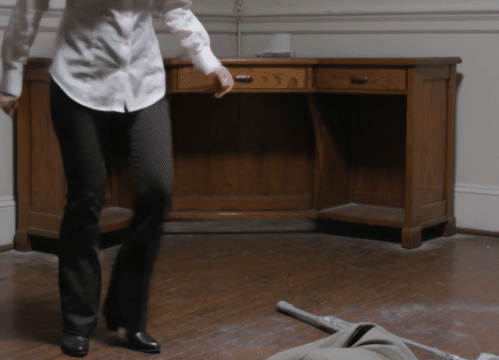
Margaret fell face-first beside the bags of collected bottles. The plastic bags toppled, sending bottles rolling across the alley. Coins scattered again, several disappearing into the muddy water beneath the recycling bins.
A sharp gasp came from the loading area.
Margaret tried to push herself up, but pain forced her back down. Her elbow scraped against the concrete, leaving a thin red trace. She curled onto her side, breathing hard, her face twisted in shock and pain.
Brianna stepped closer.
“Pick them up.”
Margaret raised a trembling hand.
“Please don’t.”
The words seemed to amuse Brianna even more.
She kicked Margaret twice more, hard enough to leave the older woman struggling to protect her back and side. Margaret folded inward, gasping, her thin gray coat soaked against the cold ground.
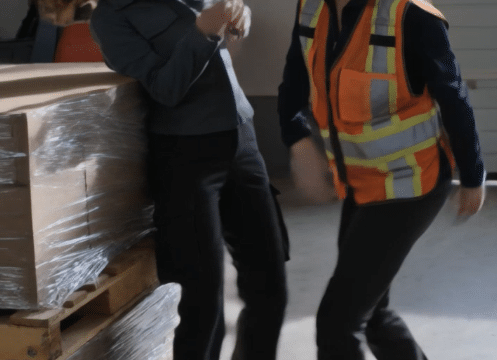
Several supermarket workers had emerged near the loading entrance. One covered his mouth. Another froze beside a stack of cardboard boxes. A delivery driver took a step backward, staring at the scene as if his mind refused to accept what he was seeing.
Brianna turned her phone toward the witnesses.
“What? You’ve never seen someone work for their fortune before?”
Then she pointed the camera down at Margaret.
“Poor people look funny crawling.”
Margaret did not answer.
She was looking at the coins disappearing into the water.
One of them had been the last quarter she needed to buy a small carton of milk.
Brianna kept filming, smiling as though she had captured something clever enough to make her famous. She had come behind the supermarket looking for a reaction, a humiliating video, a moment she could post online and turn into a joke.
She had no idea that the camera above the warehouse door was recording her, too.
The heavy metal door suddenly burst open.
A woman in a navy coat hurried into the alley, followed by two security guards. She was fifty-seven-year-old Denise Walker, the supermarket’s regional director, and she had been reviewing a late-night inventory report inside the building when a warehouse employee alerted her to the disturbance.
Denise went straight to Margaret.
“Don’t move,” she said gently. “We’re going to help you.”
One guard knelt nearby while the other positioned himself between Margaret and Brianna. Denise asked an employee to call emergency services and made sure Margaret was protected before she turned toward the woman holding the phone.
Her expression had gone cold.
She pointed toward the camera mounted above the loading entrance.
“Pull the back camera footage.”
Brianna’s smile vanished.
She lowered her phone and looked up at the security camera.
“Camera footage?”
For the first time that night, the young woman seemed to understand that she might not control the story she had been filming.
But the footage would reveal something even more disturbing than the assault itself.
Because Margaret Ellis had been coming to that supermarket for months, and the people who worked there knew her for a reason Brianna could never have imagined.
Act II
Margaret had not always lived on the edge of poverty.
For most of her adult life, she had worked as a home health aide, caring for elderly patients who needed help bathing, dressing, preparing meals, and remembering their medication schedules. She was the kind of person who noticed when a patient was unusually quiet or when a refrigerator had gone untouched for days.
Her work was exhausting, but she loved it.
She had raised her daughter, Claire, while working irregular shifts and taking whatever extra hours were available. When Claire grew up and moved to another state, Margaret stayed close to her own mother, Evelyn, whose health had begun to decline.
Then a series of setbacks changed everything.
Margaret injured her back while helping a patient transfer from a wheelchair. The injury was not catastrophic, but it left her unable to perform the physical tasks her job required. She tried to return to work too soon, made the pain worse, and eventually lost the position she had held for nearly a decade.
Her savings disappeared into rent, utilities, and medical expenses.
When Evelyn began struggling to manage on her own, Margaret moved back into her mother’s small apartment. She told herself it would be temporary, just until she recovered and found lighter work.
Months passed.
The rent rose. Evelyn’s pension barely covered the essentials. Margaret applied for administrative jobs, answered advertisements for part-time work, and accepted occasional cleaning assignments when her back allowed it.
Some weeks were manageable.
Others were not.
Collecting refundable bottles became one of the few ways she could earn a little cash without needing an employer to approve her schedule or asking anyone to make accommodations for her injury.
She knew which public bins were usually safe to search, which recycling centers paid the most, and which streets had the busiest foot traffic. She wore the same thin gray coat because replacing it meant spending money she did not have.
She never asked strangers for charity.
She simply collected what people discarded.
Behind the supermarket, workers had gradually come to recognize her. Margaret always stayed out of the loading vehicles’ way, never blocked the exits, and carefully separated the bottles so the staff would not have to clean up after her.
She even helped an older stock clerk named Raymond pick up a box of crushed cans after it split open one afternoon.
“You don’t have to do that,” Raymond had told her.
“I know,” Margaret replied. “But it would bother me to walk away.”
That was Margaret.
She had little money, little security, and no guarantee that the next week would be easier than the last. But she still believed that a person’s circumstances did not excuse them from treating others with decency.
Brianna had been raised with a very different understanding of the world.
Her father had owned several car dealerships, and her mother moved in circles where appearance and social status carried enormous weight. Brianna grew up hearing that successful people should never look weak, never accept inconvenience, and never allow anyone to mistake kindness for obligation.
She had been given opportunities most people never received. When she lost a job, a family connection helped her find another. When she overspent, her parents covered the bills. When she caused a scene, someone usually made the problem disappear before it could threaten her reputation.
By twenty-six, Brianna had developed a habit of turning ordinary encounters into little contests of power.
She filmed strangers who annoyed her. She mocked service workers who made her wait. She posted sarcastic videos about people she considered embarrassing, then dismissed criticism as jealousy.
She told herself she was funny.
She never considered what happened to the people she turned into punchlines after the camera stopped recording.
The night she attacked Margaret, Brianna had come to the supermarket to meet a friend who worked nearby. The friend canceled at the last minute, leaving Brianna irritated and looking for something to occupy her.
She noticed Margaret collecting bottles behind the building.
At first, Brianna filmed from a distance, making comments about the woman’s coat and the bags of recyclables. Margaret ignored her and continued working.
That silence frustrated Brianna.
She wanted an argument. She wanted Margaret to look angry, frightened, or desperate enough to make the video entertaining.
When Margaret’s coin bag appeared beside her, Brianna seized it and tossed the contents into the air.
The coins scattered.
Margaret dropped to her knees.
And Brianna got the reaction she wanted.
What she had not considered was that the supermarket’s loading area was monitored by cameras. Nor had she considered that the employees who witnessed the attack had already seen her take the coin bag and begin filming.
They had frozen during the violence, but they had not forgotten what they saw.
When Denise Walker arrived, the witnesses were silent.
She looked at Margaret, then at the scattered coins, then at Brianna’s phone.
“Did you record this?” Denise asked.
Brianna lifted her chin.
“It’s my phone.”
“That wasn’t my question.”
Brianna glanced toward the security camera again.
Denise turned to the guard.
“Preserve the footage. All of it. From before she arrived until after we came outside.”
The guard nodded and went inside to contact the security office.
Brianna suddenly began explaining herself.
“She was crawling around back here. I was just joking with her.”
Denise looked at Margaret, who was still trying to sit up.
“Is this woman a threat to you?” Denise asked gently.
Margaret shook her head, though she was visibly frightened.
“I don’t know her.”
“Then she had no reason to touch you.”
Denise removed her own coat and placed it around Margaret’s shoulders while the employee who had called for help returned to say that assistance was on the way.
For several seconds, Margaret stared at the coins still scattered across the concrete.
“Could someone help me get those?” she whispered. “I need them for food.”
Denise followed her gaze.
“Of course.”
She asked an employee to collect the coins that remained safely accessible. The money was counted and placed back in Margaret’s bag, and the supermarket arranged immediate help with food while they waited for medical assistance.
It was a small gesture compared with what Margaret had endured.
But it was the first time that night someone had treated her needs as more important than their own curiosity.
And when Denise finally entered the security office to review the recording, she discovered that the camera had captured more than Brianna expected.
Act III
The security room smelled faintly of coffee and warm electronics.
A supervisor pulled up the recording from the loading entrance while Denise stood beside him. The first image showed Brianna entering the alley with her phone already raised.
The footage had no sound, but it did not need any.
It showed Brianna approaching Margaret, filming her, and reaching for the coin bag. It showed the coins flying through the air and Margaret dropping to her knees to retrieve them.
Then came the first kick.
Margaret fell beside the bottle bags. Brianna moved closer and struck her again while the older woman tried to protect herself.
The supervisor paused the recording.
Denise’s jaw tightened.
“Save the original,” she said. “Make a secure copy, and don’t let anyone edit or delete anything.”
The supervisor nodded.
“Should I send it to corporate?”
“Yes. And preserve the employee statements, too. We need a complete record of what happened.”
Denise knew that evidence needed to be handled carefully. She was not a police officer, and she was not going to decide criminal liability from a screen in a security room.
But she could ensure that the evidence remained intact and that the company cooperated with any investigation.
When she returned outside, Brianna was pacing beside the loading dock, talking rapidly into her phone. Her confidence had begun to fracture.
She had expected someone to tell Margaret to leave. She had expected the employees to laugh nervously, apologize for the inconvenience, and let her drive away.
Instead, two guards remained nearby, an ambulance had been requested, and Denise was treating the incident like something that mattered.
Brianna ended her call.
“Do you know who my family is?” she demanded.
Denise did not blink.
“No.”
“My father knows people. He does business with half the companies around here.”
“That may be true.”
“Then you should be careful about what you do next.”
Denise looked toward the warehouse door.
“I’m being careful. That’s why I’m preserving the evidence.”
Brianna gave a short, disbelieving laugh.
“You can’t threaten me with a security camera.”
“I’m not threatening you.”
Denise turned toward Margaret, who was now sitting with a blanket around her shoulders while an employee helped her collect the remaining coins.
“I’m making sure what happened to her is not erased.”
For a moment, Brianna said nothing.
Then she tried a different approach.
She claimed Margaret had been trespassing. She suggested that the woman had become aggressive when asked to leave. She insisted the video on her phone would prove that she had merely been joking around.
But the employees who had witnessed the attack were beginning to provide their accounts.
One had seen Brianna seize the coin bag. Another had watched her kick Margaret while the woman was on the ground. A third confirmed that Margaret had been quietly collecting bottles before Brianna approached her.
Their accounts matched the security recording.
And Brianna’s own phone contained the video she had been making.
That video would become important for a reason she had never intended.
When the footage was examined, it showed Brianna deliberately framing Margaret as a source of amusement. It captured the scattered coins and Margaret’s desperate attempts to retrieve them. Depending on what had been recorded and preserved, it could also help investigators establish the sequence of events before and during the assault.
Brianna had created the recording to humiliate another person.
Now it was another piece of evidence.
Denise returned to the loading entrance and asked the security guard to remain with Margaret until the medical team arrived. She also instructed the store manager to arrange groceries for Evelyn and Margaret through the company’s emergency assistance program.
Margaret protested when she heard.
“I can’t take all that.”
“You’re not being asked to earn it,” Denise replied. “You’re being offered help after someone hurt you.”
Margaret lowered her eyes.
For years, she had been the person bringing soup to an elderly patient, buying groceries for someone whose benefits had been delayed, or staying late because a family caregiver had no one else to call. She knew how to give help.
Receiving it was harder.
“I don’t want people thinking I’m using what happened to me,” she said.
Denise pulled a chair closer.
“You didn’t ask for this. You didn’t create this situation. And you don’t have to prove that you’re poor enough to deserve a meal.”
Margaret’s eyes filled with tears.
She looked away quickly, embarrassed by her own reaction.
Denise did not press her.
Meanwhile, Brianna’s phone began buzzing repeatedly. She had sent a message to her friend, telling her that a supermarket employee was making a ridiculous scene over a harmless joke.
The friend asked what she meant by harmless.
Brianna typed back that an old woman had dropped some coins and become dramatic.
Then she looked toward the security camera again.
The small black dome above the loading door seemed to be watching her.
She lowered her phone.
“What exactly are you going to do with that footage?” she asked.
Denise stepped back into the alley.
“We’ll preserve it, review it according to company policy, and provide it to the appropriate authorities if requested or legally required.”
Brianna’s face tightened.
“You can’t just hand over private footage.”
“We’ll follow the law.”
“You’re making this sound like a crime.”
Denise looked at her for a long moment.
“You kicked a woman who was collecting coins for her mother’s food. That is what the evidence appears to show.”
Brianna opened her mouth, but no answer came.
For the first time, she could not find a clever way to make the scene sound harmless.
Yet Denise was about to learn that the supermarket had another responsibility: making sure that what happened to Margaret did not disappear into an internal report no one ever read.
Act IV
The police arrived while the rain was still falling.
They separated the parties, spoke with the witnesses, and began documenting the incident. Margaret was assessed by medical personnel, who checked her injuries and recommended further evaluation because of the force of the assault.
Denise gave the responding officers the contact information for the security supervisor and confirmed that the original recording had been preserved. She also explained that the company would cooperate with lawful requests for the footage.
Brianna tried to regain control of the conversation.
She said Margaret had been in an area where customers were not supposed to linger. She said the coins had spilled accidentally. She claimed that any physical contact had been exaggerated by people who disliked her.
The witnesses’ accounts told a different story.
The video told a different story.
And the recording on Brianna’s own phone raised further questions about her intentions.
The officers handled the investigation according to their procedures. Denise did not order anyone to arrest Brianna, and she did not pretend that owning the supermarket gave her authority over the law.
Her authority was different.
She could protect her employees, preserve company evidence, offer assistance to the victim, and ensure that the store did not quietly discard a serious complaint simply because the person accused of causing harm had money.
That distinction mattered.
Before leaving, Denise spoke privately with the store manager.
“I want a full incident report,” she said. “Every witness. Every available recording. Every action taken after the assault. Nothing gets deleted, and nobody pressures an employee to change their statement.”
The manager nodded.
“And make sure our staff know they can report incidents like this without worrying about whether the person involved is wealthy, connected, or likely to complain.”
When Denise returned to Margaret, she found the older woman staring at the coin bag in her lap.
Some coins were missing. Others were wet and streaked with dirt. The small bag had torn near the seam.
Margaret held it as if it were something precious.
“I should have stayed home,” she whispered.
Denise crouched in front of her.
“No.”
“If I’d just waited until morning—”
“No,” Denise repeated, more firmly this time. “You were collecting bottles. You were minding your own business. You did nothing to deserve this.”
Margaret’s shoulders began to shake.
She had been trying to hold herself together since the first coin hit the ground. She had endured the humiliation, the pain, the fear of not knowing what would happen next, and the terrible realization that strangers had watched her suffer without stepping forward.
Now, with someone finally telling her that she was not to blame, she began to cry.
Denise stayed beside her.
She did not promise that everything would be easy. She did not tell Margaret that a single act of kindness could erase years of financial hardship.
She simply stayed until Margaret was ready to move.
The supermarket arranged transportation for her and made sure that food reached Evelyn that evening. A staff member contacted Margaret the following day to ask how she was recovering and whether she needed help navigating the available community resources.
Denise also asked the company’s human resources and legal teams to review the incident and make sure that any employee who had witnessed the assault received appropriate support.
Then she returned to the security footage.
The recording was preserved in its original form, with access restricted to authorized personnel. The store documented when copies were made and who handled them, reducing the risk that the evidence could be altered or circulated improperly.
Brianna had wanted a video she could control.
Instead, there were now independent records of what happened.
Her own recording had been created before she knew who might see it. The store’s camera had captured the assault from a different angle. Witnesses had provided accounts that could be compared against both recordings.
The truth no longer depended on which version Brianna preferred to tell.
In the days that followed, she discovered that her assumptions about influence were less reliable than she had believed. Her father could call acquaintances, but he could not make the security footage disappear. She could complain about Denise, but that did not change the witness statements. She could insist that the video was a joke, but that did not explain why Margaret had been kicked while lying on the ground.
Brianna contacted the supermarket to demand that the footage be destroyed.
The company declined to discuss the evidence with her beyond explaining that it would be retained according to its policies and any applicable legal requirements.
She threatened to sue.
The company referred the matter to its legal team and maintained the preservation process.
For once, there was no manager offering a gift card to make her go away.
No employee was asked to apologize for enforcing a boundary.
No one told Margaret to forget what had happened because Brianna was an important customer.
And when Brianna’s employer learned about the incident, it began its own review of the conduct and any implications under its workplace policies. That process was separate from the supermarket’s investigation and from any legal proceedings.
Brianna had spent years believing that embarrassment was something other people suffered.
Now she was afraid of what would happen when her own actions were seen clearly.
But the most important consequence would not be decided by social media, her family, or the supermarket’s management.
It would depend on the evidence and the proper process.
And Margaret, the woman Brianna had treated as invisible, was finally being heard.
Act V
The weeks after the assault were difficult.
Margaret’s injuries gradually improved, but the memory of the alley stayed with her. She found herself glancing over her shoulder when she walked near the supermarket, especially after dark. The sound of coins falling onto concrete could bring back the moment Brianna had thrown her savings into the air.
For a while, Margaret stopped collecting bottles.
She told herself it was only temporary, that she needed time to recover. But the real reason was harder to admit: she was afraid of being seen again.
She had spent years trying to survive without attracting attention. The thought of becoming known as the woman from the video filled her with dread.
What if people laughed?
What if they recognized her at the bus stop?
What if the story reduced her entire life to a few seconds of humiliation?
Denise understood those fears.
She arranged for a community support coordinator to speak with Margaret about food assistance and other available resources. The supermarket provided the emergency groceries it had promised, and employees contributed additional household supplies without making a public spectacle of the gesture.
Margaret accepted the help more easily the second time.
Not because she had suddenly become comfortable needing it, but because she began to understand that accepting assistance did not erase the years she had spent helping others.
Evelyn was relieved to have food in the apartment. She was also furious when she learned what had happened to her daughter.
“Someone did that to you because you were trying to buy me dinner?” she asked.
Margaret reached across the small kitchen table and held her mother’s hand.
“It’s over now.”
Evelyn squeezed her fingers.
“I wish I’d been there.”
Margaret shook her head.
“No, Mom. You shouldn’t have had to see it.”
For the first time in weeks, they managed to laugh together, though the laughter was brief and fragile.
Meanwhile, the investigation continued.
The supermarket provided the preserved footage and relevant records through the appropriate channels. Witnesses were available to describe what they had seen, and Brianna’s recording could be examined alongside the store’s camera footage.
The evidence would be assessed by the authorities responsible for determining what happened and what action was warranted. Denise avoided discussing the investigation publicly, refusing to turn Margaret’s pain into a publicity campaign.
She did, however, change the way the supermarket responded to incidents involving vulnerable people around the loading area.
Employees were reminded to contact security when someone was threatened or assaulted, rather than assuming that a disturbance was merely a disagreement. The store also reviewed its procedures for preserving recordings and documenting reports.
The goal was not to turn the supermarket into a place where every argument became a spectacle.
It was to ensure that a person in distress would not be abandoned simply because everyone nearby was afraid to get involved.
Brianna faced consequences beyond the investigation itself. People who had seen her behavior began asking questions about the kind of person she was when she believed no one could challenge her. Her attempt to make Margaret look ridiculous had revealed something about Brianna that she could no longer explain away with a joke.
She had not merely mocked poverty.
She had deliberately taken the little money a struggling woman needed for food, watched her crawl after it, and then used violence to make the humiliation worse.
Her phone had been raised because she wanted an audience.
Now she feared one.
There was no sudden public confession, no miraculous transformation, and no guarantee that Brianna would become a kinder person overnight. Real accountability rarely works that neatly. The investigation and any resulting legal decisions would follow their own course, and Brianna would have to live with the evidence of her actions rather than simply announce that she regretted being caught.
For Margaret, justice was not about watching Brianna suffer.
It was about no longer feeling that the world had decided her life was worth less because she had little money.
One cold morning, several weeks later, Margaret returned to the supermarket.
She wore a warmer coat that had been donated through a local assistance program. In her pocket was a small coin purse, its torn seam carefully repaired by Evelyn.
Margaret stood near the entrance for a moment, gathering her courage.
Then Raymond, the stock clerk who had once watched her help him pick up spilled cans, came over.
“It’s good to see you,” he said.
Margaret smiled faintly.
“It’s good to be out.”
He asked whether she needed anything carried to the bus stop. She thanked him but said she could manage.
There was no crowd waiting for her. No one pointed. No phone appeared in her face.
A few employees greeted her quietly, then returned to their work.
Margaret bought bread, eggs, milk, and a small can of soup for her mother. She counted the money carefully before placing it on the counter.
The cashier gave her the receipt.
“Have a good day.”
“You, too,” Margaret replied.
Outside, the sky had begun to clear.
Margaret walked toward the bus stop with the grocery bag held close to her coat. She was still poor. Her mother’s needs had not vanished, and the future remained uncertain.
But she was not invisible.
Not to the people who had helped her, and not to herself.
That afternoon, Denise reviewed the final internal recommendations from her team. She approved the updated incident procedures and asked the store manager to ensure that every employee understood how to preserve evidence and report serious misconduct.
Then she stood for a moment beside the loading entrance, looking up at the small security camera above the warehouse door.
It was an ordinary piece of equipment, installed to protect inventory and monitor deliveries.
That night, it had captured something far more important.
It had recorded a woman being humiliated because she was poor. It had recorded the violence that followed. And it had preserved the truth when the person holding the phone thought she could turn another human being’s suffering into entertainment.
Denise knew a camera could not stop every act of cruelty.
It could not replace courage, kindness, or the decision to step forward when someone needed help.
But it could make it harder for cruelty to hide behind a carefully edited story.
Brianna had wanted to make Margaret look small.
Instead, she had revealed the smallness of her own character.
Margaret had knelt on the wet concrete that night because twelve dollars meant food for her mother. She had gathered bottles because honest work, however humble, was still work. She had endured years of hardship without deciding that someone else’s suffering was a source of amusement.
Her dignity had never depended on her income.
And the most powerful thing the supermarket did was not threaten Brianna or promise revenge. It was preserve the evidence, protect the person she had harmed, and refuse to let money or influence determine whose account mattered.
The camera had captured the assault.
The witnesses had confirmed what they saw.
And Margaret’s story no longer belonged to the woman who had tried to turn it into a joke.
It belonged to Margaret herself.