Act I
“I need those for school.”
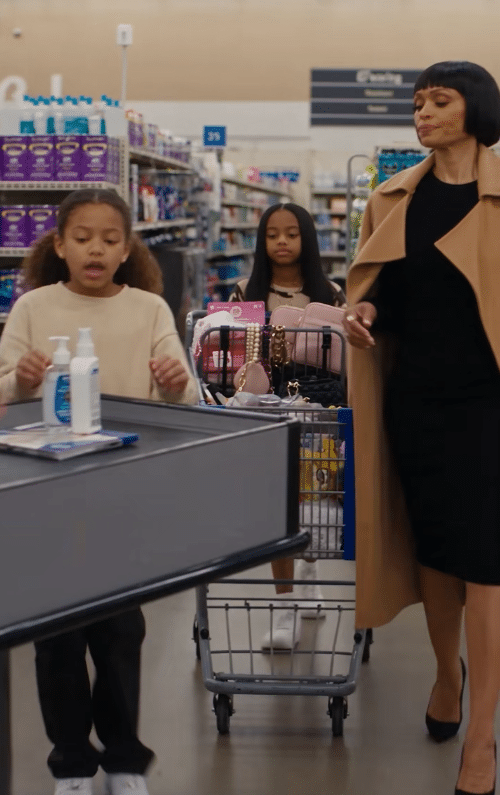
Nia stood beside the supermarket checkout, watching her stepmother lift three ordinary items from the conveyor belt: shampoo, toothpaste, and a school notebook.
They weren’t expensive electronics or fashionable accessories. They weren’t even things Nia had chosen for fun. They were basic necessities, the sort of purchases that should never have required a fourteen-year-old girl to defend herself in public.
Yet her stepmother placed them to one side as if Nia had tried to sneak something extravagant into the cart.
“Buy them yourself. My money is for my children.”
The cashier paused with one hand near the scanner.
Nia felt the heat rise into her cheeks. Behind her, shopping carts rattled across the polished supermarket floor, and the checkout machines continued their steady beeping. A few customers moved through the neighboring lanes, paying for groceries and preparing to leave.
Nobody else seemed to notice what was happening.
But Nia could feel every second of it.
She looked at the three items her stepmother had rejected, then at the shopping cart beside them. The cart was filled with household supplies, cosmetics, accessories, and personal-care products. Several of the newer items had been selected for Ava, Nia’s thirteen-year-old stepsister.
Ava’s things had remained in the cart.
Nia’s had been removed.
She tried to understand what made her purchases different. Shampoo wasn’t a luxury. Toothpaste wasn’t an unreasonable request. And the notebook was for school, where she was expected to arrive prepared like every other student.
Still, her stepmother was treating the items as though Nia had asked for a favor.
Nia lowered her eyes, fighting the embarrassment that threatened to overwhelm her.
She had learned that arguing often made things worse. If she protested, she risked being called ungrateful. If she stayed quiet, she would have to accept the decision without understanding why.
Her stepmother folded her arms.
“Is there a problem?” she asked the cashier, as though Nia were the one making the transaction difficult.
The cashier remained neutral.
Nia reached toward her notebook, but her stepmother moved it farther away.
The message was unmistakable: these things were not going to be purchased for her.
Nia looked at the cart again. Ava’s section held several new cosmetics and accessories, along with personal-care products that went well beyond the three items Nia had requested.
She swallowed.
“Dad gave you money for all of us.”
Her stepmother’s expression hardened.
“Your father’s guilt does not create an obligation for me.”
Nia went quiet.
She had not expected a speech about fairness. She had simply believed that the money Marcus had provided for the household would cover ordinary needs for all the children.
Now she was being told that even the basics were something she should buy herself.
And she had no idea that the payment record at the register was about to expose a much bigger problem.
Act II
Ava had been examining the products in the cart when she realized that Nia’s items were sitting off to the side.
She looked at the shampoo, toothpaste, and notebook, then at the cosmetics and accessories that had been chosen for her.
The difference was difficult to ignore.
Nia wasn’t asking for a new collection of makeup or an expensive accessory. She was asking for three ordinary items, yet her stepmother was treating the request as an unreasonable demand.
Ava reached into the cart and began removing some of her own purchases.
“Put Nia’s things back. I don’t need all this.”
She spoke sincerely.
Ava had no idea that the store credit being used for the transaction had been issued specifically in Nia’s name. She believed her mother when she said the credit belonged to the family, and she had assumed the shopping trip was being paid for fairly.
Now, seeing Nia’s items rejected while her own remained in the cart, she wanted to give something up.
Her mother stopped her.
“You will not go without because Nia expects charity.”
Ava stared at her.
Charity?
That was how her mother was describing shampoo, toothpaste, and a school notebook?
Ava looked at Nia, whose eyes had dropped toward the conveyor belt. Her stepsister wasn’t asking Ava to sacrifice everything she wanted. She was trying to obtain the few things she needed without turning an ordinary shopping trip into a public humiliation.
Ava felt a knot tighten in her stomach.
She had never thought of herself as someone who would benefit from another child’s exclusion. She had assumed the products in the cart were being paid for with money available to the household.
But her mother’s response made the difference between them seem deliberate.
Ava placed one of her accessories back into the cart, then reconsidered and lifted it out again. She didn’t know what else she could do without making the confrontation worse.
Nia glanced at her.
For a moment, she seemed grateful that someone had noticed the unfairness. But she also looked embarrassed that Ava had been forced to defend her in front of the cashier.
The supermarket continued around them.
A register beeped in the next lane. A cart rolled past. Someone collected a receipt and walked away.
At their checkout, the three basic items remained separated from the rest of the shopping.
Stepmother appeared determined to complete the purchase without them.
She had already decided that Nia’s needs were unnecessary, and Ava’s attempt to give up some of her own items had only made her more defensive.
Then a familiar voice came from the neighboring checkout.
“Why are Nia’s things off the belt?”
Marcus had noticed the confrontation and walked over.
He looked at the three rejected items, then at the much larger collection of products in the cart.
His daughter stood beside the conveyor, quiet and visibly embarrassed.
Stepmother turned toward him at once.
“She added unnecessary items without asking.”
Marcus looked down at the shampoo, toothpaste, and notebook.
He knew his daughter well enough to recognize how little sense that explanation made.
But before he could question it further, the cashier looked at the payment information on her register.
She paused.
Then she checked the record again.
What she found had nothing to do with whether Nia’s purchases were necessary.
It had to do with whose money had already paid for the items in the cart.
Act III
“Sir, this store credit was issued in Nia Carter’s name.”
The cashier spoke professionally, without accusation or drama.
She was simply explaining what the register showed.
But Marcus went still.
He looked at the cashier, then toward Nia. His daughter was standing beside the items that had been removed from the conveyor, her expression caught between confusion and humiliation.
The store credit had been issued in Nia’s name?
Marcus hadn’t expected that.
He looked toward his wife.
Stepmother’s face tightened, and her hand moved closer to her handbag.
The cashier checked the account information again to make sure she was reading it correctly. The payment record clearly identified Nia Carter as the person to whom the credit had been issued.
It wasn’t a general household credit with no named recipient.
It was Nia’s.
Marcus looked back at the cart.
Ava’s cosmetics and accessories remained among the products waiting to be purchased. The personal-care items chosen for her were still there, while Nia’s shampoo, toothpaste, and notebook sat separately on the side of the conveyor.
He began to understand why the situation felt so wrong.
His wife had rejected Nia’s basic purchases on the grounds that her own money was meant for her children. She had described Nia’s request as charity, even though the transaction now appeared to involve credit specifically issued in Nia’s name.
Marcus didn’t jump to conclusions.
He waited for the cashier to explain what the record showed.
The cashier turned back to the register and checked the recent transaction history associated with the same store credit.
A few taps later, she paused again.
“Most of Nia’s credit was already used on these products.”
She indicated the products associated with Ava’s purchases.
Marcus looked at the items.
The statement was precise. The store’s record showed that most of the credit issued to Nia had already been spent on products that were now sitting in the cart, many of them intended for Ava.
Nia stared at the register.
She hadn’t known that the credit existed in her name, let alone that most of it had already been used.
She had arrived at the checkout asking for ordinary necessities. Her stepmother had treated her request as an act of entitlement, insisting that she should buy the items herself.
Yet the cashier was now explaining that money issued specifically to Nia had already paid for much of the shopping.
The contrast was devastating.
Marcus looked from the register to his wife.
Stepmother had told the children that the credit belonged to everyone. She had made the purchases appear ordinary and the arrangement fair.
But the record told a different story.
Before Marcus could ask another question, Caleb spoke from beside the cart.
“Mom told us the credit belonged to everyone.”
His voice was small and confused.
He wasn’t accusing his mother of anything. He was repeating what he had been told, trying to reconcile her explanation with the cashier’s information.
And his words made the situation even clearer.
The children had been given one explanation.
The transaction record showed something else.
Act IV
Marcus looked down at the register, then at the items arranged across the conveyor belt.
The cashier remained composed, waiting for the family to decide how they wanted to proceed. She had not taken sides or offered an opinion about the household dispute.
She had simply explained two facts: the store credit was issued in Nia’s name, and most of it had already been used on the products currently associated with Ava’s purchases.
Those facts were enough to change the entire conversation.
Nia’s three items were still sitting apart from the rest of the shopping.
The shampoo had not been scanned. The toothpaste remained beside it, and the school notebook lay near the edge of the conveyor.
Meanwhile, Ava’s cosmetics and accessories had been included in the purchase from the beginning.
Ava looked down at the products in her section of the cart.
She had believed the credit belonged to the whole family. She hadn’t knowingly agreed to use money assigned to Nia, and she hadn’t understood that the transaction history would show most of it going toward her purchases.
Now she began moving her own products away from the checkout.
She didn’t make a scene or demand that anyone blame her mother. She simply wanted to stop benefiting from an arrangement she had never understood.
Nia watched her.
There was no satisfaction in her expression. She looked overwhelmed by the realization that the money she had believed was available for her needs had already been used elsewhere.
Marcus turned toward Caleb.
The boy looked genuinely confused. He had accepted the explanation that the credit belonged to everyone because it had come from his mother.
He had no reason to suspect that the label on the account might tell a different story.
Marcus understood that his children had been given an account of the situation that did not match the information now available.
He looked toward his wife.
Only minutes earlier, she had told Nia to buy her own supplies. She had said her money was for her children and that Marcus’s guilt created no obligation for her to support Nia.
But the cashier’s explanation had revealed that the credit involved in the transaction had been issued in Nia’s name.
The argument about charity now sounded very different.
Nia hadn’t been demanding that Stepmother spend her personal money on luxuries. She had been asking for basic personal-care items and a notebook while most of her named store credit had already been used on purchases associated with Ava.
Marcus glanced at the register one more time.
He wasn’t looking for a loophole or a technicality. He was trying to understand why his daughter had been publicly denied ordinary necessities while the credit issued to her had been used for other purchases.
The answer wasn’t coming from the register.
It would have to come from the woman who had made the decisions.
Marcus turned fully toward Stepmother.
She stood beside the cart, her composure slipping as the facts gathered around her. Her earlier certainty had depended on treating Nia’s request as unreasonable.
Now the payment record had undermined that story.
And Marcus was ready to ask the question she could no longer answer with a lecture about charity.
Act V
“You used Nia’s money, then called her needs charity?”
Marcus’s voice was controlled, but the accusation landed heavily.
Stepmother stared at him.
The checkout lane seemed to grow quieter around them. The cashier waited professionally behind the register, while the products remained divided between the conveyor and the cart.
Nia’s shampoo, toothpaste, and notebook were still set aside.
Ava was moving some of her own purchases away from the checkout, stunned by what she had learned. Caleb stood near the cart, still trying to understand why the explanation he had been given didn’t match the transaction record.
Marcus looked at his wife.
The evidence was simple.
The store credit had been issued in Nia Carter’s name. Most of it had already been used on products associated with Ava’s purchases.
And when Nia asked for three ordinary items, Stepmother had removed them from the conveyor and told her to buy them herself.
She had described Nia’s needs as charity while treating the products purchased with Nia’s credit as part of an ordinary family shopping trip.
Nia stood quietly beside her father.
She had not asked the cashier to investigate the transaction. She had not accused her stepmother of taking anything. She had simply asked for the items she needed and tried to explain that Marcus had provided money for everyone.
The truth had emerged without her having to prove it herself.
That did not make the moment less painful.
She looked at the products in the cart and wondered how long the credit had been used without her understanding what it was for. The record showed that most of it had already been spent, leaving her standing at a checkout being told that her basic needs were an unreasonable burden.
Ava looked at Nia, then at the items she had begun removing.
She hadn’t known.
That distinction mattered to her, and she wanted Nia to understand that she had never intended to take something that belonged to her.
But there was no easy way to undo the embarrassment of the scene or the words their mother had used.
Marcus waited for his wife to respond.
Stepmother glanced toward the register, then at the three items sitting apart from the others. Her face lost color, and her eyes widened slightly as she seemed to search for an explanation that could account for the record.
She had insisted that Nia’s purchases were unnecessary.
She had claimed the credit belonged to everyone.
Now the cashier had established that the credit was issued specifically to Nia and that most of it had been spent on products associated with Ava.
Marcus held her gaze.
“Your needs are charity,” he seemed to be asking without saying anything more, “but what you bought with her credit is family spending?”
Stepmother opened her mouth.
No answer came.
Nia stood beside her basic school items while Ava continued moving her own products away from the checkout. The cashier waited in silence.
Marcus didn’t look away from his wife.
And for the first time since the confrontation began, Stepmother had nothing to say.
Hard cut.