Act I
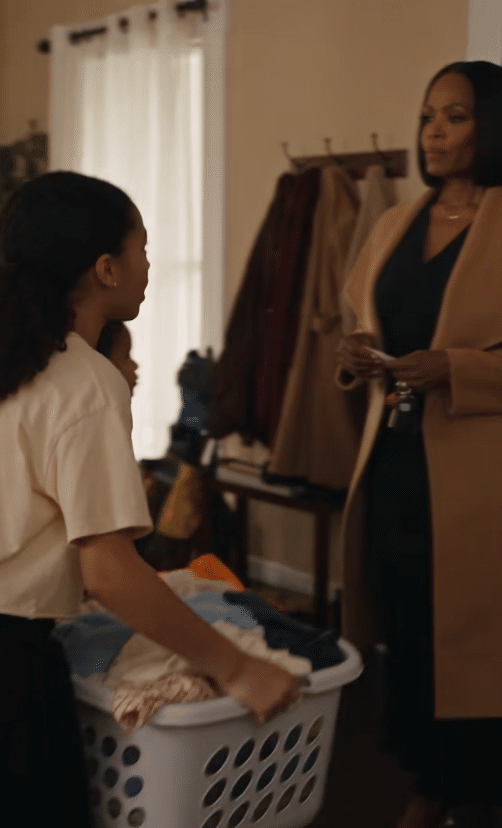
Nia was still holding the laundry basket when she realized everyone else was getting ready to leave without her.
Near the front door, her stepmother stood with car keys in one hand and a chore list in the other. Ava had her shoulder bag ready, and ten-year-old Caleb was clutching a stack of amusement-park tickets, practically bouncing with excitement. The family had been talking about this trip for days.
Nia had believed she was going, too.
She set the laundry basket beside the sofa and looked from the bags to the tickets.
“I thought we were all going to the park.”
Her stepmother didn’t even pretend to be surprised. She simply held out the chore list, as if Nia had asked an inconvenient question about an ordinary Saturday morning.
“Family outings are for family.”
The words landed with a quiet finality.
Nia glanced at Caleb’s hand. Four tickets. She counted them again, hoping she had misunderstood what she was seeing.
“Dad bought four tickets.”
For a moment, her stepmother’s expression tightened. Then she reached toward Caleb and took the fourth ticket from his hand.
Nia watched, unable to believe what was happening.
Her stepmother tore the ticket straight down the middle, then tore it again. The small pieces fluttered toward the floor.
“Then he wasted money. Finish the laundry before we return.”
Ava’s excitement vanished.
Caleb stared at the scraps, his fingers closing around the remaining tickets. Neither child had asked for this. Neither had expected the morning to turn into another lesson about who belonged in their family and who did not.
Nia looked down at the torn paper.
She didn’t cry or argue. She stood beside the laundry basket, trying to understand how a day she had anticipated with her father could be taken away so casually.
Her stepmother turned toward the door, apparently satisfied that the matter was settled.
But Caleb bent down.
And while his mother was looking away, he quietly picked up the pieces of Nia’s ticket and slipped them into his hoodie pocket.
He didn’t know it yet, but those scraps would soon become the first piece of evidence his father couldn’t explain away.
Act II
Marcus had promised his family a day at the amusement park.
He had bought four tickets because, in his mind, there was never supposed to be a question about who was included. Nia was his daughter. Ava and Caleb were his stepchildren. Whatever complications came with blending two families, he believed the children deserved to feel equally welcome.
His wife had assured him that everything was arranged.
She had smiled when he mentioned the tickets. She had talked about what the children should bring and what time they ought to leave. Nothing in her manner suggested that one child would be left behind.
But whenever Marcus was away, the rules seemed to change.
Nia had learned to recognize the signs. A family activity would be discussed in front of her, then quietly rearranged until she was no longer part of it. A promise would become a misunderstanding. An invitation would turn into something she supposedly hadn’t wanted.
And whenever she questioned the change, her stepmother found a way to make Nia feel responsible.
Sometimes it was because she had chores to finish. Sometimes it was because she was supposedly being difficult. Sometimes she was told that her father hadn’t made arrangements for her after all.
The explanations changed.
The outcome did not.
Nia had never wanted to believe that someone could deliberately keep her away from her own family. It was easier to imagine that adults made mistakes, that schedules changed, that she had misunderstood what was promised.
She was fourteen, old enough to notice patterns but still young enough to hope that the next time would be different.
This time, she had trusted the tickets.
Four admissions. Four people. One family outing.
Now the fourth ticket lay in pieces on the floor.
Her stepmother placed the chore list on top of the laundry basket. Several items were written in neat handwriting, with the remaining household tasks marked as though Nia had been assigned them long before anyone had discussed the amusement park.
The implication was unmistakable.
Everyone else would spend the day making memories. Nia would stay behind and work.
Ava looked from the list to her mother.
“You’re seriously making her stay here?”
Her mother gave her a warning look.
“Don’t start.”
Ava’s jaw tightened, but she said nothing more. She had spent years watching her mother make decisions and expecting the rest of the household to accept them. Until recently, she had tried to avoid getting involved in conflicts between Nia and her mother.
That morning, avoidance felt different.
She could see Nia’s face. She could see the torn ticket. And she knew her father had purchased four admissions.
There was no misunderstanding to hide behind.
Caleb kept one hand inside his hoodie pocket, feeling the torn pieces against his fingers.
He was too young to understand every layer of the conflict, but he understood the simplest part: Nia had been given a ticket, and their mother had destroyed it because she didn’t want Nia to go.
Then the front door opened.
Marcus walked inside unexpectedly.
He stopped almost immediately.
Ava and Caleb were dressed for the outing. Their bags were ready. His wife held the car keys. Nia stood beside a basket of laundry with a chore list in front of her.
It took him only a moment to realize that something was wrong.
“Why isn’t Nia ready?”
His wife turned toward him.
And with a speed that would have been impressive if it hadn’t been so revealing, she changed the story.
Act III
“She chose to stay home.”
The answer came smoothly, accompanied by a small, disappointed shake of the head.
Marcus looked at Nia.
She was holding the chore list now, gripping the paper near its edges. Her face was composed, but she had stopped looking toward the door. Whatever excitement she had carried into the morning was gone.
He waited for her to explain.
Nia glanced at her stepmother, then back at her father.
“She said I’m not family.”
The room seemed to shrink around the words.
Marcus looked at his wife, who immediately stepped forward with an expression of practiced concern.
“She’s trying to ruin the day for everyone.”
It was a familiar maneuver. Instead of explaining why Nia had been excluded, she made the girl’s hurt sound like a deliberate attempt to cause trouble. The accusation shifted attention away from the torn ticket and toward Nia’s reaction.
If Marcus accepted that explanation, the morning could continue as planned.
If he questioned it, he would have to confront the possibility that his wife had lied to him.
For a second, the old pattern seemed ready to repeat itself.
Then Marcus noticed Caleb.
The boy had gone unusually quiet. His gaze kept shifting between his father and his mother, and one hand remained tucked inside his hoodie pocket.
Marcus had learned that Caleb often noticed more than he said.
“Caleb?” he asked gently.
The boy hesitated.
His mother turned toward him.
“Come on. We need to leave.”
Caleb didn’t move.
Nia stood beside the laundry basket, still holding the list that had replaced her ticket. She wasn’t asking anyone to defend her. She wasn’t trying to convince Marcus that her stepmother was cruel.
She had simply told him what had happened.
That made the silence afterward even more painful.
Marcus looked at the children, then at the four places that had been prepared for an outing that was suddenly supposed to involve only three people. He remembered buying the tickets. He remembered being explicit about the number.
He had not bought three.
He had bought four.
His wife folded her arms.
“Are we really going to do this right now?”
Marcus didn’t answer.
Caleb slowly withdrew his hand from his pocket.
The torn ticket fragments rested in his palm.
He held them out to his father.
“Mom tore Nia’s ticket.”
Marcus accepted the pieces.
They were small, irregular scraps of paper, but the printed design and admission details were still recognizable. He brought the edges together, enough to understand what they were.
This wasn’t a child misunderstanding an invitation.
It wasn’t Nia choosing to stay home.
It was a ticket Marcus had purchased, deliberately destroyed by the person who had assured him the family outing was arranged.
His wife stared at the pieces.
For the first time that morning, she seemed unable to decide which explanation to offer.
But Ava wasn’t finished.
She had been standing near the sofa with her phone in her hand. Her expression had shifted from anger to something more serious, as though she had finally decided that protecting her mother from an uncomfortable truth was no longer worth the cost.
She unlocked the screen.
“There’s something else Dad needs to see.”
And when she turned the phone toward Marcus, the real reason for Nia’s exclusion began to emerge.
Act IV
The message was short.
Ava held the phone steady while Marcus read the words displayed on the screen.
“Three real family members only.”
For a moment, he said nothing.
The message had come from his wife. There was no ambiguity in its wording, no missing context that could transform it into an innocent remark. Beside it sat the evidence of the morning: the four tickets, the torn fragments, and Nia standing beside a laundry basket because she had supposedly chosen not to attend.
Marcus looked up from the phone.
His wife had gone very still.
Ava’s voice was quiet when she spoke.
“I found it in the messages.”
She wasn’t looking at her mother anymore. She was watching her father read, perhaps realizing that the family she had grown up in had been held together by explanations she had never thought to question.
Marcus looked at the screen again.
The phrase didn’t merely exclude Nia from one trip. It revealed how his wife thought about the household when she believed he wasn’t watching.
Three real family members.
The implication was cruelly simple: Marcus, his wife, Ava, and Caleb could be presented as a family, but Nia was somehow outside that circle, despite being his daughter.
He scrolled slightly farther through the same message and photo history.
The images that appeared next were familiar in their pattern. Earlier outings showed his wife with Ava and Caleb. The children were together in photographs, smiling in places where a family might naturally want to preserve a memory.
Nia was repeatedly absent.
There was no need to invent an explanation for each picture. Their arrangement was troubling enough on its own, particularly when considered alongside the message and the torn ticket.
Marcus had seen those outings before.
He had assumed Nia wasn’t in the photographs because she hadn’t attended, perhaps because plans had changed or because she had something else to do. He had accepted the explanations he was given because he believed the adults in his home were acting in good faith.
Now he was beginning to understand that the absence itself had become part of the pattern.
Ava looked at Nia.
“She always tells Nia you didn’t buy her a ticket.”
The words struck Marcus harder than he expected.
He turned toward his daughter.
Nia’s expression changed as the meaning settled in. She had been told that her father hadn’t paid for her admission, that there had been no ticket for her, that the trip simply wasn’t something she could join.
She had believed those explanations because they came from an adult who spoke with certainty.
Now she could see the torn ticket in Marcus’s hand.
Her father had bought one for her.
He had wanted her there.
The person who had told her otherwise had been the same person who destroyed the ticket.
Marcus felt the pieces of the situation coming together with painful clarity. His wife had not merely failed to include Nia. She had allowed him to believe that Nia’s absence was her own choice, while telling Nia that her father had not made room for her.
One story had been designed for him.
Another had been designed for his daughter.
Between those two versions of reality, Nia had been left to believe that she was unwanted by the people who should have made her feel secure.
Marcus lowered the phone slightly.
His wife took a small step forward, as if she might finally explain.
But the evidence was no longer limited to someone’s recollection of a conversation. It was there in the message, the photographs, and the fragments of a ticket Caleb had quietly saved.
The question was no longer whether Nia had misunderstood.
The question was how many times this had happened while Marcus believed everything was fine.
He looked at the phone one final time.
Then he turned toward his wife.
Act V
The amusement-park bags remained by the door.
The car keys were still in his wife’s hand. Caleb held the remaining tickets close to his chest, while the torn fragments had been transferred to Marcus. The chore list lay beside the laundry basket, untouched.
The morning had not changed in any dramatic physical way.
No furniture had been overturned. Nobody had raised a hand. There was no great scene of destruction.
Yet the room no longer felt like the same home.
Marcus looked at Ava’s phone, then at the torn ticket pieces. He thought about the explanations he had accepted over the years and the occasions when Nia had quietly withdrawn rather than risk another disagreement.
He had believed he was giving his daughter a stable family life.
He had trusted that his wife would treat all the children fairly when he wasn’t there.
That trust had allowed him to miss what was happening right in front of him.
Nia stood a short distance away, watching him with an expression that was difficult to read. She seemed relieved that the truth had finally been seen, but the relief carried its own sadness.
She had not wanted to prove her stepmother wrong.
She had wanted to go to the amusement park with her family.
She had wanted the ticket her father bought for her to mean what it was supposed to mean: that someone had remembered her, counted her in, and expected her to be there.
Instead, she had been given laundry and told she did not belong.
Marcus turned toward her.
For a brief moment, he looked as though he wanted to say something, but his attention returned to the phone in his hand. The evidence demanded more than reassurance. It demanded that he recognize the difference between the family he believed he had and the one his wife had been presenting whenever he was absent.
He looked at the earlier photographs once more.
He did not need to know every detail of every outing to understand the pattern. The message had supplied the intention. The torn ticket had supplied the act. The photographs showed that Nia’s absence was not confined to this one Saturday.
His wife stood opposite him, no longer speaking.
Perhaps she was searching for a way to turn the accusation back on Nia. Perhaps she was trying to find a version of events that could make the message mean something else. Whatever explanation she was preparing, she had not yet found the words.
Marcus slowly lowered the phone.
He looked at the woman who had repeatedly assured him that the children were being treated fairly. Then he looked at the torn ticket in his hand, its pieces too small to restore the morning that had been taken from his daughter.
When he finally spoke, his voice was controlled, but the hurt beneath it was unmistakable.
“How many times did you leave her behind?”
His wife stared at him.
Her lips parted slightly, but no answer came. The confidence she had carried into the morning disappeared as she looked at the message on the phone and the torn ticket that had exposed her lie.
Ava stood silently beside her brother.
Caleb still held the remaining tickets.
And Nia, who had begun the morning believing she was simply going to spend a day with her family, stood beside the laundry basket while her father waited for an answer.
Her stepmother’s face lost its color.
Her eyes widened.
For once, there was no excuse ready, no accusation she could make against Nia, and no way to explain away the words on the screen.
She could only stand there, unable to answer the question that had finally exposed the truth.
Hard cut.