Act I
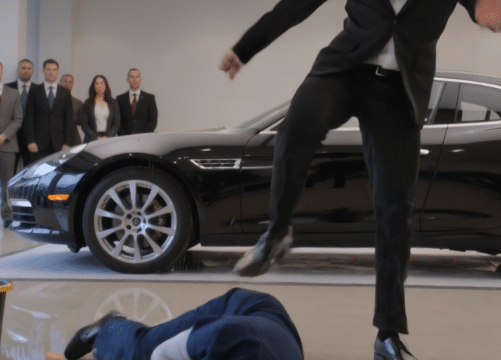
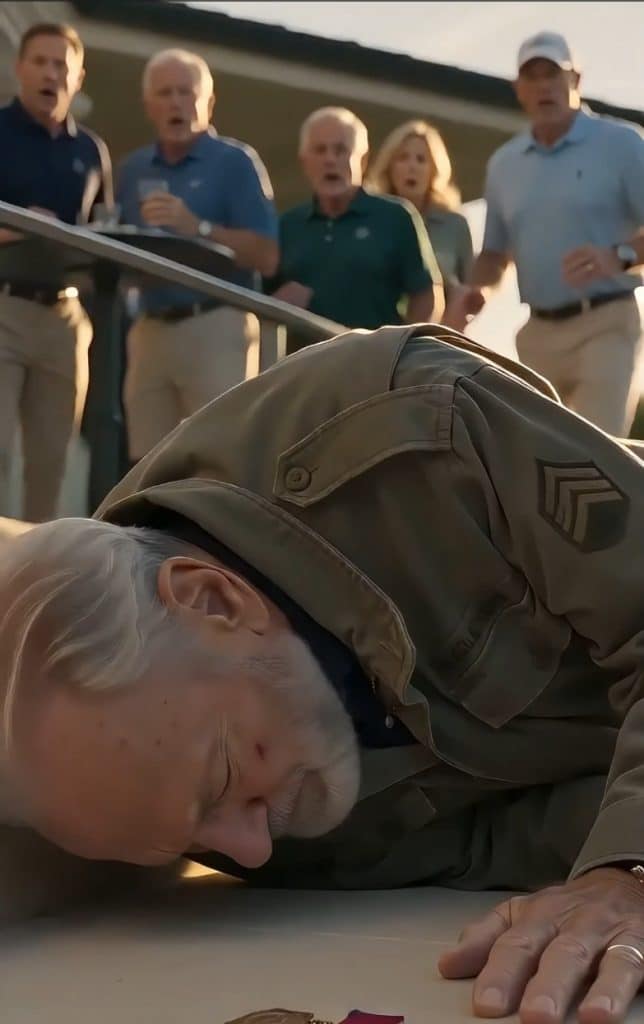
The medal hit the stone before anyone understood what it was.
A small scratched piece of metal on a faded ribbon slipped from the old man’s pocket, clattered once against the country club step, and came to rest beneath the polished brass doors.
Then General Thomas Miller fell beside it.
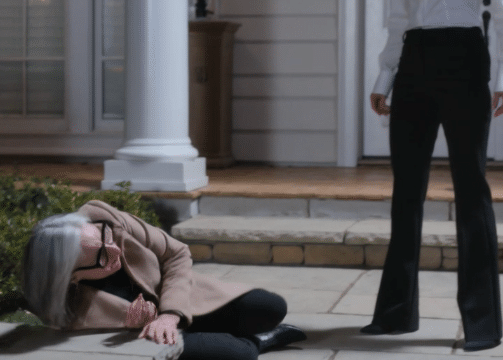
His faded army-green jacket twisted beneath his shoulder as he landed hard on the stone entrance. His worn jeans scraped against the step. A thin line of red appeared near his lip, but he did not reach for it.
He only looked at the medal.
As if something far more important than his pride had just been dropped.
The man who punched him stood above him in a pastel golf polo, white pants, mirrored sunglasses, and expensive gloves gripping a club membership card like a weapon.
“This club is for heroes,” he said, voice loud enough for everyone on the terrace to hear. “Not street trash.”
The words moved across the entrance like poison.
Members in golf attire froze near the glass dining terrace. A server stopped with a tray balanced in both hands. Two older women near the steps looked at the old man and then quickly away, as if shame could be avoided by refusing eye contact.
General Miller remained low, one palm on the stone.
He had weathered deserts, mountains, hospitals, funerals, and rooms full of men who mistook rank for courage. He had been shouted at by generals, senators, grieving parents, and frightened young soldiers.
But this was different.
Not because the punch hurt.
Because the wall above the club entrance held framed military portraits.
Men in uniform.
Men praised over steak dinners.
Men toasted by people who had never carried anything heavier than a golf bag.
And beneath those portraits, one of the club’s own members had struck an old veteran because his jacket looked poor.
The aggressor’s name was Preston Vale.
He was a third-generation member, a committee donor, and the kind of man who believed polished doors existed to keep out anyone who made comfort feel guilty.
Then footsteps rushed down the steps from inside.
The Club President appeared in a navy blazer, club tie, and gold name badge, his face changing the moment he saw the medal on the stone.
He did not look at Preston first.
He went straight to the old man.
“General Miller,” he said, voice shaken with respect, “we built this hall in your honor.”
The entrance went silent.
Above the brass doors, the camera of the room seemed to find the framed portrait.
A younger Thomas Miller in uniform.
Straight-backed. Decorated. Impossible to mistake.
Preston’s sunglasses slipped down his nose.
His face emptied.
“General?” he whispered.
Act II
The Bellehaven Country Club had never known what to do with its own history.
It liked the parts that looked good in frames.
The flag ceremonies. The charity tournaments. The veterans’ luncheon every November, when members wore patriotic pins and applauded speeches about sacrifice before returning to private dining rooms where staff were not allowed to sit.
The club had been founded after World War II by families who wanted a place of leisure with “American values.” Over time, those values became harder to define and easier to decorate. Military portraits lined the hallway not because most members understood them, but because they gave the club an air of honor it had not always earned.
One portrait stood above the main entrance.
General Thomas Miller.
Most members passed beneath it daily without reading the plaque.
Those who did knew the official version.
Decorated officer. Humanitarian evacuation commander. Founder of the Miller Veterans Recovery Fund. Instrumental in saving more than four hundred civilians and service members during the Arden Ridge crisis.
The real version was quieter.
Thomas Miller had grown up in a two-room house outside Dayton. His father fixed farm equipment. His mother worked nights at a laundry. The army was not a family tradition for him. It was a door.
He entered young, learned fast, and discovered leadership did not mean giving orders from clean rooms. It meant knowing which soldier had stopped sleeping. Which medic was hiding grief behind jokes. Which private had a letter from home folded too many times in his pocket.
Men followed Miller because he never asked them to carry fear alone.
During the Arden Ridge evacuation, a transport route collapsed under shelling and storms. Communications failed. Supplies ran thin. Command recommended withdrawal. Miller refused to leave civilians behind, including wounded children and elderly patients from a field clinic.
For three days, he moved people through freezing passes with half the equipment and twice the risk.
He came home with medals.
He also came home with ghosts.
The country gave him ceremonies. The army gave him citations. The club gave him a hall, a portrait, and a plaque polished every Friday morning by someone paid too little to know the man’s story.
Miller accepted none of it easily.
He disliked honors that turned pain into decoration.
He attended the hall dedication only because the club promised the event would raise money for veterans’ housing and medical support. For years, that promise held.
Then the club changed.
New members came in with hedge-fund money, real-estate money, inheritance money. The Veterans Hall became a rentable event space. The recovery fund became a line item. The portrait remained, but the work behind it faded into speeches.
Miller stopped visiting.
Until that morning.
A letter arrived from a former club employee whose son had served under him. The Veterans Recovery Fund had been quietly drained into clubhouse renovations. A wing supposedly reserved for disabled veterans had become premium storage for golf equipment. A memorial scholarship was being used as a tax-friendly trophy for donors’ children.
Miller did not call reporters.
He did not call lawyers.
First, he came to see the place himself.
He wore his old jacket.
He put one service medal in his pocket.
Not to prove who he was.
To remind himself who he had promised to remain.
Act III
Preston Vale noticed the jacket before he noticed the man.
That was enough.
He had spent the morning arguing with the membership committee about image standards. The club was preparing for a military heritage luncheon, and Preston wanted the entrance cleared of “loiterers,” delivery workers, rideshare drivers, and anyone who made arriving members uncomfortable.
Comfort, for Preston, meant not being forced to see need.
He was on his way to the terrace bar when he saw Miller standing near the brass doors, looking up at the portraits.
The old man’s jacket was faded. His jeans were worn. His boots had seen weather. His beard was gray and uneven. He looked like someone who had walked too far and slept too little.
Preston saw a threat to the club’s image.
“Can I help you?” he asked.
Miller turned.
“I’m here for the veterans’ event.”
Preston laughed once.
“The event is private.”
“I was invited.”
“By whom?”
Miller looked toward the doors.
“Someone who remembered.”
That answer irritated Preston more than a lie would have.
A few members paused nearby. Some recognized tension and slowed down to watch, though none moved closer.
Preston lifted his chin.
“You need to leave.”
Miller’s eyes rested on the portraits.
“I’d like to speak with the president.”
“The president does not meet with people off the street.”
“I’m not off the street.”
“You look it.”
The words should have ended the matter in shame.
Instead, they gave Preston a feeling of audience.
So he performed.
He stepped closer, raised his voice, and accused Miller of trespassing. When Miller did not cower, Preston grabbed his sleeve and tried to pull him away from the entrance. The old man steadied himself and said, quietly, “Take your hand off me.”
That calm sentence did what anger could not.
It exposed Preston’s weakness.
He swung.
Now, with the club president kneeling beside Miller and the old service medal lying between them, every member at the entrance had to choose what to see.
The man on the stone.
The portrait above the door.
The insult still hanging in the air.
This club is for heroes.
Not street trash.
The Club President, Malcolm Reed, picked up the medal with both hands.
His voice shook when he spoke.
“Sir,” he said, “I am so sorry.”
Miller looked at him.
“Don’t apologize before you know what you’re sorry for.”
Malcolm lowered his eyes.
That was when the shame truly began.
Act IV
Preston tried to recover behind anger.
Men like him often did.
“There’s been a misunderstanding,” he said, pulling off his sunglasses as if showing his face might make him more sincere. “I had no idea who he was.”
Miller slowly stood with Malcolm’s support.
His hand was scraped lightly. His lip marked. His jacket dusty at the shoulder. But his back straightened in a way that changed the entire entrance.
“No,” Miller said. “You didn’t.”
Preston nodded too quickly.
“Exactly. If I had known—”
“If you had known I was useful to your image,” Miller said, “you would have behaved better.”
No one spoke.
A golf cart idled near the path. The glass terrace reflected the frozen guests. Somewhere beyond the greens, a flag snapped softly in the wind.
Malcolm turned toward the assembled members.
“General Miller is not only our honoree today,” he said. “This entrance hall was dedicated to him fifteen years ago after the Arden Ridge evacuation. The Veterans Recovery Fund exists because of his work.”
A server near the doorway whispered, “That’s him?”
Another member looked up at the portrait and went pale.
Preston’s hand tightened around his golf glove.
“I support veterans,” he said weakly.
Miller’s eyes moved to him.
“You support being seen supporting veterans.”
That sentence found more than Preston.
It found the terrace.
The committees.
The framed portraits.
The luncheon tables waiting inside with folded napkins and printed programs about sacrifice.
Miller bent slowly and picked up the medal from Malcolm’s hands. He did not pin it to his jacket. He folded the ribbon once and held it in his palm.
“I was told the recovery fund has changed,” he said.
Malcolm’s face tightened.
Preston looked away.
Miller noticed.
“Has it?”
The question was quiet.
Malcolm answered like a man stepping into his own failure.
“Yes.”
The word struck the entrance harder than the punch.
Miller looked past him through the brass doors, into the hall where his younger face watched from the wall.
“Then we have two problems today,” he said. “One man who struck me. And one club that forgot why it honored me.”
Preston took a small step back.
Malcolm turned to security.
“Mr. Vale is suspended from club grounds immediately pending disciplinary review.”
Preston stared.
“Suspended? My family built half this place.”
Miller looked around at the stone steps, the brass doors, the portraits, the manicured greens.
“No,” he said. “People who served built what you sell.”
Act V
Preston Vale left through the side path.
Not proudly.
Not loudly.
His sunglasses were in his hand now, and without them his face looked smaller. Two security staff walked several feet behind him, not touching him, not needing to. Members watched from the terrace, some with satisfaction, others with discomfort because Preston had only said aloud what they had quietly allowed the club to become.
The veterans’ luncheon did not begin on time.
Miller insisted on that.
“Lunch can wait,” he said. “Truth has waited longer.”
Inside the hall, Malcolm Reed gathered the board, senior staff, committee chairs, and every member willing to remain. The portraits lined the walls around them. Officers, medics, pilots, nurses, infantrymen, chaplains, translators. Faces from different wars, different eras, different kinds of sacrifice.
Miller stood beneath his own portrait and hated every second of being watched.
But he spoke anyway.
“This hall was not built so wealthy men could borrow courage from dead soldiers,” he said.
No one moved.
“It was built to serve the living.”
The investigation began that afternoon.
The Veterans Recovery Fund had not been stolen in the simple way scandals prefer. It had been softened, redirected, renamed, diluted. Money intended for emergency housing had become “heritage programming.” Accessibility upgrades had been delayed while the terrace dining area expanded. Scholarship criteria had shifted until actual veterans’ families were competing against members’ grandchildren with better references.
Every change had a signature.
Every signature had an excuse.
Preston’s name appeared often.
So did others.
That was the truth the club least wanted to face.
Cruelty rarely survives alone. It survives because rooms learn to call it tradition, policy, taste, or standards.
Miller asked that no speech be made in his honor that day.
Instead, he asked for a table.
A plain one.
No flowers.
No crystal.
He sat with three disabled veterans who had come for the luncheon and nearly turned around at the gate because staff could not find their names on the VIP list. He listened to them describe delays, unanswered calls, and the quiet embarrassment of asking a rich club for help it had already promised.
Malcolm sat beside them and took notes by hand.
No assistant.
No performance.
By evening, the club announced immediate changes. Preston’s membership was revoked after the disciplinary review confirmed assault and conduct violations. The Veterans Recovery Fund was placed under independent oversight. Misallocated money was restored. The storage wing was cleared and reopened as an accessible recovery lounge for veterans and families. Scholarship criteria were rewritten with veteran advocates at the table.
Some members resigned.
Miller said good.
The old medal stayed in his pocket for the rest of the day.
He did not want it displayed.
But a week later, he returned with a small request.
At the entrance, beneath the brass doors and below his portrait, the club installed a simple glass case. Inside was not the medal.
It was a photograph of the stone step where the medal had fallen.
Beside it were the words Malcolm had proposed and Miller had edited down to one sentence.
Honor is how you treat someone before you know their story.
Members complained at first that the display was too uncomfortable.
Miller hoped it was.
Comfort had done enough damage.
Months later, the country club looked nearly the same from the road. Manicured greens. Glass terrace. Brass doors shining in the afternoon light. Wealthy members still arrived in golf carts and polished cars.
But the entrance had changed.
A wheelchair ramp led directly to the front, not around the side. Veterans visiting the recovery lounge were greeted by name. Staff were trained to intervene when members harassed guests, workers, or anyone who did not match the club’s idea of belonging.
The portraits were no longer just decor.
Each one had a real story beneath it, written with family permission, including failures, grief, and service after coming home.
Miller visited once a month.
Never in uniform.
Sometimes in the same faded green jacket.
The first time he returned after the incident, a young valet saw him approaching and rushed to open the brass door. Then he paused, suddenly uncertain, as if afraid of performing respect for the wrong reason.
Miller noticed.
“What’s your name?” he asked.
“Ethan, sir.”
“Ethan, would you have opened that door if you didn’t know who I was?”
The boy swallowed.
Then he answered honestly.
“I’m learning to.”
Miller smiled faintly.
“That’s better than pretending you already knew.”
Inside, Malcolm waited near the hall.
“You still hate the portrait,” he said.
Miller looked up at his younger self in uniform.
“I don’t hate him. I just know what he cost.”
Malcolm nodded.
They stood together for a moment beneath the framed face of a man the club had honored and failed to recognize when age, plain clothes, and a worn jacket changed the packaging.
Later that afternoon, Miller walked out to the terrace where several veterans sat with their families overlooking the greens. A little girl asked about the medal ribbon peeking from his pocket.
“Did you win that?” she asked.
Miller sat carefully in the chair beside her.
“No,” he said. “I carried it.”
She frowned.
“What’s the difference?”
He thought for a while.
“Winning makes it sound like a game. Carrying means you remember who didn’t come home.”
The girl grew quiet.
Her father, seated nearby with a cane resting beside him, looked away toward the grass.
Miller did not say more.
The best truths did not need polishing.
Years later, members still told the story of the day Preston Vale punched an old man at the club entrance and learned too late that he was General Miller.
They remembered the medal clattering on stone.
The portrait above the door.
The president’s horrified voice.
General Miller… we built this hall in your honor.
And Preston’s breathless question.
General?
It was a satisfying story because arrogance broke where everyone could see it.
But Miller never liked the story when told that way.
It made his rank the point.
It made the lesson too easy.
The punch had been wrong before anyone saw the medal.
The insult had been ugly before anyone looked at the portrait.
The old man on the stone step had deserved a hand before the club remembered his name.
That was why, when school groups toured the hall, Miller never began with medals or battles.
He began with the door.
He pointed to the entrance and told them that every institution reveals itself not by whom it honors in frames, but by whom it protects in real time.
Then he would tap the pocket where the old medal rested and say the sentence he wished every club member had known before the day he fell.
“If you need proof before showing respect, you were never honoring heroes. You were only admiring uniforms.”