Act I
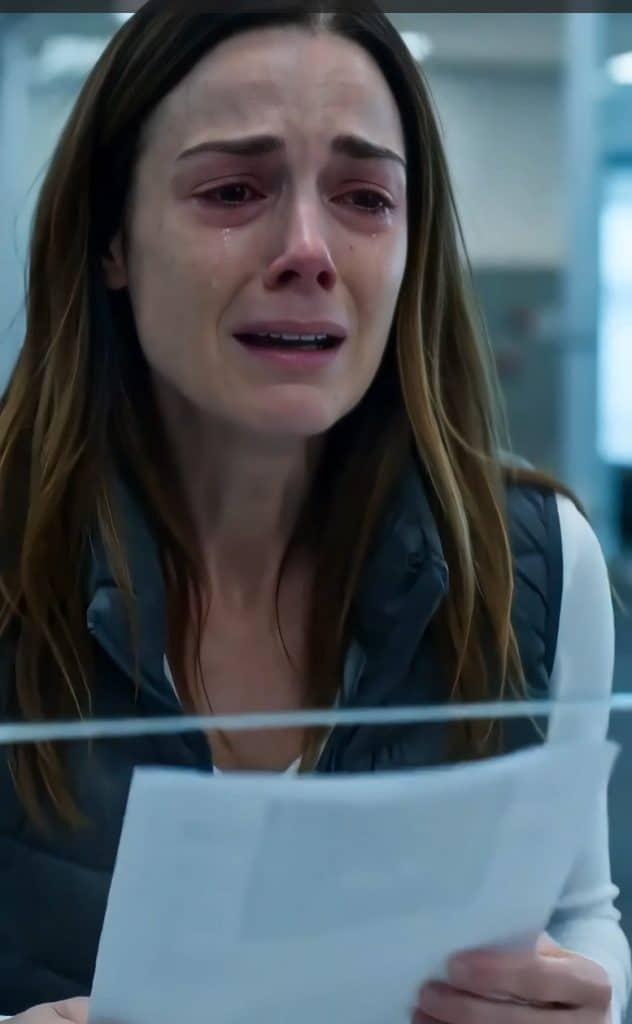
The woman at the teller window was trying not to fall apart in public.
Her name was Hannah Reed, and both of her hands were wrapped around a stack of papers as if paper could hold a life together. The bank was bright, cold, and spotless, with polished grey tiles beneath her feet and glass partitions between her and the woman who had just ended her last hope.
“Please,” Hannah said, leaning closer to the opening beneath the glass. “I’m trying to save my mother’s house.”
The teller did not look cruel.
That almost made it worse.
She looked trained. Calm. Efficient. The kind of person who could say devastating things without letting them touch her face.
Behind her, computers hummed. Keys clicked. Somewhere in the glass-walled offices, someone laughed softly, as if the world was still normal.
The teller glanced at her screen.
“The extension was declined.”
Hannah blinked.
For a moment, she did not understand the words. Not because they were complicated, but because they were too simple for what they destroyed.
Declined.
As if she had asked for a credit card limit increase.
As if she had not been standing there with her mother’s medical bills, her father’s old property records, and the foreclosure notice folded so many times the paper had gone soft at the edges.
“There has to be one more option,” Hannah whispered.
Her hands trembled as she lifted the top page. Attached to it was a black-and-white photograph: an old porch, three wooden steps, a young couple sitting side by side, and a little girl with tangled hair leaning against her father’s knee.
Hannah had been that little girl.
The porch behind them had once smelled like fresh-cut cedar and summer rain. Her father had built it after work, board by board, even when his hands were blistered from factory shifts.
The teller looked at the balance again.
“Not with this balance.”
Hannah lowered the paper.
Something inside her cracked quietly.
“My dad built that porch with his hands,” she said, her voice breaking. “He worked nights for two years to pay off that house. He told my mom no bank would ever take it from her.”
The teller’s expression softened by a fraction.
Then training took over again.
“I’m sorry.”
Hannah stared at her.
There were apologies that held warmth.
This one sounded like a closing screen.
She pressed the documents to her chest, suddenly aware of everyone around her. A man at the next window pretended not to listen. A young banker shuffled papers without looking up. The glass partition reflected Hannah’s tear-streaked face back at her, pale and exhausted under the fluorescent lights.
She had promised her mother she would come home with good news.
She had promised her father’s grave she would not let strangers put a lock on the front door he had painted blue.
Now all she had was a stamped denial and a stranger’s empty apology.
Then a door opened behind the teller line.
Firm footsteps crossed the tile.
A man’s voice cut through the bank.
“Wait.”
The teller turned so quickly her chair scraped the floor.
Hannah looked over her shoulder.
An older man in a sharp dark blue suit stood at the office doorway, silver hair neatly combed, blue tie straight, face stern and unreadable. He was not looking at the teller.
He was looking at the photograph in Hannah’s hands.
And the moment he saw the porch, his face changed.
Act II
Hannah did not know him.
But everyone else in the bank did.
The teller sat straighter. A young loan officer froze halfway through closing a drawer. Even the manager behind the glass-walled office stepped out as if someone had pulled an invisible wire through the room.
The man in the blue suit walked toward the counter slowly.
“May I see that photograph?” he asked.
His voice was lower now, but it carried more weight than the teller’s refusal had.
Hannah hesitated. She had been holding those papers so tightly all morning that handing them over felt like surrendering the last piece of her family.
But something in his eyes stopped her from saying no.
She slid the photograph beneath the glass.
The teller picked it up and passed it to him.
The man held it carefully, almost reverently.
“Where did you get this?”
“It’s my family,” Hannah said. “That’s my parents on the porch. That’s me when I was five.”
His eyes moved over the image.
“The man,” he said. “Your father. What was his name?”
“Samuel Reed.”
The name struck him like a sound only he could hear.
For a few seconds, the bank disappeared from his face. The glass, the counters, the lights, the staff watching in silence. All of it seemed to fall away.
He was somewhere else.
Some year far behind him.
“Samuel Reed,” he repeated.
Hannah wiped her cheek with the back of her wrist. “Did you know him?”
The man did not answer immediately.
Instead, he looked again at the photograph, this time at the far left corner. Hannah had never paid attention to that part. It was blurred, half-shadowed by the porch rail.
But there was someone there.
A teenage boy, thin and serious, standing slightly apart from the family like he did not belong in the picture but had been invited into it anyway.
The man touched that corner of the photo.
“That’s me,” he said.
The teller’s mouth parted.
Hannah stared at him.
“You?”
He nodded slowly. “My name is Richard Vale.”
The name meant nothing to Hannah at first.
Then she heard someone behind the counter whisper, “The chairman.”
The chairman.
Not a branch manager. Not a loan officer.
The man whose name was on the brass plaque by the entrance. The man whose portrait hung in the annual report Hannah’s mother still received in the mail because Samuel Reed had insisted on keeping paper statements until the day he died.
Richard Vale looked at Hannah with something close to grief.
“Your father saved my life.”
The words were so unexpected that Hannah almost laughed.
Not because they were funny.
Because nothing about this day had made sense for so long that the truth arrived sounding impossible.
“My father worked at the mill,” she said. “He fixed machines. He built porches. He didn’t know bankers.”
“I wasn’t a banker then,” Richard said. “I was a runaway boy with nowhere to sleep.”
The bank had gone utterly quiet.
Even the teller stopped pretending this was routine.
Richard handed the photograph back, but his hand lingered near it.
“It was 1978,” he said. “I was sixteen. My father had thrown me out. I slept for two nights behind the bus station. Samuel found me trying to steal bread from the market.”
Hannah’s throat tightened.
Her father had never told that story.
“He didn’t call the police,” Richard continued. “He bought me dinner. Then he brought me to that porch.”
Hannah looked down at the photograph.
The blurred boy in the corner suddenly sharpened in her mind.
“My mother never mentioned you.”
“She probably tried to forget me,” Richard said softly. “I was ashamed and angry. I stayed three weeks. Your father found me work, helped me get into night school, and gave me the first money I ever saved.”
He gave a small, bitter smile.
“I left without saying goodbye.”
Hannah looked from him to the teller, then back again.
It was a touching story.
But touching stories did not stop foreclosure notices.
Richard seemed to know what she was thinking.
He turned to the teller.
“Pull the full file.”
The teller swallowed. “Mr. Vale, I already reviewed—”
“I didn’t ask what you reviewed,” he said. “I said pull the full file.”
Her fingers flew across the keyboard.
Hannah stood very still as the screen reflected in the glass between them.
For the first time that morning, the bank no longer felt like a wall.
It felt like a room holding its breath.
Then the teller found something buried in the account history, and all the color left her face.
Act III
Richard noticed before Hannah did.
“What is it?” he asked.
The teller clicked once, then again, as if the computer might change its answer if she frightened it enough.
“There’s an archived notation,” she said carefully.
“Read it.”
Her eyes flicked to Hannah.
Richard’s voice hardened.
“Out loud.”
The teller inhaled.
“Original mortgage secured March 1984. Balance satisfied in full November 1999.”
Hannah frowned.
“That’s impossible.”
Her father had died in 2001. Her mother had always said the house was nearly paid off when the hospital bills came. Nearly, but not fully. After Samuel died, the bank had offered refinancing to cover medical debt and funeral expenses.
That refinance had become the chain around her mother’s life.
Richard stepped closer to the screen.
“What else?”
The teller scrolled.
“A lien was reopened in 2002 under hardship restructuring.”
Hannah nodded through tears. “That’s the loan we’ve been paying.”
Richard’s eyes narrowed.
“Authorized by whom?”
The teller’s fingers stopped.
No one moved.
“Helen Reed,” she said.
“My mother signed it?”
“That’s what the file says.”
Hannah shook her head. “No. My mother could barely hold a pen then. She was in the hospital after a stroke. My aunt handled everything for her.”
Richard turned sharply.
“What was your aunt’s name?”
“Marjorie Dunn.”
At the sound of that name, the branch manager near the office doorway shifted.
Just slightly.
Richard saw it.
So did Hannah.
“Mr. Vale,” the manager said quickly, “these records are very old. I’m sure there’s no need to discuss internal—”
“Be quiet, Paul.”
The manager’s face reddened.
Richard looked back at the teller. “Show me the signature page.”
A scanned document appeared on the monitor.
The teller turned the screen just enough for Richard to see it. Hannah leaned forward, heart pounding.
There it was.
Helen Reed.
Her mother’s name in blue ink.
But it was wrong.
Not obviously. Not to a stranger.
But Hannah knew her mother’s handwriting the way people know the sound of their own front door opening. Helen’s H had a soft loop. Her R leaned back. She always pressed hard at the end of her last name, leaving a dark little hook under the d.
This signature was too smooth.
Too careful.
Too much like someone had practiced.
“That’s not hers,” Hannah whispered.
The teller said nothing.
Richard turned to the manager.
“How long have you worked at this branch?”
Paul adjusted his tie. “Twenty-three years.”
“And Marjorie Dunn?”
Paul’s face became still.
“She was a client,” he said.
Richard’s stare did not move.
“What else was she?”
The silence stretched.
Hannah looked between them, suddenly feeling that the debt her family had been drowning under was not just tragedy.
It was design.
Richard’s voice dropped.
“Answer me.”
Paul swallowed.
“She worked here,” he said.
Hannah felt the floor tilt beneath her.
“My aunt worked at this bank?”
“In loan processing,” Paul admitted. “Years ago.”
Hannah thought of Aunt Marjorie, who had handled the bills after her father’s death. Marjorie, who told Helen she was lucky the bank had shown mercy. Marjorie, who moved to Florida five years later with a new car and never visited again.
Hannah pressed one hand against the counter.
“No,” she whispered. “No, she wouldn’t.”
But memory is cruel when it finally starts arranging itself.
She remembered her mother crying over statements she did not understand. She remembered Marjorie telling everyone Samuel had left “more debt than pride.” She remembered how the porch boards began to rot because every extra dollar went to payments that never seemed to shrink.
Richard was reading the screen now, his face darker with every line.
“There are fees here that should not exist,” he said. “Insurance charges after the policy was canceled. Penalties applied during medical deferment. A restructuring note attached to a mortgage that had already been paid.”
Paul stepped forward. “This is not appropriate to handle at the counter.”
Richard looked at him.
“No. It should have been handled twenty years ago.”
Hannah’s tears had stopped.
A new feeling was rising beneath them.
Not hope.
Not yet.
Fury.
“My mother lost her health paying this,” she said. “She sold her wedding ring. She skipped medication. She thought my father failed her.”
Richard closed his eyes briefly.
When he opened them, he was no longer the man remembering a porch.
He was the chairman of the bank.
“Lock this file,” he said. “No one alters a single record.”
Paul’s face went pale.
Then Richard said the words that changed everything.
“And get legal downstairs now.”
Act IV
They moved Hannah into a private office with glass walls, but privacy came too late.
Everyone in the bank had seen enough.
The teller brought Hannah water with shaking hands. This time, her apology sounded human.
“I didn’t know,” she said quietly.
Hannah looked at her.
“I know.”
And she did.
The teller had been cold because the system had taught her coldness as safety. Look at the balance. Read the screen. Say the line. Move to the next customer.
But Hannah’s family had not been ruined by one cold sentence.
It had been ruined by signatures, silence, and people who looked away because looking closer would have cost them something.
Richard sat across from her, the old photograph on the desk between them.
“I owe you the truth,” he said.
Hannah’s voice was raw. “You owe my mother more than that.”
He accepted it.
“Yes.”
Within an hour, two internal attorneys, a compliance officer, and a records specialist were standing around the table with files spread open like evidence. The more they found, the uglier it became.
Samuel Reed had paid off the house in full.
The discharge document had been prepared but never properly recorded.
After his death, Marjorie Dunn used her access and Helen’s medical condition to create a new loan against the property. She marked it as emergency restructuring. She directed funds through a contractor account later connected to her own husband.
Helen never received most of the money.
The bank collected payments for two decades.
Hannah listened until sound became distant.
Twenty years.
Twenty years of her mother apologizing for needing help. Twenty years of Hannah working double shifts, cancelling plans, choosing between repairs and medicine. Twenty years of believing her father had left behind a burden when he had actually left behind a home.
Richard’s jaw tightened as the final report formed.
Paul, the branch manager, tried once more to protect himself.
“These were legacy issues,” he said. “The institution has changed since then.”
Richard looked at him coldly.
“You approved the foreclosure review last month.”
Paul fell silent.
“And you saw the archived satisfaction note.”
Paul’s eyes dropped.
Hannah stared at him.
“You knew?”
The manager said nothing.
That was his confession.
Hannah stood slowly. The chair legs scraped against the floor.
“My mother is eighty-one,” she said. “She keeps my father’s work boots by the back door because she says the house still feels like he might come in from the yard. She thought she was losing that because she couldn’t pay.”
Her voice shook, but she did not cry.
“You let her believe that.”
Paul looked toward Richard. “I followed procedure.”
Richard’s face hardened.
“No. You hid behind it.”
By late afternoon, the foreclosure action was frozen.
By evening, Richard had ordered a full restitution review.
By the next morning, Hannah was driving back to her mother’s house with Richard Vale in the passenger seat and the old photograph resting on his lap.
The house sat at the end of a narrow road lined with maple trees.
It was smaller than Richard remembered.
The blue paint on the front door had faded. The porch sagged slightly at one corner. A wind chime made of old keys hung beside the steps, ringing softly in the breeze.
Helen Reed was sitting in a chair by the window when Hannah walked in.
She looked up, frightened at first.
“Hannah?”
Hannah crossed the room and knelt beside her.
“Mom,” she said, taking both of her hands. “Dad paid off the house.”
Helen stared at her.
“What?”
“He paid it off. Before he died. You never owed what they said you owed.”
Helen’s lips parted, but no sound came.
Richard stepped forward slowly.
For the first time all day, he looked afraid.
“Mrs. Reed,” he said. “You may not remember me.”
Helen looked at him for a long moment.
Then her eyes filled.
“Ricky Vale,” she whispered.
Richard lowered his head.
“I’m sorry it took me so long to come back.”
Helen began to cry then.
Not because of the money.
Because after twenty-five years of believing her husband had failed her, someone had finally brought Samuel’s honor home.
And Richard still had one more thing to return.
Act V
Three weeks later, the porch was full of people.
Not reporters. Richard had offered to keep the story quiet until Helen felt ready. Hannah had expected him to protect the bank first, but he surprised her.
“Institutions don’t heal by hiding the wound,” he said.
The bank issued a public apology. Paul resigned before he could be removed. Marjorie Dunn, old and living under a different name in Florida, received notice from investigators before she received notice from family.
But none of that mattered as much to Helen as the letter.
Richard had found it in a sealed archive box labeled under his old employee sponsorship file. Samuel had written it in 1999, the year he paid off the house.
It had never been mailed.
Richard stood on the rebuilt porch, his hands trembling slightly as he gave it to Helen.
“I think he meant for you to have this,” he said.
Helen opened the envelope with Hannah beside her.
Samuel’s handwriting filled the page, strong and slanted.
My Helen,
If you’re reading this, it means I finally managed to do something right without making a big speech about it.
The house is ours now. Every board, every nail, every stubborn step on that porch. No bank owns it. No stranger can tell you to leave it.
I built the porch because you said every home needs a place where people can come back. I didn’t understand it then. I do now.
One day, Hannah will sit there with her own troubles, and I hope the wood remembers us well enough to hold her.
Helen pressed the letter to her mouth.
Hannah turned away, wiping her face.
Richard looked out over the yard, ashamed to be standing in a place that had given him shelter while his own bank had nearly taken it away.
The restitution money came later.
Enough to repair the house. Enough to cover what Helen had overpaid. Enough for Hannah to stop working nights and begin breathing like a person who had not been underwater for years.
But Hannah did not cash the first check immediately.
She carried it to the porch and sat beside her mother.
The boards were new now, sanded smooth, but Richard had saved one original plank from the old steps. He had it cleaned, sealed, and placed beneath the porch swing where Samuel’s boots had once rested.
Helen ran her fingers over it every morning.
“Your father would have liked that,” she said.
Hannah smiled through tears.
“He would’ve said it was crooked.”
Helen laughed.
It was a small laugh, fragile from years of worry, but it filled the porch like sunlight.
A month after the bank confrontation, Richard returned alone.
He was not wearing the blue suit this time. Just a grey sweater, dark trousers, and the uncertain expression of a man who had spent his life building power and still did not know how to ask for forgiveness.
Hannah met him at the steps.
“My mother’s resting,” she said.
“I won’t disturb her.”
He held out an envelope.
Hannah looked at it warily.
“What is that?”
“A scholarship fund,” he said. “In your father’s name. For working adults going back to school. People who need someone to believe they’re not finished.”
Hannah’s throat tightened.
“You don’t have to keep paying us.”
“I’m not paying you,” Richard said. “I’m paying forward what Samuel gave me.”
Hannah looked toward the porch.
For years, she had thought her father’s legacy was a house under threat, a debt that would not die, a promise too heavy for one daughter to carry.
Now she understood it was something else.
Samuel Reed had built more than wood.
He had built shelter.
For his wife. For his child. For a starving runaway boy who grew into a powerful man and finally came back in time to stop the machine that bore his name.
Hannah took the envelope.
“Mom will want you to stay for dinner,” she said.
Richard’s eyes softened.
“I’d like that.”
That evening, Helen sat on the porch swing with a blanket around her shoulders while Hannah brought out three plates. The sun dropped behind the maple trees. The wind moved gently through the key chime by the door.
No foreclosure notice waited on the table.
No bank envelope sat unopened in fear.
The blue front door had been freshly painted.
Richard stood at the bottom of the steps for a moment, looking at the porch in silence.
Hannah watched him.
“What are you thinking?”
He touched the railing Samuel had built decades earlier.
“That your father saved me twice,” he said.
Hannah shook her head softly.
“No,” she said. “He just built a place good enough for the truth to come back to.”
Inside, Helen called for them before the food got cold.
Hannah turned toward the door, then paused.
For the first time in years, she did not feel like she was guarding a house from loss.
She felt like she was coming home.
And beneath her feet, the porch held.