Act I
“He heard you. Back off.”
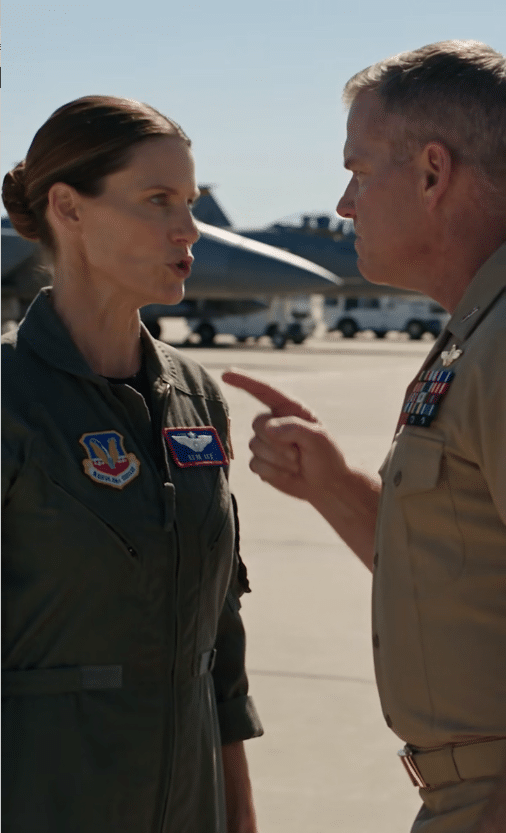
The warning came from a woman in an Air Force flight suit standing beside a parked aircraft. Her brown hair was secured neatly, her flight boots planted firmly on the tarmac. She had been watching a young crew chief struggle to get a senior officer’s attention.
The officer was Brigadier General Robert Hayes, a forty-nine-year-old commander whose one-star insignia seemed to matter more to him than the people working beneath it.
He turned toward her, visibly irritated.
“You don’t correct me on my line.”
She did not step away.
“Chocks! Left gear! Move!”
Her voice cut through the noise of the flight line. The ground crew reacted to the urgency in her warning, but Hayes was already furious that someone had challenged him in front of his personnel.
He stepped toward her.
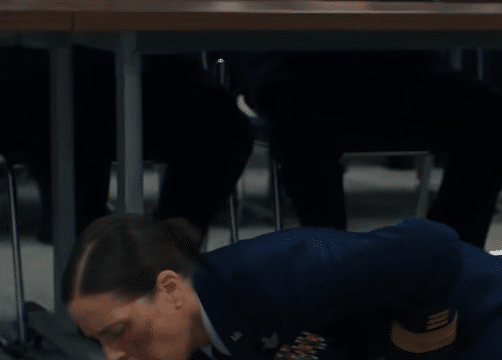
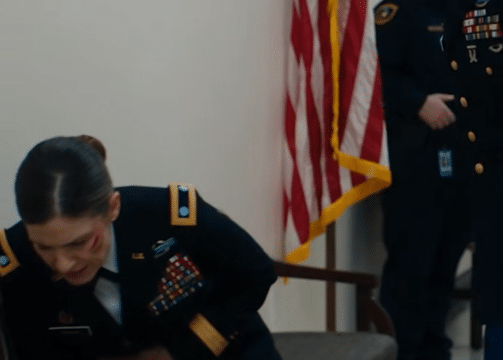
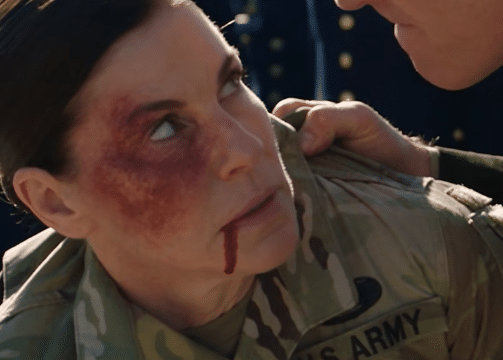
The slap came hard and without warning. Her face snapped sideways, and a red swelling began to rise across her cheek. A faint trace of blood appeared at the corner of her mouth.
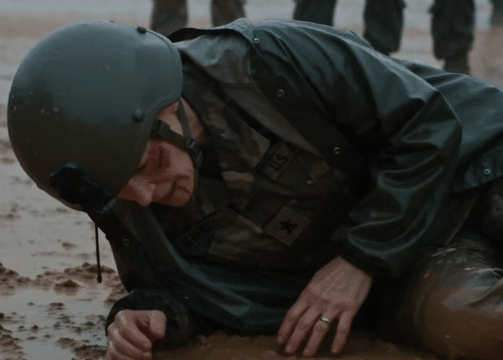
Before she could recover, Hayes drove a kick into her torso, knocking her onto the tarmac. She braced herself with one arm, struggling to breathe.
Then he delivered another hard kick into her side.
Nearby crew members froze. A young airman stared at the scene, visibly shocked, while another ground worker looked between the injured woman and the general.
Hayes stood over her, convinced he had silenced the challenge.
He had mistaken her warning for disrespect.
He had mistaken her uniform for proof that she was beneath him.
And he had no idea that the aircraft behind them was about to demonstrate exactly why she had spoken.
Act II
Her name was Claire Bennett.
At forty-one, Claire had spent much of her adult life around aircraft, flight crews, and the demanding realities of military aviation. She knew the difference between a routine mechanical concern and a developing emergency. She understood that a few seconds of hesitation on an active flight line could turn a manageable problem into a disaster.
She was not the kind of officer who needed to dominate a conversation.
She watched. She listened. She checked details that other people sometimes dismissed as minor.
That morning, she had noticed something troubling during activity around a parked aircraft. A young crew chief had been trying to draw attention to a problem involving the aircraft’s braking and ground-restraint arrangements.
The situation required immediate attention.
Claire recognized the danger before the people around her fully understood it. She directed the crew to check the appropriate equipment and warned Hayes to step back.
But Hayes had become accustomed to treating questions as challenges.
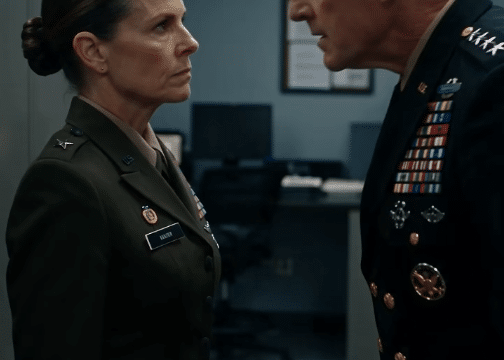
He was a Brigadier General, and he expected the flight line to respond to his presence with unquestioning obedience. His service uniform, ribbon rack, and one-star insignia were symbols of a career he believed had earned him the right to control every conversation.
He had little patience for anyone who interrupted his authority.
The young crew chief had already made him uncomfortable by raising a concern. Claire’s intervention made it worse.
Instead of checking the warning, Hayes focused on the fact that she had corrected him.
That decision revealed the weakness beneath his confidence.
A capable commander knows when to listen to the people closest to a problem. A dangerous commander assumes that admitting someone else is right would diminish his own position.
Claire had seen both kinds of leadership.
She knew that aircraft did not care about rank. A mechanical failure would not pause because a general wanted to finish speaking. The laws of physics did not become negotiable when someone wore stars on his uniform.
That was why she had called out the warning.
Now she was on the tarmac, her cheek swollen and her side aching with every breath. Hayes remained standing over her, apparently satisfied that he had restored the authority he believed she had challenged.
The ground crew did not share his satisfaction.
They had seen the warning. They had seen the assault. And they were beginning to understand that the woman on the ground had been paying attention to something far more important than Hayes’s pride.
Then the aircraft moved.
Act III
At first, it was almost subtle.
A low mechanical sound shifted beneath the ordinary noise of the flight line. A ground crew member turned toward the aircraft, then looked again as its position began to change.
It was rolling.
The realization spread through the crew faster than anyone could explain it. The aircraft was no longer securely stationary, and the people closest to it suddenly had a problem that demanded immediate action.
One airman moved toward the equipment. Another looked for a safe position. The young crew chief’s attention snapped back to the aircraft.
Hayes turned too.
But he did not immediately take command of the situation.
He had spent the previous moments asserting himself over Claire. Now, with an aircraft moving unexpectedly, his attention seemed divided between the danger and the people watching him.
Claire looked up from the tarmac.
Pain tightened her expression. Her cheek was visibly swollen, and one arm remained close to her side. She was still struggling to breathe normally.
But she recognized what was happening.
Her voice rose above the confusion.
“Chocks! Left gear! Move!”
The response was immediate.
The ground crew turned toward her and acted. The crew chief moved into position, and personnel followed the urgent direction. The aircraft was brought to a safe stop before the situation could become worse.
The flight line settled into a tense silence.
No elaborate explanation was needed.
The same people who had watched Hayes dismiss Claire’s warning were now watching them respond instantly to her commands. They had not waited for him to repeat her instructions. They had not looked to his rank for permission.
They had heard her.
They had trusted her judgment.
And they had acted.
Hayes stood motionless.
His eyes moved from the aircraft to the crew, then toward Claire. His expression was no longer one of irritation. It was confusion, the first sign that he was beginning to understand how badly he had misread the woman he had attacked.
The aircraft had not stopped because Hayes had asserted control.
It had stopped because the crew recognized a dangerous situation and followed the person giving the correct instructions.
For the first time, the general’s authority seemed irrelevant to everyone except himself.
Act IV
The crew remained focused on the aircraft, confirming that it was secure and that the immediate danger had passed.
Claire stayed where she was for a moment, taking careful breaths. The pain in her side had not vanished. Her swollen cheek and the faint blood at her mouth made it impossible to mistake what had happened to her.
Yet her attention remained on the people and equipment around her.
She had recognized the danger before the aircraft moved. She had warned the crew. And even after Hayes assaulted her, she had been the one who responded when the emergency became real.
The young crew chief looked toward her with an expression that mixed concern and recognition. Other ground personnel did the same.
Their response was not theatrical. It was professional.
They had followed the voice they trusted in a crisis.
Hayes, meanwhile, looked increasingly out of place.
His polished shoes and service uniform had once made him the center of the scene. Now he stood beside the aircraft with no clear explanation for what had happened.
He had ignored a warning that proved important.
He had attacked the person who gave it.
And when the situation demanded decisive action, the crew had responded to her instead of him.
The realization was difficult for him to absorb because it challenged the assumption that had driven his behavior from the beginning: that authority belonged to the person with the highest visible rank in the immediate conversation.
But aviation crews learned their jobs through discipline, repetition, and trust. They knew that an emergency required clear instructions, not wounded pride.
Claire had demonstrated that understanding even while injured.
Hayes had demonstrated the opposite.
The crew’s behavior made the difference unmistakable. No one needed to announce her hidden position. No screen had to display a title. The emergency itself had revealed the authority she carried.
She had known what to do.
They had known to listen.
And Hayes had been ignored.
His face began to lose color. The confidence in his posture weakened, replaced by the uneasy realization that the people around him had just seen a more convincing display of command from the woman he had knocked to the ground.
He looked at Claire again.
This time, he was not looking down at an officer he considered beneath him.
He was looking at someone whose judgment had just helped prevent a dangerous situation from becoming worse.
Act V
The aircraft was secure.
The ground crew continued its checks, moving with the focused discipline expected of people working around expensive and potentially dangerous equipment. The young crew chief stayed attentive, while the other personnel kept their eyes on the aircraft and the injured officer.
Claire slowly regained her footing.
She did not make a show of her pain. She did not try to turn the moment into a speech. Her cheek was swollen, and the way she protected her side showed that the assault had taken a real toll.
But she remained composed.
Hayes watched her, his expression changing with every passing second.
He had believed that his rank entitled him to silence anyone who challenged him. He had treated a safety warning as an insult because it had come from someone he did not consider important enough to correct him.
Now the consequences were visible.
The crew had responded to Claire’s commands without hesitation. The aircraft had been stopped safely. The warning he had dismissed had been the warning that mattered.
And everyone on the flight line knew what had happened before the emergency.
They had seen him strike her.
They had seen him kick her while she was down.
They had seen her remain focused on the aircraft even after he had tried to break her composure.
That was the difference between intimidation and leadership.
Intimidation could make people afraid to speak. It could force silence in a room or make subordinates look away.
But it could not create trust when seconds mattered.
Trust was earned through judgment, consistency, and the willingness to put the mission ahead of personal pride.
Claire had done that.
Hayes had not.
The general’s eyes moved toward the crew, then back to the woman standing near the aircraft. His mouth opened slightly. The question that followed sounded less like disbelief than the sudden collapse of everything he had assumed about his own authority.
“They listened to you…?”
Claire held his gaze.
She did not need to answer.
The aircraft was safely stopped. The crew had already given him the answer. And the man who had tried to silence her had finally discovered that the people on the flight line knew exactly whose judgment they trusted.
Tighten Repetitive Middle SectionsClarify Claire’s Rank and Authority