Act I
The black chip rolled across the red carpet before anyone remembered to breathe.
It spun once beneath the gold wall sconce, scratched edges flashing under the warm casino lights, then came to rest beside the leg of a green poker table. A second later, Mr. Harrison hit the floor.
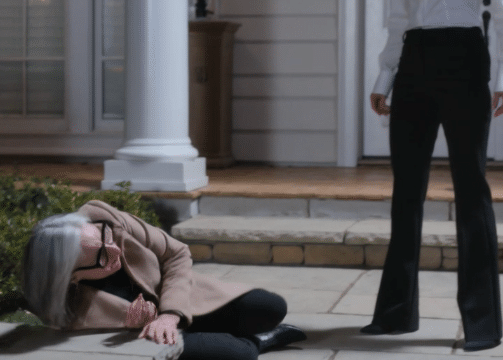
His faded brown coat twisted beneath him. One hand scraped lightly against the table edge as he tried to catch himself, and a thin line of blood appeared near his lip. His silver hair fell across his forehead, his tired blue eyes blinking through the shock.
The VIP room went silent.
Private dealers froze with cards in their hands. Cocktail servers stopped beside champagne buckets. Wealthy gamblers in tuxedos and designer suits turned from their chips, their drinks, their private jokes, and stared.
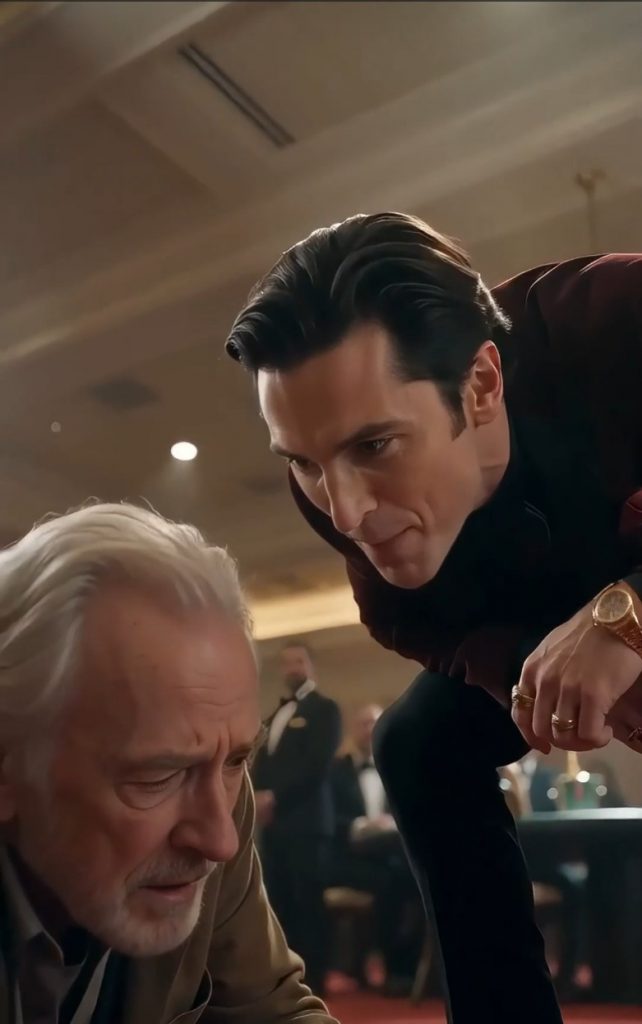
The man who had punched him stood over him in a burgundy velvet jacket.
Derek Voss.
High roller. Regular guest. Loud winner. Louder loser.
He wore gold rings on three fingers and a grin that belonged to someone who had confused money with immunity. A cigar case bulged in his pocket. His slick black hair shone beneath the chandelier light as he looked down at the old man near his shoes.
No regret.
Only contempt.
Mr. Harrison drew a careful breath and reached toward the black chip.
Derek stepped closer.
“VIP means money,” he said, voice low and nasty. “Not old men begging for luck.”
A few gamblers shifted uncomfortably.
No one stepped in.
That was how rooms like this worked. Everyone saw everything, but nobody wanted to be the first person to ruin the illusion that rich people behaved better than everyone else.
Mr. Harrison’s fingers trembled near the chip.
Derek laughed under his breath.
“You wander in here with one dead chip and a thrift-store coat, and you think you belong at my table?”
The old man stayed silent.
Not because he had nothing to say.
Because he had learned, over a long life, that arrogant men often convicted themselves if you let them keep talking.
Then the velvet curtain at the private entrance snapped open.
The casino manager hurried in with two security guards behind him, his black tuxedo sharp, red pocket square bright against his chest. His polished name badge caught the light as his eyes swept the room.
Then he saw the old man on the floor.
His face went pale.
The entire room felt the shift before anyone understood it.
The manager rushed past Derek without a glance, lowered himself beside Mr. Harrison, and spoke with a respect so deep it seemed to bend the air.
“Mr. Harrison,” he said, voice trembling but clear, “your private table has been reserved since 1989.”
The room gasped.
Derek’s grin vanished.
Behind them, a framed black-and-white photo on the wall came into focus.
A much younger Mr. Harrison stood beside the casino founder, shaking his hand on opening night.
Derek stared at the picture.
Then at the old man.
“Harrison?”
And for the first time that night, the high roller looked afraid.
Act II
Arthur Harrison had not stepped inside the Aurelia Grand in twelve years.
Not through the front doors. Not through the private elevators. Not even through the employee entrance where he used to sneak in before sunrise with the founder, Joseph Bell, to check the carpets before opening weekends.
People thought he had disappeared.
Some said he had sold his shares and retired in Arizona. Some said he had lost his fortune. Some said his wife’s death had broken him so completely that he refused to be seen in the city again.
Only part of that was true.
His wife, Margaret, had died.
That had changed everything.
The casino had been their miracle and their argument. In 1989, Arthur was not rich. He was a mechanic with a small repair shop, a good eye for engines, and one dangerous habit: he believed in desperate dreamers.
Joseph Bell was one of them.
Joseph had a plan for a casino that did not treat ordinary guests like cattle and wealthy guests like gods. He wanted elegance, yes, but not cruelty. He wanted private rooms, high-limit tables, fine restaurants, and velvet carpets, but he also wanted every dealer paid well and every server protected from abusive guests.
Investors laughed at him.
Arthur did not.
He sold his repair shop, mortgaged his house, and gave Joseph the money that kept the project alive for six more months. Margaret called him insane for three days. On the fourth, she brought Joseph a casserole and told him if they were all going broke, he might as well eat first.
The Aurelia Grand opened in 1989 with one rule Joseph and Arthur wrote together.
No amount of money makes a man untouchable.
For years, they enforced it.
They removed famous actors, oil heirs, bankers, athletes, and one governor’s nephew who threw chips at a dealer after losing a hand. Arthur never cared how much someone bet. He cared how they treated the people standing near them.
Then the casino grew.
Joseph got sick.
Corporate executives arrived with polished language and colder priorities. VIP retention. Guest value. Reputation management. High-worth accommodation.
Arthur hated those phrases.
After Joseph died, Arthur remained on the board for a while, but the casino no longer felt like the place he and his friend had built. The carpets were richer. The chandeliers brighter. The suits sharper.
The soul was thinner.
Margaret noticed it first.
“They’re forgetting the old rule,” she told him one evening.
Arthur looked at the black chip in his hand, the first ceremonial chip Joseph had given him on opening night.
“Maybe they’ve forgotten us too.”
Margaret smiled sadly.
“Then go remind them.”
He never did.
Not while she was alive.
After she passed, the world became quiet in a way he did not know how to repair. He stopped attending board dinners. Stopped answering invitations. Stopped visiting the private table that had been kept for him every Friday night since 1989.
But he kept the chip.
Scratched, black, old, nearly worthless to anyone else.
To him, it was Joseph’s handshake. Margaret’s laughter. The night they stood outside the casino before the doors opened and realized their impossible risk had become real.
Then a letter arrived.
It came from a young dealer named Elena Ruiz.
Mr. Harrison, you don’t know me. But I found your name in the old employee handbook. It said you believed VIP should never mean permission. I wish that were still true.
The letter described Derek Voss.
Not just one bad night.
A pattern.
He mocked dealers. Grabbed chips from servers’ trays. Called security on guests he thought looked “cheap.” Threw tantrums when losing and demanded apologies when winning.
The casino tolerated him because he spent millions.
Arthur read the letter three times.
Then he opened a drawer, took out the old black chip, and put on the faded coat Margaret had once told him made him look like a retired detective.
He did not call ahead.
He did not ask for an escort.
He simply walked into the Aurelia Grand as an old man with a chip in his hand.
And the casino showed him exactly what it had become.
Act III
The first guard at the VIP entrance almost stopped him.
Arthur saw it in the man’s eyes.
The faded coat. The plain shirt. The old chip. The slow walk. The absence of expensive confidence.
But the guard hesitated.
Maybe because Arthur looked too calm. Maybe because some buried instinct told him not to block a man who carried silence like history.
Inside the high-limit room, the red velvet carpet was newer than Arthur remembered. The poker tables had been replaced. The gold sconces were brighter. The framed founder portraits still hung along the wall, though most guests passed them without looking.
Arthur looked.
Joseph Bell smiled from a black-and-white photograph near the bar, younger than Arthur ever felt now, one hand raised in mid-laugh. Beside him, in another frame, stood Arthur himself from opening night.
No one in the room noticed.
Derek Voss noticed only the old chip.
Arthur had paused near the private table in the corner, the one marked discreetly with a brass plaque.
Reserved.
Derek had been losing for an hour and needed a target.
“Hey,” he called. “You lost?”
Arthur turned.
“No.”
Derek’s friends chuckled.
The dealer looked down at the felt.
Derek stood, whiskey anger simmering beneath his polished grin.
“This is a high-limit room.”
Arthur nodded.
“I know.”
“You need help finding penny slots?”
A few gamblers laughed softly.
Arthur closed his fingers around the chip.
“I’m waiting for someone.”
Derek’s eyes narrowed.
“Not at that table.”
Arthur looked at the brass plaque.
“I believe this one is mine.”
That was the sentence that made the room tilt.
Derek stepped forward, his velvet jacket catching the light.
“Yours?”
Arthur did not move.
Derek looked him over slowly.
The coat.
The tired eyes.
The old chip.
The dignity he mistook for delusion.
Then Derek snatched the chip from Arthur’s hand.
A dealer gasped.
Arthur’s face changed, not with fear, but grief.
“Careful,” he said quietly.
Derek held the chip between two fingers.
“This trash?”
Arthur reached for it.
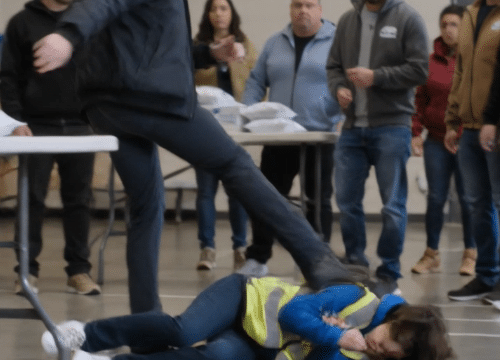
Derek punched him.
The blow sent Arthur down beside the poker table, and the chip slipped free, rolling across the red carpet. For a moment, it was the loudest thing in the room.
Then Derek leaned over him and delivered the insult.
“VIP means money. Not old men begging for luck.”
Arthur looked at the chip near the table leg.
He thought of Joseph.
He thought of Margaret.
He thought of the rule they had written before the first guest ever crossed the casino floor.
No amount of money makes a man untouchable.
Then the manager entered.
Thomas Keller had managed the Aurelia Grand for seven years, and in that time, he had heard the name Harrison spoken like a ghost story. Original investor. Founder’s partner. Silent board power. The man whose table was never removed, even during renovations.
He had never met him.
But he knew the face from the wall.
The moment Thomas saw Arthur on the floor, he understood three things at once.
The old stories were true.
The casino had failed him.
And Derek Voss had just made the most expensive mistake in the room.
Act IV
Thomas Keller helped Arthur stand.
Not quickly.
Carefully.
With both hands and visible respect.
The VIP room watched as the old man rose beside the table where Derek had tried to shame him. Arthur’s lip was marked. His hand was scraped. His coat was rumpled.
But his eyes were steady.
Thomas picked up the black chip from the carpet and held it in his palm like a relic.
“Opening year,” he said softly.
Arthur nodded.
“Joseph gave it to me the night before the doors opened.”
Thomas swallowed.
Several older dealers exchanged looks.
One of them whispered, “That’s the founder chip.”
Derek’s face tightened.
“Hold on,” he said. “There’s obviously been a misunderstanding.”
Arthur looked at him.
Derek smiled too hard.
“I thought he was some old hustler trying to get into the game.”
The room went colder.
Arthur’s voice was quiet.
“And that made it acceptable?”
Derek blinked.
“No, I mean—”
“You mean you thought I was nobody.”
Derek’s jaw worked.
Thomas turned toward the security guards.
“Mr. Voss is to be removed from the VIP room.”
Derek laughed once.
It sounded forced.
“You’re joking.”
Thomas did not blink.
“You assaulted Mr. Harrison.”
“I spend more here in a weekend than most people make in a lifetime.”
Arthur looked at him with tired sadness.
“That may be the saddest thing you’ve said tonight.”
A few gamblers lowered their eyes.
Derek’s anger flared.
“You can’t throw me out. I’m a platinum member.”
Thomas’s voice hardened.
“Your membership is suspended immediately pending permanent review.”
Derek stared at him.
Then at the security guards moving closer.
“You don’t have the authority.”
Thomas glanced toward the founder portrait.
“Actually, Mr. Harrison does.”
That sentence changed everything.
The room seemed to inhale.
Arthur did not smile. He did not enjoy the fear blooming across Derek’s face. Revenge had never interested him much. Truth was enough when it finally stood up straight.
Thomas spoke into his earpiece.
“Lock Mr. Voss’s player account. Preserve all camera footage from the VIP room. Pull incident reports connected to his name. No staff member is to be pressured into silence.”
Derek’s face drained.
“Incident reports?”
Arthur turned toward the dealers.
One young woman looked down, then lifted her chin.
“He threw chips at me last month.”
Another dealer spoke.
“He grabbed my wrist when I tried to correct a payout.”
A cocktail server’s voice shook.
“He said if I complained, I’d be back serving tourists downstairs by morning.”
Derek snapped toward them.
“Lies.”
Arthur’s eyes sharpened.
“Be careful.”
Two words.
Low.
Final.
Derek stopped.
For the first time, he seemed to understand that the old man he had knocked down was not trying to win a fight.
He was reclaiming a room.
Thomas faced the staff.
“Every report will be reopened.”
Arthur added, “And every person who filed one will be protected.”
The dealers looked at him.
Not like gamblers look at money.
Like workers look at someone who finally remembered they were human.
Derek’s panic broke through his arrogance.
“Harrison?” he stammered again.
Arthur accepted the black chip from Thomas and closed it in his hand.
“Yes,” he said. “And this was never your table.”
Act V
Derek Voss was escorted out past the founder portraits.
That was the part people remembered.
Not because he shouted. He did not. Not at first.
He walked stiffly between two security guards, velvet jacket still gleaming, gold rings still flashing, face pale beneath the warm lights. But the room no longer bowed around him. Dealers did not lower their eyes. Servers did not step backward. Gamblers watched him with the cold judgment he had once enjoyed aiming at others.
At the velvet curtain, Derek turned.
He seemed to expect someone to intervene.
A host. A pit boss. Another high roller. Anyone.
No one moved.
Then he disappeared into the corridor.
The VIP room remained silent after he was gone.
Arthur stood near the private table, the old chip resting in his palm. Thomas Keller waited beside him, looking like a man who had just discovered a crack running through the foundation of the building he managed.
“I’m sorry, Mr. Harrison,” he said.
Arthur looked around the room.
“At least you said it after seeing what happened.”
Thomas lowered his eyes.
The sentence was kind enough not to humiliate him and sharp enough not to let him escape.
Arthur sat at the private table for the first time in twelve years.
The dealer approached slowly.
“Would you like to play, sir?”
Arthur looked at the cards.
Then at the founder portrait.
Then at the young dealer who had written him the letter. Elena Ruiz stood near the far table, her face pale and hopeful, as if she could not believe the old man had actually come.
Arthur placed the black chip on the felt.
“No,” he said. “I’d like to talk.”
That night, the Aurelia Grand changed course.
Not publicly at first.
Casinos are careful with scandals. They know how to move problems through back corridors and rename them privacy. But Arthur Harrison had not returned to be hidden.
By morning, Derek Voss’s membership was permanently revoked. His outstanding privileges were canceled. His private marker line was frozen pending legal review. Footage of the assault was turned over to authorities, along with witness statements.
By the end of the week, thirty-seven staff reports connected to high-limit guests were reopened.
Thirty-seven.
Arthur read each one.
He sat in Joseph Bell’s old office, the one executives had turned into a lounge for private investors, and read about threats, insults, grabbed wrists, thrown chips, racist comments, unpaid tips, and managers who had told employees to “keep perspective” because VIPs were valuable.
When he finished, he closed the folder and looked at Thomas Keller.
“You know what Joseph would have called this?”
Thomas said nothing.
Arthur tapped the folder.
“Bad business.”
Within three months, the casino rewrote its VIP conduct policy.
Physical aggression meant immediate removal. Staff complaints bypassed player-host departments and went directly to an independent review team. Guest value could not override safety. Dealers could pause a table if threatened. Servers could refuse service to abusive patrons without risking their jobs.
And above the entrance to the high-limit room, beneath the restored founder portrait, Arthur added a small brass plaque.
No amount of money makes a man untouchable.
Some guests hated it.
Arthur considered that a useful filter.
A year later, he returned on opening night anniversary.
Not in a tuxedo.
In the same faded brown coat.
Margaret would have laughed at him for that. Then she would have straightened the collar and told him he looked stubborn enough to survive anything.
The VIP room was busy but calmer now. The red carpet had been cleaned. The tables were full. The dealers stood straighter. Elena Ruiz had been promoted to floor supervisor.
She greeted him near the velvet curtain.
“Good evening, Mr. Harrison.”
“Good evening, Elena.”
She glanced at the black chip in his hand.
“You brought it back.”
“I did.”
“Are you playing tonight?”
Arthur looked toward his private table.
For years, that table had been a monument to absence. Now it felt different. Not like a throne. Like a promise returned to use.
He sat down slowly.
The room noticed him, but no one rushed him. No one bowed too deeply. No one performed fear. That pleased him.
A young dealer placed a fresh deck on the felt.
Arthur put the old black chip beside it.
“Just one hand,” he said.
Elena smiled.
“For luck?”
Arthur looked at the chip, scratched and worn from the night a dream opened its doors in 1989.
Then he looked at the staff moving through the room without flinching every time a wealthy man raised his voice.
“No,” he said. “For memory.”
The cards were dealt.
The city roared beyond the casino walls.
Inside the high-limit room, the old man who had once been knocked to the carpet sat beneath the founder’s portrait with quiet dignity, holding the same chip everyone had mistaken for worthless.
Derek Voss had believed VIP meant money.
Arthur Harrison had come back to remind them it meant trust.
And trust, unlike money, could not be bought back after being thrown away.