Act I
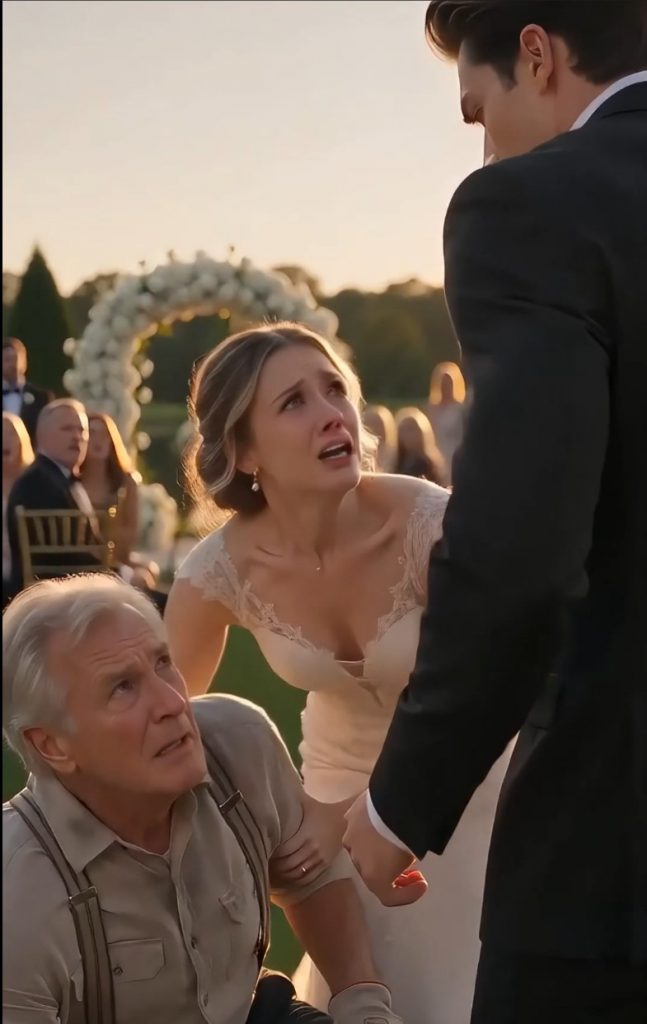
The punch landed beside the white rose arch.
For one stunned second, the entire lakeside wedding stopped breathing.
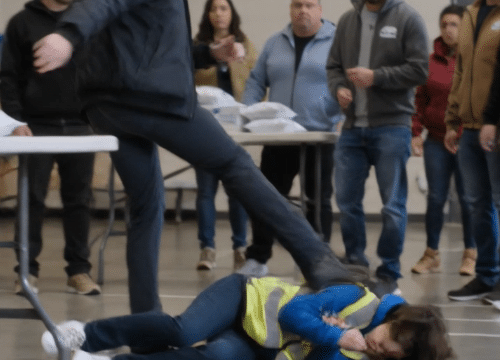
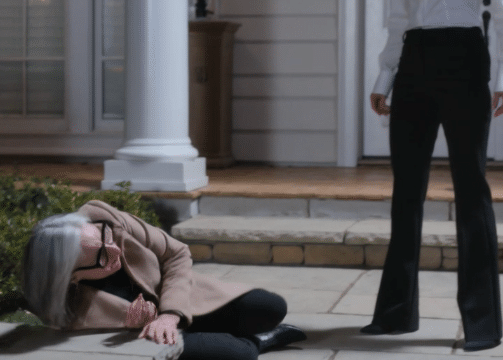
The older man fell backward into the rose bush, his shoulder tearing against the thorns, pruning shears dropping from his belt and clattering into the grass. White petals shook loose around him. A faint mark appeared near his lip as he braced himself with one hand, trying to stay upright even after the blow had knocked him down.
The string musicians stopped mid-note.
Guests in silk dresses and tailored suits turned from the lake, from the gold chairs, from the glowing sunset behind the floral arch.
And at the center of it all stood the groom.
Grant Caldwell lowered his fist slowly, his black tuxedo still perfect, his white boutonniere still pinned neatly to his lapel. His styled hair had not moved. His expression held no shock, no regret, only irritation.
Like the old man had bumped into him.
Like the problem was not violence.
Like the problem was inconvenience.
“You ruined my wedding photos, old man,” Grant snapped.
The gardener looked up from the grass.
His name was Robert Bennett.
He wore a faded work shirt, suspenders, gardening gloves, and muddy boots. Pruning shears hung loose beside him now, half-hidden in the grass. He looked like someone hired to trim roses before the ceremony and forgotten once the guests arrived.
That was what Grant saw.
A worker.
A distraction.
A stain on the perfect image.
Robert did not answer.
He only pressed one scratched hand against the grass and tried to steady his breath.
A bridesmaid gasped. A groomsman muttered Grant’s name under his breath. The photographer lowered his camera as if even he knew some moments should not be captured.
Then the bride turned from the photo area.
Amelia Bennett had been laughing only seconds earlier, bouquet in hand, lace gown glowing in the sunset. She had not seen the first movement. Only the fall. Only the roses shaking. Only her groom standing over a man on the ground.
Then she saw the gardener’s face.
Her bouquet slipped from her hand.
“No,” she whispered.
Grant turned toward her, still annoyed. “Amelia, it’s fine. He walked into the shot.”
But Amelia was already running across the lawn.
Her pearl earrings flashed as she pushed past the photographer, past the bridesmaids, past the guests who had gone silent with a fear they could not yet name.
She dropped to her knees beside the older man.
“Dad!”
The word cracked through the wedding louder than the punch.
Grant froze.
His face changed.
“Dad?”
Amelia looked up at him with tears already rising, but her voice was not weak.
“You just hit my father.”
Act II
Grant Caldwell had never loved the estate.
He loved what the estate said about him.
The Bennett property stretched along the lake with manicured gardens, a private dock, stone terraces, old trees, and a white mansion that had watched three generations of weddings, funerals, summer parties, and family arguments unfold under its roof.
To Amelia, the estate was home.
To Grant, it was a backdrop.
He loved the photographs more than the history. Loved the way people’s eyebrows lifted when they heard where the ceremony would be held. Loved the guest list, the champagne tower, the custom tuxedo, the idea that marrying Amelia Bennett placed him inside a family name older and quieter than his own ambition.
Robert Bennett knew that from the first dinner.
He had seen men like Grant before.
They praised the house before they praised the woman. They looked at the grounds as if calculating value. They treated staff well when watched and poorly when rushed. They admired legacy, but only when they thought it could be inherited through proximity.
Robert did not forbid the engagement.
He loved Amelia too much for that.
His daughter had grown up between rose beds and lake storms, running barefoot through garden paths while her mother called from the porch. After his wife died, Robert raised Amelia mostly alone. He learned to braid hair badly. He burned pancakes. He attended every school play, every debate tournament, every cold afternoon soccer game where she mostly picked flowers near the goal.
The estate became their shared language.
Her mother had planted the white roses near the photo arch the year Amelia was born. Every spring, Robert trimmed them himself. Not because the gardeners were incapable, but because memory was not something he outsourced.
On the morning of the wedding, Amelia found him beside those roses.
“Dad,” she said, smiling through nerves, “you promised you’d let the staff handle everything today.”
Robert looked up from the bush.
“I am staff today.”
“You own the estate.”
“Exactly. Worst kind of staff.”
She laughed, then grew soft.
He noticed.
Robert always noticed.
“Still sure?” he asked.
Amelia looked toward the mansion, where Grant’s family had already begun arriving in black cars.
“I love him.”
“That wasn’t my question.”
Her smile faded.
For months, small things had troubled her. Grant correcting waiters too sharply. Grant mocking a groundsman’s accent after he thought she had gone inside. Grant complaining that her father dressed like “someone who came with the property.”
Amelia had defended him in her mind.
Stress.
Wedding pressure.
Different upbringing.
But love can be a dangerous editor. It cuts the evidence into something easier to forgive.
Robert had not pushed.
He only said, “A man reveals himself by what he thinks he is allowed to do when he is inconvenienced.”
Amelia kissed his cheek.
“You’re being dramatic.”
“I’m your father. It’s in the contract.”
He made her promise one thing.
Before the ceremony, he wanted ten minutes alone with the rose arch. He wanted to trim the uneven branches, clear a few fallen petals, and make sure the flowers looked the way her mother would have wanted.
Amelia agreed.
The problem was timing.
The photographer called the wedding party early. Grant wanted sunset shots before the ceremony because the light was perfect over the lake. The guests had begun gathering. The musicians were tuning. The estate planner was whispering into a headset.
Robert was still near the white rose bush, pruning the last thorny stem.
He moved carefully behind the arch, trying to stay out of the shot.
Grant saw him anyway.
Not as Amelia’s father.
Not as the owner of the land beneath his polished shoes.
As a gardener in the wrong place.
And something ugly in him stepped forward before anyone could stop it.
Act III
Amelia’s knees sank into the grass beside her father’s muddy boots.
“Dad, look at me,” she said.
Robert gave her a faint smile.
“I’m all right, sweetheart.”
“You’re bleeding.”
“Barely.”
His attempt at calm only made her chest ache worse.
She touched his torn shoulder seam, then looked at his hand, where the thorns had scratched him lightly. Nothing severe. Nothing dramatic enough for strangers to understand why her heart felt split open.
But she understood.
The wound was not the mark near his lip.
It was the sight of her father on the ground at her wedding while her groom stood above him like he had done something justified.
Grant took a step closer.
“Amelia, I didn’t know.”
She turned on him.
The lake behind her reflected the orange sunset, beautiful and useless.
“You didn’t know what?”
Grant swallowed.
“That he was your father.”
The sentence moved through the crowd like cold wind.
A few guests looked down.
Robert closed his eyes briefly.
Amelia stood slowly.
Her lace gown brushed the grass. Her dropped bouquet lay behind her, white ribbon tangled near the rose bush. The photographer still had not raised his camera.
“You didn’t know he was my father,” she repeated.
Grant lifted both hands, desperate now. “Exactly. I thought he was one of the groundskeepers.”
Robert opened his eyes.
The silence after that answer was devastating.
Amelia stared at the man she had almost married.
“You thought he was staff.”
“Yes,” Grant said, too quickly. “I mean, he was dressed like—”
“Like someone working?”
Grant’s face tightened.
“That’s not what I meant.”
“It is exactly what you meant.”
He looked around, suddenly aware of the guests, the musicians, the groomsmen, the bridesmaids, the families on both sides frozen beneath the floral arch.
His arrogance began to search for a way out.
“He crossed into the photo area,” Grant said. “I reacted badly. I admit that.”
Amelia’s laugh was sharp and broken.
“You punched an older man because he crossed into a photograph.”
Grant’s jaw hardened.
“Don’t make this sound worse than it was.”
Robert’s voice came quietly from behind her.
“It was exactly what it was.”
Everyone turned.
He had risen with effort, brushing grass from his suspenders. He looked plain beside the tuxedos and gowns, but something in his posture made the estate seem to gather around him.
Grant noticed it too late.
Robert picked up the pruning shears from the grass and handed them to the estate manager, who had appeared near the arch with a face full of horror.
“Mr. Bennett,” the manager said softly, “should I call security?”
Grant’s eyes widened.
“Mr. Bennett?”
Amelia’s expression went cold.
“Yes, Grant. Robert Bennett. My father. Owner of this estate. Owner of the gardens you wanted in every photo.”
The groom stared at the old man in the faded work shirt.
The man he had struck.
The man whose land held his wedding, whose money had paid for the flowers, whose daughter stood between them in a wedding gown that suddenly looked less like a promise and more like a warning.
Grant’s mouth opened.
Nothing came out.
Act IV
Grant did what men like him often do when consequences arrive.
He softened his voice.
“Mr. Bennett,” he said, “I owe you an apology.”
Robert looked at him.
“Do you?”
Grant nodded quickly.
“Of course. I lost my temper. Wedding stress. The schedule, the photographers, everything was chaotic. I didn’t realize who you were.”
Amelia flinched at the last line.
Robert did not.
He simply looked at Grant as if examining a branch before deciding where to cut.
“You keep saying that.”
Grant blinked.
“Because it’s true.”
Robert stepped closer, slow and steady.
“You did not realize I was important.”
Grant’s face reddened.
“That is not what I said.”
“It is what you mean.”
The guests were completely silent now.
Even the lake seemed still.
Robert pointed gently toward the staff standing near the mansion steps: the servers, gardeners, drivers, planners, musicians, assistants, and housekeepers who had made the wedding look effortless.
“If I had been one of them,” he asked, “would your apology be different?”
Grant looked trapped.
The answer was on his face before his mouth could hide it.
Amelia saw it.
That was the moment the last fragile piece of denial inside her broke.
For months, she had heard him speak sharply. Seen him dismiss people. Felt the small sting of discomfort and chosen love over instinct.
But this was not discomfort.
This was truth in a tuxedo.
Grant turned toward her.
“Amelia, please. We are not ending a wedding over one mistake.”
She looked at her father’s torn shirt.
Then at the rose bush her mother had planted.
Then at Grant’s fist, still curled slightly at his side.
“One mistake?” she asked.
His voice lowered.
“You’re emotional.”
The guests heard it.
So did Robert.
Amelia’s face went still.
Grant realized too late that he had chosen the wrong word.
“Amelia,” he said quickly. “I didn’t mean—”
“You hit my father,” she said. “Then told me I was emotional for reacting.”
His mother rose from the front row.
“Grant, darling, maybe we should all go inside and calm down.”
Amelia turned to her.
“No.”
The word stopped the older woman.
Amelia faced the guests.
“There will be no ceremony today.”
A collective gasp moved through the lawn.
Grant stared at her.
“You can’t be serious.”
“I have never been more serious.”
His polished mask cracked.
“In front of everyone?”
Amelia looked at him with tears in her eyes and steel in her voice.
“You chose the audience.”
Robert placed a hand gently on her shoulder.
She leaned into it for half a second, not as a child hiding behind her father, but as a daughter remembering the first man who had ever made her feel safe.
Grant’s panic became anger.
“So that’s it? You throw away our future because your father was in the wrong place?”
Amelia’s eyes lifted.
“No. I’m saving my future because you showed me yours.”
The estate manager stepped forward.
“Mr. Bennett?”
Robert did not take his eyes off Grant.
“Escort Mr. Caldwell and his family to the front drive. Quietly. No one from my staff is to be spoken to with disrespect.”
Grant’s face emptied.
“You’re throwing me out?”
Robert’s voice was low.
“I am removing a man from my home who believes cruelty is acceptable when he thinks no one powerful is watching.”
The groomsmen shifted uncomfortably.
One of them looked away.
Grant seemed to shrink inside his tuxedo.
Security approached from the mansion path.
Amelia bent and picked up her bouquet from the grass. A few petals had torn loose. She held it carefully, then placed it beside the rose bush instead of carrying it.
Her wedding bouquet became an offering to the truth.
Grant whispered one last time, almost childlike in disbelief.
“Dad?”
Robert’s expression did not change.
“No,” he said. “Not yours.”
Act V
The guests left before sunset fully disappeared.
Some quietly apologized to Amelia. Some avoided her eyes. Some slipped away toward the parking area, eager to escape the discomfort of having witnessed a beautiful event become honest.
Grant’s family left in silence.
Grant himself looked back once from the front drive. He seemed to expect Amelia to run after him, to soften, to remember the invitations and the cake and the vows waiting beneath the arch.
She did not move.
She stood beside her father near the white rose bush until the last of the black cars disappeared beyond the estate gates.
Only then did she begin to cry.
Robert opened his arms.
She stepped into them like she had when she was little, careful of his shoulder, careful of his scratched hand, but needing the embrace more than the dignity she had held all afternoon.
“I’m sorry,” she whispered.
Robert kissed the top of her head.
“For what?”
“For bringing him here.”
He sighed.
“You brought home the man you hoped he was. Today you met the man he hid.”
That made her cry harder.
The musicians had packed away their instruments. The gold chairs stood empty. The lake reflected the last orange stripe of sunset, turning the water into something almost too beautiful for what had happened beside it.
Amelia wiped her face.
“Mom planted these roses.”
“I know.”
“She would have hated this.”
Robert looked at the bush, petals bruised from the fall, stems bent but not broken.
“She would have hated him hitting anyone more.”
That became the sentence Amelia carried through the weeks that followed.
The official explanation was simple.
Wedding canceled due to a private family matter.
But nothing stays private when two hundred guests watch a groom punch the bride’s father beside a rose arch. The story traveled through country clubs, boardrooms, brunch tables, and group chats. Some people twisted it. Some defended Grant. Some claimed Amelia had overreacted.
Then a member of the wedding staff, tired of hearing lies, released a written statement.
The truth became harder to decorate.
Grant lost more than a bride.
His firm quietly placed him on leave after several employees came forward with their own stories. Assistants he had insulted. Restaurant staff he had threatened. A driver he had once shoved with a suitcase and called invisible.
Cruelty, Amelia learned, was rarely isolated.
It was a habit.
Robert refused to discuss legal action publicly. Privately, he made sure every member of the wedding staff was paid in full, with bonuses large enough to make the estate manager cry. He also paid for counseling for the young photographer, who had been shaking too hard afterward to drive himself home.
“You saw something ugly here,” Robert told the staff. “I don’t want you to leave thinking this house belongs to that moment.”
Months passed.
The rose bush healed.
So did Robert’s lip and shoulder.
Amelia healed more slowly.
She moved back into the estate for a while, not because she was broken, but because grief is easier when someone remembers how you take your coffee. She walked the gardens with her father in the mornings. Sometimes they spoke about Grant. Sometimes they spoke about her mother. Sometimes they spoke about nothing at all.
One evening, she found Robert pruning the same white roses.
“You’re supposed to be resting,” she said.
“I rested yesterday.”
“You napped for fifteen minutes in a chair.”
“At my age, that counts.”
She smiled.
It was the first real smile he had seen in days.
Robert clipped a damaged stem and dropped it into a basket.
“You know,” he said, “your mother and I fought the morning of our wedding.”
Amelia looked at him.
“You did?”
“She wanted lilies. I wanted roses.”
“Who won?”
He looked at the white blooms beside them.
“She did. Obviously.”
Amelia laughed softly.
The sound surprised them both.
A year later, the estate hosted another wedding.
Not Amelia’s.
A young groundskeeper named Daniel married his longtime girlfriend beneath the same floral arch, with Robert’s blessing and Amelia’s help. The chairs were simple. The food was homemade. The music was local. No one cared about perfect photographs.
Before the ceremony, Amelia adjusted the bride’s veil while Robert trimmed the roses nearby.
A little flower girl asked why the older man in suspenders was allowed near the arch.
The bride smiled.
“Because he owns the place.”
Robert winked.
“And because I’m very good with roses.”
Amelia looked at him across the lawn.
For the first time, the memory of Grant did not sting as sharply.
The estate had survived him.
So had she.
The white roses bloomed fuller than ever, bending gently toward the lake as the sun lowered behind the trees.
And Amelia finally understood what her father had tried to teach her all along.
A wedding does not reveal love because people dress beautifully and promise forever beneath flowers.
It reveals love when something goes wrong.
When someone inconvenient steps into the frame.
When power shifts.
When a man thinks no one important is watching.
Grant had believed the gardener ruined his wedding photos.
But Robert Bennett had not ruined anything.
He had simply crossed the frame at the perfect moment and showed his daughter the truth before she signed her life to a man who only respected people after learning they owned the ground beneath his feet.