Act I
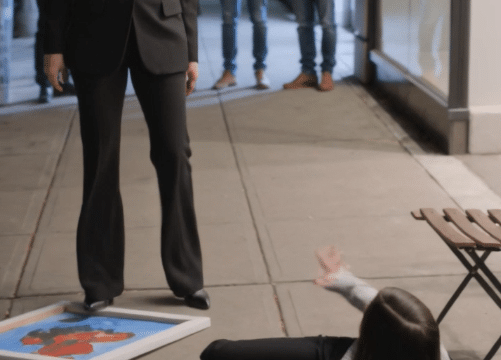
The hotdog cart rattled only inches before one of its worn wheels brushed against the polished shoe of a decorated officer. It was an accident so small that most people would have forgotten it before taking another step.
He didn’t.
Before anyone could react, the officer exploded with fury. His hands slammed into the little food cart with such force that it flipped sideways, sending hotdogs, sandwiches, wrappers, and bottles of mustard skidding across the sidewalk.
The elderly woman behind the cart gasped as she instinctively reached to steady it.
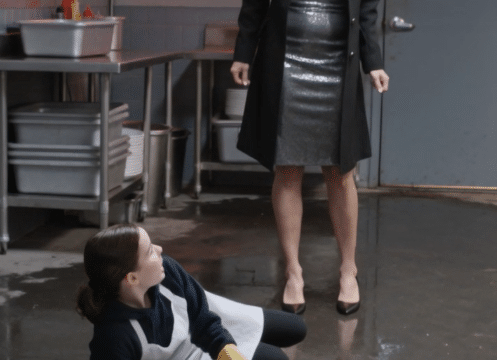
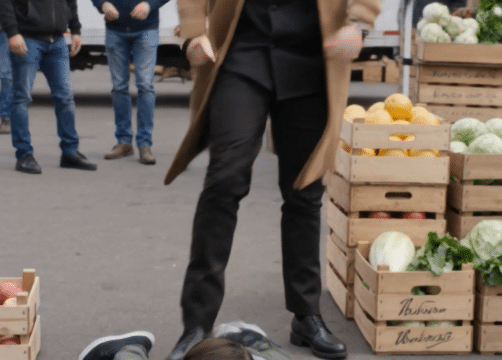
Instead, the officer stepped back and drove a brutal kick into her stomach.
She crashed onto the brick pavement, the air ripped from her lungs. One elbow scraped against the rough sidewalk as both trembling hands wrapped around her stomach. The overturned cart continued rattling beside her while lunch scattered across the busy corner.
Pedestrians froze.
Some reached for their phones.
Others simply stared, unable to believe what they had just witnessed.
The officer stood over her as though he had done nothing wrong.
His medals glittered beneath the afternoon sun.
His pride shone even brighter.
“You should watch where you roll that filthy cart, trash,” he sneered loudly enough for everyone to hear.
The old woman never argued.
She only struggled to breathe.
What happened next would expose far more than one man’s cruelty.
Act II
The woman was known by nearly everyone who worked along that block.
Her name was Margaret.
For almost twenty years she had pushed the same modest food cart through the neighborhood before sunrise, serving construction workers, office clerks, delivery drivers, and anyone who needed an inexpensive meal.
She never became wealthy.
She never expected to.
After her husband passed away, the cart became her only source of income.
Many customers offered extra money out of sympathy.
She almost always refused.
“If I can still work,” she would smile, “I can still earn my dinner.”
That quiet dignity made what happened even harder to watch.
The officer reached into his wallet, pulled out several bills, and tossed them onto the scattered food.
The money fluttered beside crushed sandwich wrappers.
“People like you don’t belong near officers,” he said coldly.
Then he added one final insult.
“Take these bills and disappear.”
The silence became heavier than the traffic around them.
No one wanted to challenge a decorated officer wearing a chest full of medals.
Authority can make decent people hesitate.
But true authority should never be confused with entitlement.
Someone else was about to remind everyone of that difference.
Act III
A military vehicle stopped sharply at the curb.
Its rear door opened before the engine had fully settled.
Out stepped a senior officer whose uniform carried even greater distinction than anyone present had expected to see.
His eyes swept across the crowd.
Then they found the elderly woman lying beside the overturned cart.
Everything else disappeared.
Ignoring the scattered money, he rushed directly toward her and knelt beside her on the pavement.
His hands gently supported her shoulders.
“Mom…”
The single word barely escaped his lips.
Witnesses exchanged stunned glances.
The officer who had started the confrontation suddenly lost all color.
The senior officer carefully brushed dirt from his mother’s sleeve before helping her sit upright.
Only after making sure she could breathe did he slowly stand.
His face remained calm.
That calmness frightened everyone far more than shouting ever could.
He turned toward the decorated officer.
“You dared touch my mother?”
The street became completely silent.
The medals that had moments earlier inspired admiration now seemed painfully meaningless.
Because everyone understood the truth.
Character always outranks decoration.
The realization hit the bully all at once.
But it was still only the beginning.
Act IV
The decorated officer instinctively stepped backward.
His confident posture collapsed.
“I… I didn’t know…”
His voice trembled.
The senior officer didn’t interrupt.
Instead, he looked toward the overturned cart.
Lunch meant for hardworking people now lay scattered across dirty pavement.
Years of honest labor had been treated as worthless in a matter of seconds.
His mother slowly stood with assistance, still holding her stomach.
She never demanded revenge.
She never shouted.
Instead, she quietly began picking up crushed paper wrappers.
That simple act affected the witnesses more deeply than any dramatic speech could have.
Several pedestrians rushed forward.
Construction workers gathered the food that could still be saved.
Office employees helped lift the damaged cart.
A young student silently collected the scattered dollar bills and placed them back into the officer’s trembling hand.
“No,” the student said quietly.
“She doesn’t need your pity.”
The decorated officer lowered his eyes for the first time that afternoon.
Respect could never be purchased after it had been destroyed.
And everyone present finally understood that.
Still, one lesson remained.
Act V
An internal investigation followed within days.
Security footage confirmed exactly what dozens of witnesses had already seen.
The decorated officer faced disciplinary action—not because the victim was connected to a senior officer, but because his conduct violated everything the uniform was meant to represent.
The senior officer later made that point publicly.
“My mother deserved respect before anyone knew who she was.”
“Every citizen deserves that.”
Those words spread far beyond the street corner.
Margaret returned to her food cart several weeks later.
Customers arrived in greater numbers than ever before.
Some came because they had heard her story.
Most stayed because they admired the quiet strength she had shown.
She still refused unnecessary charity.
She still smiled as she handed each customer a warm meal.
Nothing about her kindness had changed.
The decorated officer, however, would never forget that afternoon.
Not because he had been embarrassed.
Not because he had lost his status.
But because he had learned, far too late, the lesson that should have come long before any medal.
A uniform may command attention.
Wealth may command comfort.
Rank may command obedience.
But none of them command respect.
Respect is earned one choice at a time.
And the easiest way to reveal someone’s true character is not by watching how they treat people with power—
—but by watching how they treat someone they believe has none.