Act I
The insurance office was unusually quiet that morning until one sharp voice shattered the calm.
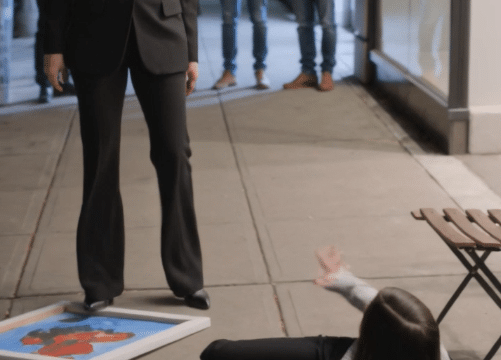
An elderly woman in a simple black dress stood at the reception desk, clutching a worn folder and an old photograph close to her chest. Her husband had passed away only weeks earlier, and she had come to ask about the policy they had paid into for decades.
Instead of compassion, she was met with impatience.
The office manager glanced at her faded handbag and tired clothes before deciding who she must be.
“People always show up after someone dies expecting free money,” he said loudly enough for everyone in the waiting room to hear.
Several clients looked away in discomfort.
The widow lowered her eyes but didn’t argue.
She simply bent down to gather the papers that had slipped from her trembling hands.
No one realized that the small photograph lying on the polished floor was about to change everything.
Act II
Margaret had never imagined she would return to this building alone.
For forty-two years, she and her husband, Thomas, had built a quiet life together.
Thomas wasn’t wealthy.
He wasn’t famous.
He simply believed that if you worked honestly and treated people fairly, life would eventually reward integrity.
Years before, when the insurance company was nothing more than a struggling family business operating from two rented offices, Thomas had been one of the first employees willing to take the risk.
He accepted smaller paychecks.
He worked nights.
He helped recruit clients when the company could barely keep its doors open.
Many people who walked through the headquarters every day had never heard his name.
But without people like Thomas, the company might never have survived.
Margaret wasn’t there asking for charity.
She only wanted the benefits her husband had earned.
Yet appearances had already written the story in the manager’s mind.
And assumptions often speak louder than facts.
Act III
The boardroom doors suddenly opened.
The company’s CEO stepped into the lobby after finishing an executive meeting.
As he walked past the reception area, something on the floor caught his attention.
It was an old black-and-white photograph.
He stopped.
Picked it up.
His expression changed instantly.
In the picture stood two young men wearing construction helmets outside the company’s very first office.
One of them was his father.
The other was Thomas.
The CEO slowly looked toward the elderly widow.
His voice softened.
“Ma’am…”
The entire room turned silent.
He carefully handed the photograph back with both hands.
“I know this picture.”
The widow looked surprised.
“My father kept the original in his office for years.”
Then he said words that froze every employee in place.
“Your husband helped build this company with my father.”
No one moved.
The office manager’s confident expression disappeared.
Act IV
The CEO ignored everyone else and offered Margaret a chair himself.
He asked for water.
Then personally reviewed her paperwork.
Everything had been filed correctly.
The delay wasn’t caused by missing documents.
It was caused by someone who had decided that a grieving widow wasn’t worth helping.
Turning toward the office manager, the CEO’s tone became firm.
“This company was built on trust.”
“Not on judging people by their clothes.”
“Not on humiliating someone before knowing their story.”
Every employee listened in complete silence.
Some remembered similar moments when vulnerable clients had been treated as inconveniences instead of human beings.
The manager tried to explain.
He claimed he had only been following procedure.
But everyone present knew the truth.
Procedure had never required disrespect.
His biggest mistake wasn’t denying a claim.
It was forgetting that dignity belongs to everyone.
Act V
Margaret received every benefit her husband had earned.
Before leaving, the CEO personally walked her to the front entrance.
He promised that the company’s customer care policies would be reviewed and that every employee would receive renewed training on empathy, professionalism, and respectful communication.
Weeks later, a framed copy of the old photograph appeared in the lobby.
Beside it was a simple plaque.
“This company stands today because ordinary people chose honesty, hard work, and kindness long before success ever arrived.”
Visitors often stopped to read it.
New employees learned Thomas’s story during orientation.
Not because he had been rich.
Not because he had owned the company.
But because he represented the values the company never wanted to forget.
As for the former manager, people remembered him for a different reason.
He had judged someone’s worth before learning who they were.
That single moment became a lesson repeated throughout the organization.
Because respect should never depend on appearance, wealth, age, or status.
You never truly know the story of the person standing in front of you.
And sometimes, the people who seem the least important are the very ones who helped build the world you now take for granted.