Act I
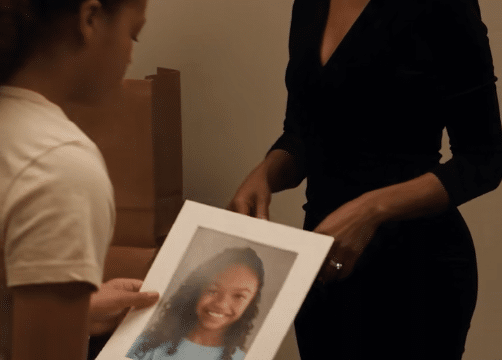
The room went quiet when Nia asked the question.
“Can we pick up my new glasses today?”
At fourteen, Nia had learned how to ask for things carefully. Not because she was spoiled. Not because she expected to get everything she wanted. She had simply learned that in her father’s house, even basic needs could somehow become arguments.
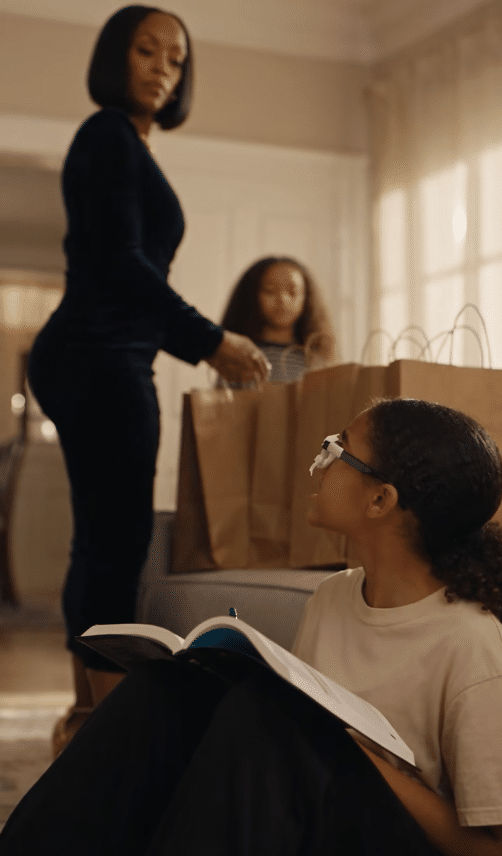
Her glasses were barely holding together. One arm had snapped, and a strip of tape kept it attached to the frame. She had tried to make it look less obvious, adjusting the glasses whenever someone looked her way.
But reading had become harder.
She squinted at the schoolbook in front of her, leaned closer to the page, and silently tried to make the words stop swimming.
Then her stepmother walked into the room carrying several shopping bags.
She dropped them onto the sofa beside Nia.
“No. I canceled them.”
Nia looked up.
“The doctor said I need them for school.”
Her stepmother gave a small, dismissive smile.
“Smart children are worth investing in. Stop pretending you’re one of them.”
The words landed harder than Nia expected.
She looked down at her book.
For a moment, the shopping bags beside her seemed almost absurd. New clothes. New accessories. Things Ava had apparently needed.
And Nia couldn’t even get the glasses her doctor had prescribed.
But what Nia didn’t know was that someone else in the room already knew something was wrong.
And she was about to say it out loud.
Act II
Ava stood near the shopping bags, staring at her mother.
She was only twelve, but even she understood that something about the conversation didn’t make sense.
Her sister wasn’t asking for an expensive phone or some fashionable outfit. She was asking for glasses.
And their father had already paid for them.
“Dad already paid for her glasses,” Ava said.
Her mother’s expression changed instantly.
“Stay out of adult decisions.”
Ava fell silent.
But she didn’t look convinced.
For weeks, Nia had been trying to hide how difficult school had become. She copied from the board more slowly than everyone else. Sometimes she wrote down the wrong question entirely. When teachers asked her to correct something, she would quietly erase it and try again.
At home, she never complained.
She was afraid that if she admitted she couldn’t see properly, her father would think she was making excuses.
So when her grades began changing, Nia said nothing.
And when the missing glasses became a problem, she blamed herself.
Maybe she had broken them.
Maybe she had been careless.
Maybe she really wasn’t as smart as everyone thought.
That was the story she had slowly begun telling herself.
Then the front door opened.
Marcus walked in with Nia’s teacher.
His eyes went immediately to his daughter’s face.
Then to the taped glasses.
Then to the shopping bags.
Something about the scene made him stop.
“Why were Nia’s glasses canceled?”
His wife didn’t hesitate.
“She broke them on purpose because she wanted a designer pair.”
Nia’s head snapped up.
The accusation hurt almost more than the broken glasses.
But Marcus didn’t answer.
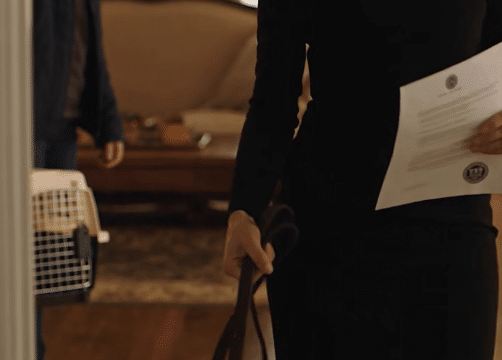
Because the teacher had already placed several papers on the coffee table.
And the first page told a very different story.
Act III
The teacher spread Nia’s recent assignments across the table.
There were mistakes everywhere.
But they weren’t the kind of mistakes Marcus expected from a student who simply hadn’t studied.
Some questions had been copied incorrectly. Words were missing. Numbers were changed. Entire lines had been written differently from what appeared on the board.
The teacher pointed to the pages calmly.
“Nia has been copying questions incorrectly because she can’t see the board.”
Nia lowered her eyes.
Her cheeks burned.
“I didn’t want Dad to think I was failing.”
Marcus looked at her.
For the first time, he understood why his daughter had stopped asking for help.
She hadn’t been lazy.
She hadn’t been careless.
She had been trying to survive a problem she was too embarrassed to admit she had.
Then Ava stepped forward.
She reached into one of the shopping bags.
What she pulled out wasn’t clothing.
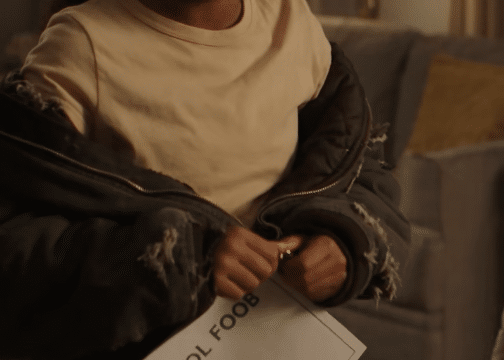
It was a new eyeglasses case.
She placed it on the coffee table.
The room froze.
“Mom returned Nia’s pair and used the credit for mine.”
Her mother’s face hardened.
“That is none of your business!”
But it was too late.
Marcus picked up the case.
Inside was the optical receipt.
The original order was for Nia.
The replacement purchase was connected to Ava.
For several seconds, nobody spoke.
Nia stared at the receipt as if she couldn’t understand what she was seeing.
The glasses hadn’t disappeared because she had failed to deserve them.
They had been taken away.
But the receipt wasn’t the only thing the teacher had brought into that room.
There was another envelope.
And what it contained would make Marcus question something far bigger than a pair of glasses.
Act IV
The teacher quietly handed Marcus the sealed school envelope.
“There’s something else.”
Marcus opened it.
His eyes moved across the page.
Then stopped.
He read it again.
Nia watched his face, unable to understand what had changed.
The teacher spoke softly.
“Nia didn’t fail.”
Marcus looked at the academic report again.
The results were strong.
High marks.
Solid assessments.
Work that showed effort, discipline, and ability.
The daughter he had been led to believe was struggling academically had actually been performing well.
The mistakes weren’t proof that Nia wasn’t smart.
They were evidence that she couldn’t see what she was supposed to copy.
Marcus looked toward his daughter.
Nia’s eyes filled with tears.
Not because she had suddenly become successful.
She had been successful all along.
She simply hadn’t been allowed to know it.
Then Marcus’s expression changed.
Relief disappeared.
Something colder took its place.
If Nia hadn’t failed, then why had he been given another impression?
Why had he heard that his daughter was falling behind?
Why had nobody shown him these results?
And most importantly, where were the reports that supposedly proved she was failing?
Marcus slowly turned toward his wife.
“What did you do with her report cards?”
The question seemed to drain every ounce of confidence from her.
She opened her mouth.
Nothing came out.
Ava stared at her mother.
Nia stared at her father.
And suddenly, the broken glasses didn’t look like the biggest secret in the room anymore.
Because if those report cards had never been shown to Marcus, then someone had made sure he wouldn’t know what his daughter was actually capable of.
But there was still one question nobody could answer.
Where were they?
Act V
For years, Nia had carried the shame of believing she wasn’t good enough.
She had apologized for needing glasses.
She had hidden her struggles in class.
She had watched other people receive things she needed while convincing herself that maybe she simply didn’t deserve them.
And somewhere along the way, someone had turned her fear into evidence against her.
But now Marcus knew the truth.
The girl sitting quietly beside the schoolbooks wasn’t failing.
She wasn’t careless.
She wasn’t pretending to be smart.
She was a hardworking fourteen-year-old who had been trying to read a classroom board through damaged lenses while believing her father might be disappointed in her.
Marcus looked at her differently now.
Not with pity.
With the painful realization of how long he had been given the wrong story.
Nia finally lifted her head.
For the first time that afternoon, she didn’t look ashamed of her glasses.
She looked confused.
Then relieved.
Then afraid of what the truth might uncover next.
Across the room, her stepmother stood completely still.
The shopping bags were still scattered across the sofa.
The new glasses case sat open on the coffee table.
The optical receipt was beside it.
And the academic report remained in Marcus’s hand.
One piece of the story had been exposed.
But the missing report cards were still somewhere.
And whatever had been done with them was a secret that could no longer stay buried.