Act I
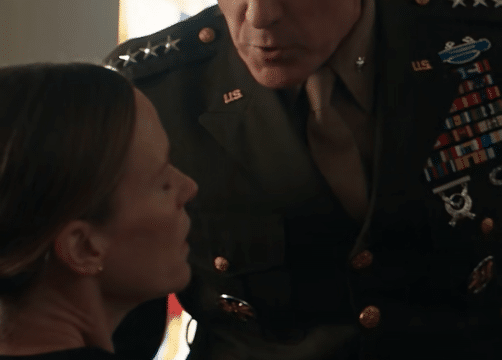
The hallway went silent when the lieutenant colonel grabbed the medic by the collar.
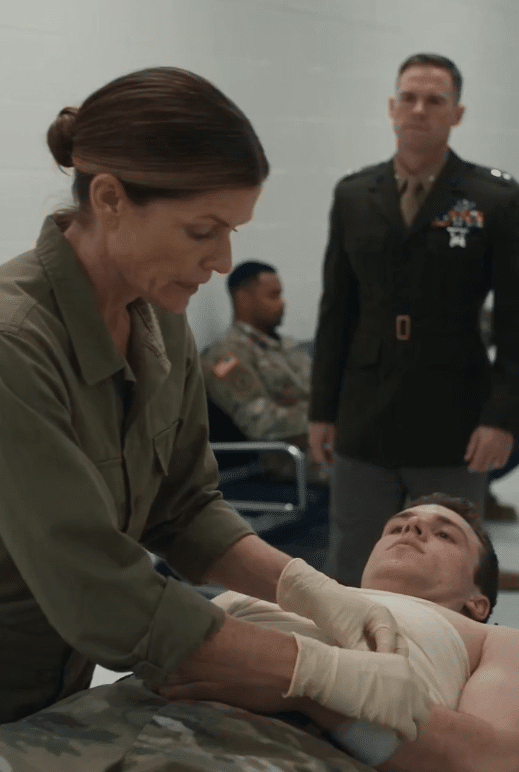
Only seconds earlier, the military hospital had been moving with its usual controlled urgency. Boots crossed the white tile. A medicine cart stood beside a stretcher. Young soldiers waited quietly for treatment, some nursing minor injuries, others staring at the ceiling as they waited their turn.
At the center of it all, a 41-year-old medic calmly worked over a wounded young soldier.
Then the lieutenant colonel arrived.
His uniform was immaculate. His insignia was impossible to miss. Even his minor injury seemed to offend him more than it hurt.
“Treat me first.”
The medic didn’t even look up.
She tightened the bandage around the younger soldier’s arm and answered with the calmness of someone who had spent years dealing with panic.
“He needs treatment before you do.”
The officer’s expression changed.
It wasn’t the answer he expected.
In his mind, rank settled everything. Rank decided who entered first, who spoke first, who was obeyed first.
But the medic had followed triage protocol.
And that, apparently, was enough to make him feel humiliated.
He stepped toward her.
The medic finally looked up.
There was no fear in her expression.
That seemed to make him even angrier.
Before anyone could react, both of his hands seized the collar of her olive medical blouse.
He yanked.
The fabric tightened against her neck as he twisted her half a turn in front of the young soldier.
Then he shoved her into the medicine cart.
Metal rattled violently.
Bandages and medical supplies scattered across the floor.
The medic fell sideways, catching herself badly as her elbow scraped against the tile.
A thin line of blood appeared.
But she didn’t cry out.
Her first instinct wasn’t even to look at her own injury.
She looked at the young soldier on the stretcher.
Was he all right?
That was the moment something strange happened.
As the medic pushed herself upright, the collar of her blouse remained displaced.
For just a second, the back of her neck was exposed.
There was an old scar there.
And beside it, almost hidden beneath the edge of her hair, was a tiny tattoo.
Two wings.
The young soldier froze.
He had seen it.
And suddenly, the hospital hallway wasn’t just a place where an officer had lost his temper.
It was a place where someone had just uncovered a piece of the past that was never supposed to be seen.
But the lieutenant colonel still had no idea what he had just exposed.
And that was about to become his biggest mistake.
Act II
“Medics obey officers,” the lieutenant colonel said coldly. “You don’t choose who matters.”
His voice carried down the hallway.
No one answered.
The medic slowly rose, one hand pressing against her scraped elbow.
The officer stood over her, waiting for an apology.
He didn’t get one.
Instead, she calmly straightened her blouse.
For years, she had learned how to remain composed when other people were losing control.
She had treated frightened recruits.
She had worked through exhaustion.
She had stood beside soldiers who couldn’t stop shaking after returning from the field.
She knew what pain looked like.
She also knew the difference between authority and insecurity.
The lieutenant colonel had rank.
But rank didn’t give him permission to decide whose injuries mattered more.
Around them, the other soldiers had become statues.
One gripped the rail of a stretcher.
Another started to rise, then stopped when the officer looked in his direction.
Nobody wanted to become the next target.
The young soldier on the stretcher was different.
He wasn’t watching the officer anymore.
He was watching the medic.
More specifically, he was watching the tiny tattoo near her hairline.
His face had gone pale.
He swallowed hard.
“Sir… please stop.”
The lieutenant colonel turned toward him.
For a moment, the hallway seemed even quieter.
Then the officer gave a contemptuous laugh.
“I don’t take orders from patients.”
The young soldier lowered his eyes.
But he didn’t look frightened anymore.
He looked haunted.
The medic noticed.
She said nothing.
That was the strange part.
She didn’t ask him what he had recognized.
She didn’t explain the scar.
She didn’t explain the tattoo.
She simply pulled her collar back into place and looked at the officer.
There was something different in her eyes now.
Not anger.
Not revenge.
Recognition.
As though she had just realized that the past had finally walked into the room.
And it was standing on the stretcher.
The officer, meanwhile, still believed he had won.
He couldn’t have known that the person he had just assaulted wasn’t the only one who recognized that scar.
The young soldier knew exactly what it meant.
And he was terrified of what would happen if the lieutenant colonel learned the truth.
Act III
The young soldier had first seen the tattoo years earlier.
Not on a hospital wall.
Not in a military record.
In a photograph.
It had been an old photograph kept inside a box that his family rarely opened.
The picture showed a younger woman in military medical gear, standing beside a field hospital after an operation overseas.
Her face was partly turned away.
But the tiny wings near her hairline were visible.
So was the scar.
He had been a child when he first saw the photograph.
He hadn’t understood why his mother kept staring at it.
He hadn’t understood why his father had eventually taken it away.
And he certainly hadn’t understood why the photograph had disappeared afterward.
But he remembered one sentence his mother had said that night.
Some people survive things they aren’t supposed to survive.
Years later, he had enlisted.
He had never expected the photograph to matter again.
Until now.
The medic stood three feet away.
Older.
Tired.
Different.
But the scar was unmistakable.
So was the tattoo.
The young soldier’s breathing became shallow.
He wasn’t simply looking at a medic anymore.
He was looking at the woman his family had believed was dead.
The woman whose name had been erased from conversations.
The woman connected to an old military operation that had ended with missing personnel and sealed records.
And suddenly, another memory returned.
His mother had once told him that someone had saved her life during that operation.
A battlefield medic.
A woman who stayed behind while everyone else was evacuated.
A woman whose body was never recovered.
The young soldier stared at the medic.
She looked back at him.
Neither spoke.
She didn’t need to.
His expression told her he knew.
But there was another problem.
The lieutenant colonel had started watching them.
“What are you looking at?”
The young soldier said nothing.
The officer stepped closer.
The medic’s face remained perfectly still.
Then she said quietly,
“You may want to start listening to survivors.”
The words landed harder than a shout.
The lieutenant colonel stopped.
For the first time, his confidence faltered.
“Survivors?”
The medic didn’t answer.
She simply covered the scar again.
But it was too late.
The young soldier had seen it.
And now the officer had seen the young soldier’s reaction.
The hallway had changed.
A moment earlier, the lieutenant colonel had been the most powerful person in the room.
Now everyone was watching him as though they were waiting for something.
Something he didn’t yet understand.
Something that had been buried for years.
And the person who could expose it was standing directly in front of him.
Act IV
The lieutenant colonel’s eyes moved between the medic and the young soldier.
His arrogance had disappeared.
He tried to recover it.
“Get back on the stretcher.”
The young soldier didn’t move.
The officer’s jaw tightened.
“That’s an order.”
Still nothing.
The medic quietly picked up one of the fallen bandages.
Her elbow stung.
The scrape was insignificant compared with what was happening around her.
She looked at the young soldier.
He gave the smallest nod.
It wasn’t a greeting.
It was confirmation.
He knew.
And she knew that he knew.
For years, the truth had survived in fragments.
A photograph.
A scar.
A tattoo.
A name people stopped saying.
A story that had been buried under official explanations.
Now those fragments had found each other again.
The lieutenant colonel took another step.
“Who are you?”
The question was directed at the medic.
She looked at him.
For the first time, there was almost pity in her expression.
“You really don’t remember?”
His face tightened.
He searched her features.
There was something familiar.
Not her face.
Something older.
Something buried.
Then his eyes dropped toward the collar of her blouse.
He saw the edge of the scar.
His breathing changed.
The medic didn’t move.
She let the silence do the work.
The young soldier suddenly understood something else.
The officer wasn’t afraid because of the tattoo alone.
He was afraid because he recognized the operation.
And if he recognized the operation, then he knew exactly what had happened there.
The missing reports.
The people who had never returned.
The story that had been rewritten.
The officer’s expression became almost colorless.
The medic stepped closer.
“You thought nobody survived.”
He stared at her.
She continued softly.
“You were wrong.”
No one in the hallway moved.
The soldiers who had been afraid to intervene now looked from one face to another.
The officer had wanted everyone to remember his rank.
Instead, they were beginning to remember something much older.
A name.
A mission.
A secret.
And perhaps the reason this woman had never spoken about the past.
She wasn’t afraid of him.
She had simply been waiting for the truth to become impossible to hide.
Then the young soldier whispered the one word that finally shattered the officer’s remaining confidence.
“Mom?”
The medic closed her eyes for a second.
When she opened them, they were wet.
But she didn’t collapse.
She didn’t run to him.
She simply nodded.
Once.
The young soldier’s face crumpled with disbelief.
For years, he had been told she was gone.
Now she was standing three feet away.
Alive.
And the officer who had just assaulted her suddenly understood that the past hadn’t returned alone.
It had brought witnesses.
Act V
The lieutenant colonel couldn’t speak.
His lips parted, but nothing came out.
The hallway seemed to hold its breath.
The woman he had just thrown into a medicine cart was no longer simply a medic to him.
She was a survivor of the operation he had spent years trying to forget.
And the young soldier on the stretcher wasn’t merely a patient.
He was her son.
The pieces finally fit.
The scar.
The tattoo.
The photograph.
The missing woman.
The sealed history.
The officer’s sudden fear.
Everything that had seemed disconnected only minutes earlier now formed a single story.
The medic looked down at her scraped elbow.
Then she looked at her son.
“You’re hurt.”
The young soldier gave a shaky laugh through his tears.
“Not as much as I thought I was.”
For the first time that night, the medic smiled.
It was small.
Tired.
But real.
The officer remained frozen.
He had spent the entire confrontation believing that power belonged to whoever wore the highest rank.
But the room had taught him something different.
Rank could make people obey.
It couldn’t make them forget.
It couldn’t erase scars.
It couldn’t destroy memories.
And it couldn’t change what had happened.
The medic walked toward her son.
She checked his bandage again with the same calm hands she had used before the confrontation.
The same hands that had treated him without knowing who he was.
The same hands that had continued working after being thrown against the cart.
The same hands that had survived the past.
Her son looked at her.
“You really survived?”
She paused.
Then she answered quietly.
“I promised someone I would.”
He didn’t ask who.
He already understood.
Across the hallway, the lieutenant colonel finally looked at the scar one last time.
His face had lost every trace of arrogance.
Only fear remained.
“Survivors?”
The word escaped him like he had only just discovered what it meant.
The medic turned toward him.
She didn’t threaten him.
She didn’t raise her voice.
She didn’t need to.
Because the truth had already done what anger never could.
It had taken away the one thing he believed made him untouchable.
His certainty.
And as the hospital lights continued to hum above them, the young soldier reached for his mother’s hand.
This time, she didn’t let go.