Act I
The tiny spill was almost invisible.
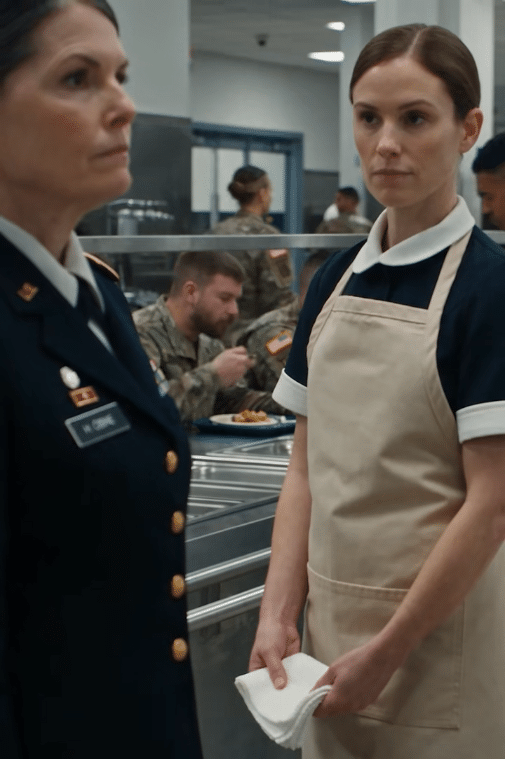
A few drops of coffee or sauce had landed on the cafeteria floor beside Colonel H. Obine’s polished black boot.
She looked down.
Then she looked at the woman standing behind the serving line.
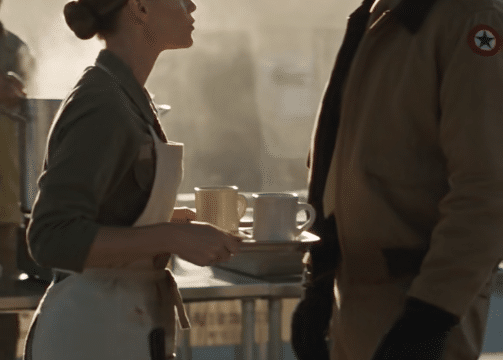
The woman wore a plain cafeteria apron over dark clothing, her brown hair tied neatly at the back. Nothing about her appearance suggested rank.
To Obine, that was all that mattered.
She pointed at the floor.
“Clean it up.”
The woman didn’t move.
The cafeteria continued around them for another second.
Then the atmosphere changed.
A few soldiers noticed the exchange.
An officer carrying a tray slowed down.
Obine’s expression hardened.
She wasn’t asking.
She was giving an order.
The apron-wearing woman looked at the spill.
Then at Obine.
Her face remained completely calm.
Before Obine could repeat herself, a man’s voice came from behind them.
“Do you treat every worker like this?”
Obine turned.
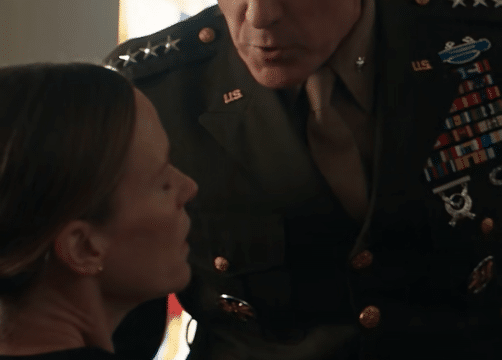
A silver-haired General stood near the entrance to the serving line.
He wasn’t shouting.
He didn’t need to.
The room seemed to recognize his presence before anyone spoke.
Obine straightened.
But instead of reconsidering, she lifted her chin.
The General’s question had given her an opportunity.
She chose the opposite answer.
“People below us should know their place.”
Silence.
Absolute silence.
The apron-wearing woman finally looked down.
Then, very slowly, she pulled back one corner of the apron.
Something official was hidden underneath.
A credential.
The edge of it caught the light.
Her eyes met Obine’s.
“That was an interesting choice.”
Obine’s confidence vanished.
Because suddenly, the woman she had ordered to clean the floor didn’t look like a cafeteria worker at all.
And the General was already walking toward them.
Act II
The cafeteria had never been truly quiet.
There was always the sound of trays.
Coffee machines.
Chairs scraping against tile.
Low conversations between soldiers finishing meals before returning to duty.
But after the General’s question, every sound seemed to disappear.
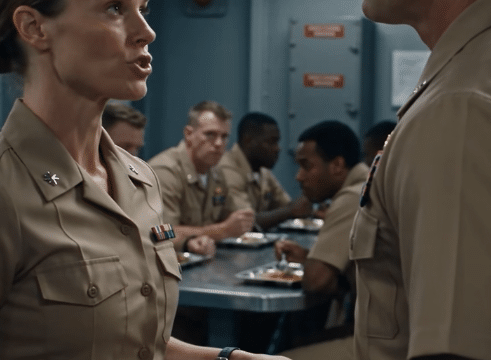
Colonel H. Obine stood near the serving station with her polished boots planted firmly on the floor.
Her name tape was visible.
Her insignia was unmistakable.
She carried herself like someone who had spent years expecting people to move when she entered a room.
The woman behind the counter carried herself differently.
Quiet.
Precise.
Professional.
She didn’t look frightened by the Colonel.
That should have been the first warning.
Instead, Obine interpreted the woman’s silence as obedience.
She had seen the apron.
She had seen the serving station.
She had decided the woman’s place before learning anything else about her.
The spill was insignificant.
The attitude behind the order wasn’t.
Obine pointed down again.
“Clean it up.”
The woman remained still.
Then the General spoke.
“Do you treat every worker like this?”
It was a simple question.
Almost gentle.
But everyone nearby understood what was happening.
The General wasn’t defending the worker yet.
He was giving Obine a chance to explain herself.
A chance to recognize what her behavior looked like from the outside.
A chance to step back.
Obine didn’t take it.
She looked at the General, then toward the apron-wearing woman.
Her expression carried the certainty of someone who believed hierarchy justified everything.
“People below us should know their place.”
A soldier near the drink station stopped moving.
Another officer slowly lowered his tray.
Nobody interrupted.
Nobody laughed.
Nobody came to Obine’s defense.
The General’s expression barely changed.
But his eyes became colder.
The woman in the apron remained composed.
There was something almost clinical about her silence now.
She wasn’t offended.
She wasn’t shocked.
She was observing.
And suddenly the General’s question made more sense.
He hadn’t asked because he didn’t know the answer.
He had asked because he wanted Obine to reveal it herself.
She had done exactly that.
Then the woman reached toward her apron.
And the first edge of the hidden credential appeared.
Act III
It was only a small movement.
One corner of the apron shifted.
Beneath it was a darker layer of uniform fabric.
And attached to it was an official credential.
The woman exposed only enough for the marking to become unmistakable.
The nearest soldiers saw it.
Their posture changed immediately.
A lieutenant near the serving line looked at the credential.
Then at the General.
Then at Obine.
He stepped back without saying a word.
The change spread through the cafeteria.
Soldiers sat straighter.
Officers stopped eating.
A conversation at the far end of the room died halfway through a sentence.
Obine stared at the credential.
Her face remained rigid.
But something had changed behind her eyes.
She looked at the woman again.
The apron suddenly seemed like camouflage.
Not a uniform of low status.
A disguise.
A deliberate choice.
The woman had allowed Obine to believe exactly what she wanted to believe.
And Obine had volunteered the rest.
The woman adjusted the apron.
Her voice remained calm.
“That was an interesting choice.”
Obine’s lips parted.
No answer came.
Because what could she say?
That she hadn’t known?
That she had assumed?
That she had treated the woman differently because she thought the apron made her less important?
Every possible explanation only made the situation worse.
The General hadn’t interrupted her.
He hadn’t needed to.
He had simply asked a question.
Obine had answered it herself.
Now the hidden credential had transformed those words from an ugly opinion into something much more dangerous.
A documented demonstration of how she treated people she believed were beneath her.
The General took another step forward.
The cafeteria seemed to contract around him.
Obine glanced toward the soldiers.
No one was looking at her with admiration anymore.
They were waiting.
The woman behind the counter stood perfectly still.
Her credential remained partially visible.
She didn’t announce her rank.
She didn’t demand an apology.
She didn’t explain why she was there.
That silence was becoming unbearable.
Because everyone in the room was beginning to understand that the real test hadn’t been about the spilled coffee.
It had been about what Obine would do when she believed nobody important was watching.
And she had just provided her answer.
Act IV
The General stopped a few feet away.
Obine looked at him.
Then at the woman.
Then back at him.
The hierarchy of the room was suddenly impossible to ignore.
The General’s uniform carried unmistakable authority.
His silver hair and composed expression gave him the presence of someone who didn’t need to raise his voice to command attention.
Obine’s rank was still visible.
But it no longer seemed protective.
She had built her confidence around being above someone else.
Now the person she had placed beneath herself had revealed an official credential.
The General had witnessed the entire exchange.
And the cafeteria had witnessed it too.
Obine’s earlier certainty began to fracture.
She looked at the spill.
Then at the woman.
Then at the credential.
The tiny stain near her boot suddenly felt like the least important thing in the room.
The General hadn’t accused her of anything.
He hadn’t announced consequences.
He simply stood there.
That restraint was heavier than anger.
The woman quietly adjusted the edge of her apron.
She had no reason to explain herself.
Obine had already explained herself.
She had done it in front of witnesses.
The General finally stepped closer.
His expression remained controlled.
Then he looked directly at the Colonel.
“Colonel.”
One word.
Nothing more.
But it landed like a door slamming shut.
Obine froze.
Her shoulders stiffened.
Her eyes moved from the General to the hidden credential.
The soldiers around them became motionless.
The General didn’t need to say what came next.
Not yet.
The word itself carried the message.
He knew her rank.
He had seen what she had done.
And now she knew he had seen it.
For the first time, Obine seemed to understand that the woman in the apron had never been beneath her.
She had simply been waiting for Obine to reveal how she behaved when she thought no one could hold her accountable.
And now the wrong person had been watching.
Act V
The cafeteria remained silent.
The woman stood behind the serving line with the credential still partly visible beneath her apron.
The General stood beside her.
Colonel H. Obine stood opposite them.
Her posture was still rigid.
But the certainty was gone.
She looked at the soldiers around the room.
No one met her eyes for long.
Not because they were afraid of her anymore.
Because they were waiting to see what happened next.
Obine’s gaze returned to the General.
His expression was unreadable.
He hadn’t shouted.
He hadn’t threatened her.
He hadn’t even raised his voice.
That made the moment more severe.
Then she looked at the woman she had ordered to clean the spill.
The woman’s face remained calm.
No smile.
No smugness.
No visible satisfaction.
She hadn’t needed to win an argument.
Obine had done the work herself.
The General had asked one question.
Obine had given one answer.
And that answer had revealed everything.
“People below us should know their place.”
Those words now hung over the cafeteria like evidence.
The irony was impossible to miss.
The woman Obine believed was beneath her had been the person quietly carrying official authority beneath an ordinary apron.
The General had allowed Obine to speak freely.
And the woman had allowed her to continue.
Neither had needed to expose her.
She had exposed herself.
Obine looked once more at the credential.
Her confidence collapsed another degree.
The cafeteria remained still.
The General’s gaze never left her.
The woman behind the counter lowered her hand.
The credential disappeared beneath the apron again.
But the damage was already done.
The spill had been tiny.
The order had lasted only two words.
The confession had lasted five.
Yet those five words had changed the entire room.
Obine had believed rank placed her above the people around her.
Now she stood face-to-face with the consequences of saying so aloud.
Her eyes widened.
Her pride disappeared.
And the last thing she heard was the General’s single word echoing in the silence:
“Colonel.”
She finally understood that the person she had treated as invisible had been watching her all along.
And the General had been watching too.