Act I
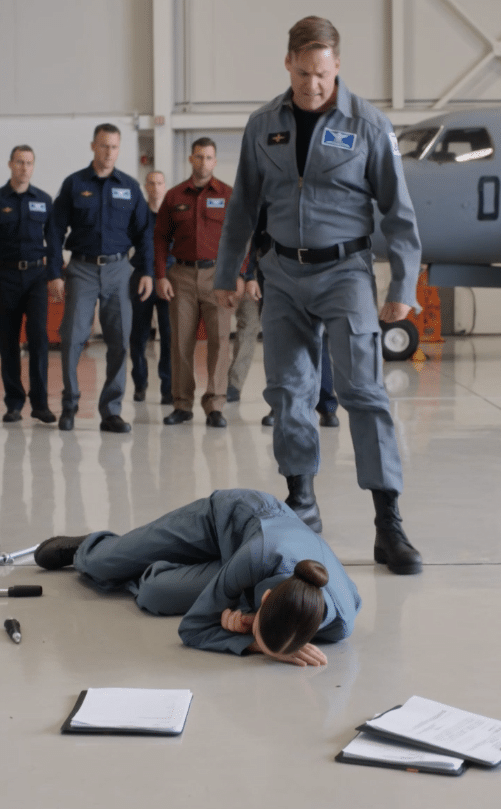
The maintenance folder hit the concrete floor just as the entire hangar fell silent.
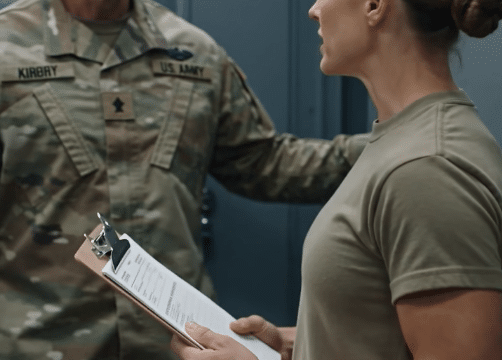
Second Lieutenant Ava Carter stood beside the handover table, one finger pressed against a maintenance record that refused to make sense. Every inspection had been signed. Every checklist appeared complete. Yet one engine component showed conflicting service times that should have made the aircraft ineligible for release.
She didn’t raise her voice.
“The maintenance record doesn’t match…”
The words were enough.
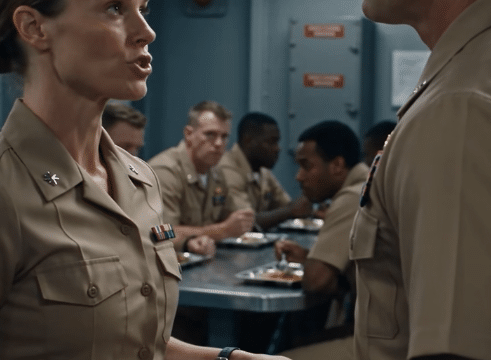
Shift Manager Daniel Ross turned toward her, his face tightening with anger. The aircraft was minutes away from being officially handed over, and technicians, pilots, and supervisors were all watching.
To him, the interruption wasn’t about safety.
It was about humiliation.
“Trash,” he barked. “New officers don’t stop my handover.”
The folder slipped from Ava’s hands as he aggressively shoved it aside, sending maintenance records scattering across the hangar floor. Tools rattled from a nearby cart as she stumbled into it, striking her elbow against the metal edge.
Pain shot through her arm, but she immediately reached for the page containing the engine log.
Even now, she refused to let it disappear.
“You just embarrassed this hangar,” Ross said, loud enough for everyone to hear.
Around them, technicians exchanged uneasy glances.
Nobody stepped forward.
Then the sound of tires echoed through the open hangar.
Everything changed.
Act II
Only three weeks earlier, Ava had quietly reported for duty.
She wasn’t loud.
She wasn’t political.
She simply followed procedure with absolute precision.
Some coworkers admired her discipline. Others whispered that she cared too much about paperwork.
Ross had dismissed her from the beginning.
He believed maintenance was built on experience, not manuals. Delays frustrated him, especially when senior officials were expecting a flawless handover.
But Ava had noticed something no one else had questioned.
The engine module listed in the aircraft log had been replaced on paper, yet the serial number recorded during her physical inspection belonged to a different component.
It could have been a clerical mistake.
Or something much worse.
She requested one final verification.
Ross refused.
Stopping the handover would damage his reputation.
Allowing the aircraft to remain grounded—even briefly—would invite uncomfortable questions from headquarters.
So he chose authority over caution.
He had no idea someone else had already begun asking those same questions.
Act III
A line of black government vehicles rolled through the hangar entrance and stopped in perfect formation.
Every conversation ended instantly.
Vehicle doors opened in rapid succession.
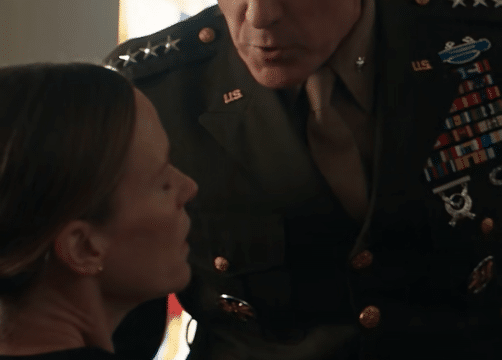
Leading the group was Major General Evelyn Grant, accompanied by senior Department of Defense inspectors and Air Force review officers.
Her attention skipped past the aircraft.
Past the maintenance supervisors.
Past Ross.
Instead, she noticed the scattered maintenance records resting across the concrete floor.
Then she looked at the page still clutched in Ava’s hand.
Without hesitation, she walked directly to the young officer.
“What did you find?” she asked calmly.
Ava handed over the record.
The general studied it for only a few seconds before looking toward the aircraft.
“Seal this aircraft,” she ordered.
A stunned silence swept through the hangar.
“Continue the review.”
Technicians immediately stopped preparing the aircraft.
Security personnel moved toward the handover area.
Ross felt the ground shift beneath him.
Act IV
The review team spread across the aircraft with practiced efficiency.
Maintenance logs were collected.
Digital records were frozen.
Every signature on the handover documents was examined.
One inspector quietly compared serial numbers while another opened archived maintenance reports.
Within minutes, the discrepancy Ava had discovered was confirmed.
The documentation and the aircraft did not match.
The aircraft had been scheduled for release despite unresolved maintenance questions.
Whether the mismatch resulted from negligence or deliberate misconduct remained unknown.
But one fact was beyond dispute.
The handover should never have continued.
General Grant turned toward Ross.
“You viewed a safety concern as an inconvenience.”
Her voice remained measured, making the words even heavier.
“You saw insubordination.”
“I saw professionalism.”
Across the hangar, technicians lowered their eyes.
Many later admitted they had noticed small inconsistencies before.
None had spoken.
Ava had.
Act V
The aircraft never left the hangar that day.
The Defense Department expanded its review far beyond a single maintenance record, uncovering broader procedural failures that had gone unquestioned for years.
Daniel Ross was removed from his supervisory duties pending the outcome of multiple investigations.
His confidence disappeared almost overnight.
The authority he had guarded so fiercely dissolved under documented evidence.
As for Ava, she returned to work with little interest in recognition.
She spent the following weeks helping investigators reconstruct maintenance histories and improve inspection procedures.
Only after the review concluded did many people learn why her transfer file had contained so little information.
Before arriving at the base, she had served on a specialized technical assessment program supporting high-level readiness evaluations across multiple installations. Her assignment to the hangar had never been routine.
She wasn’t sent merely to observe maintenance.
She had been trusted to recognize problems others might overlook.
The discrepancy she refused to ignore prevented an aircraft from entering service before critical questions had been answered.
Months later, revised maintenance protocols across the wing carried a simple reminder printed at the top of every handover checklist:
If the record doesn’t match the aircraft, the aircraft does not fly.
For many, it became another administrative rule.
For those inside the hangar that morning, it was something far more important.
A reminder that professionalism is measured not by how quickly a mission moves forward—but by having the courage to stop it when safety demands it.