Act I
The folding chairs were already arranged across the restricted memorial space when the elderly volunteer stepped forward.
He didn’t sound angry. He never did.
Holding a worn cleaning cloth in one hand, he simply pointed toward the bronze rules sign.
“Please move this off the memorial.”
The wealthy visitor barely looked up from unpacking expensive picnic food.
Instead, he laughed.
“Trash. It’s just stone.”
The words echoed far louder than he expected.
People walking through the plaza slowed to a stop.
Parents quietly guided their children away.
Everyone sensed that something sacred had just been disrespected.
The volunteer remained calm.
“This place isn’t just stone,” he replied softly. “Every name here belonged to someone’s family.”
That should have ended the conversation.
Instead, it became something no one present would ever forget.
Act II
The visitor’s expression hardened.
To him, being corrected by an elderly volunteer felt like a personal insult.
He waved dismissively toward the engraved wall.
“Clean around us.”
When the volunteer quietly refused to allow food and chairs to remain inside the protected memorial zone, the confrontation escalated.
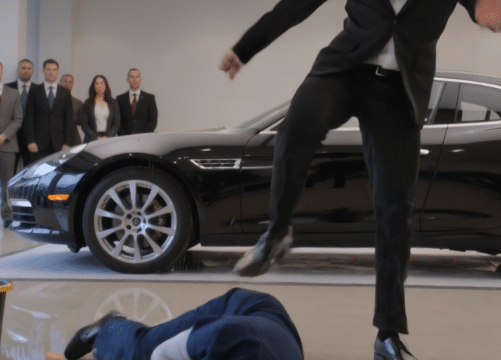
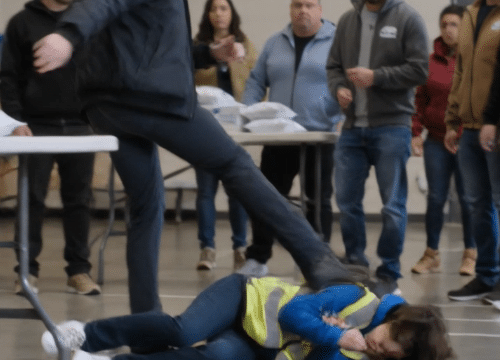
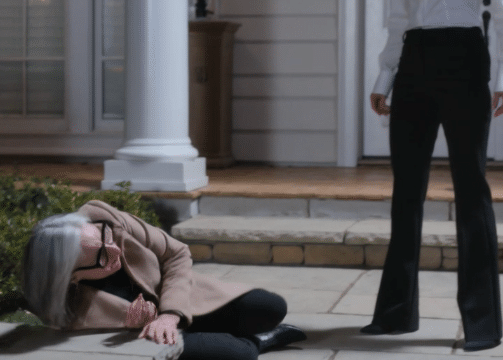
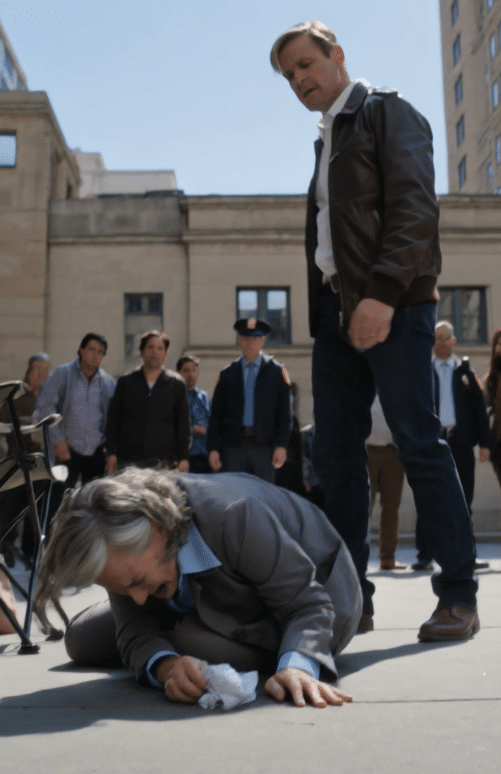
The aggressive shove that followed sent the elderly man stumbling into a folding chair, which collapsed loudly across the plaza stones.
His cleaning cloth slipped from his hand.
The rules sign toppled onto the pavement.
Gasps spread through the crowd.
The volunteer stayed conscious, visibly shaken but determined to protect the memorial even as he struggled to stand.
No one rushed forward.
Shock held everyone in place.
But someone had already seen everything from across the plaza.
And he was arriving much faster than anyone realized.
Act III
The quiet rumble of engines interrupted the tense silence.
A small convoy of city vehicles stopped sharply beside the memorial entrance.
Uniformed memorial protection staff stepped out first.
Then came the City Official.
His expression alone changed the atmosphere.
He didn’t ask what had happened.
He simply looked.
The scattered chairs.
Food placed where it never should have been.
The fallen volunteer.
The engraved wall.
Then his voice cut through the plaza.
“Remove everything. Now.”
Within seconds, staff cleared the restricted area while security positioned themselves between the visitor and the volunteer.
The picnic ended instantly.
Only then did the wealthy man finally hesitate.
“Who are you?”
Several people nearby exchanged stunned looks.
The answer was far worse than he expected.
Act IV
“I oversee this memorial,” the official replied evenly.
“My responsibility is to protect both this place and the people who dedicate themselves to preserving it.”
His eyes settled on the elderly volunteer.
The man’s jacket carried years of service pins earned through thousands of volunteer hours.
The official recognized him immediately.
“This gentleman has spent years ensuring families can visit this memorial with dignity.”
He then looked back at the visitor.
“And today, in front of dozens of witnesses, you chose to ignore every rule protecting it.”
Security quietly informed the man that the incident had been documented and that authorities would review witness statements and surveillance footage.
The confidence that had fueled his arrogance disappeared almost instantly.
Around the plaza, people who had remained silent finally began speaking.
Not against the volunteer.
Against the visitor.
Act V
Medical staff checked the elderly volunteer while fellow volunteers carefully gathered his dropped belongings.
Despite everything that had happened, his first request wasn’t about himself.
He looked toward the engraved wall.
“Please make sure nothing was damaged.”
The City Official smiled with quiet respect.
“It wasn’t.”
Then he added something the nearby crowd would remember long after the plaza emptied.
“But your dignity reminded everyone here why this place matters.”
Security escorted the visitor away as workers restored the memorial to its proper condition.
Families slowly returned.
Children once again read the engraved names.
Flowers were placed where picnic bags had been only minutes earlier.
Before leaving, the official paused beside the volunteer.
“Monuments survive because of stone,” he said.
“But their meaning survives because people like you refuse to let others forget.”
The volunteer gently picked up his cleaning cloth, looked across the peaceful plaza, and nodded.
Respect, he knew, was never enforced by the loudest voice.
It endured because ordinary people were willing to stand quietly for what deserved to be remembered.